Batman: The Killing Joke (1988)

Batman: The Killing Joke is a 1988 DC Comics one-shot graphic novel featuring the characters Batman and the Joker written by Alan Moore and illustrated by Brian BollandThe Killing Joke provides an origin story for the supervillain the Joker, loosely adapted from the 1951 story “The Man Behind the Red Hood!“, which was written by Batman co-creator Bill Finger. The Joker’s origin is presented via flashback, while simultaneously depicting his attempt to drive Jim Gordon insane and Batman’s desperate attempt to stop him.

Created by Moore, Bolland, and Higgins as their own take on the Joker’s source and psychology, the story became famous for its origin of the Joker as a tragic character; a family man and failed comedian who suffered “one bad day” that finally drove him insane. Moore stated that he attempted to show the similarities and contrasts between Batman and the Joker. The story’s effects on the mainstream Batman continuity also included the shooting and paralysis of Barbara Gordon (a.k.a. Batgirl), an event that eventually leads her to develop the identity of Oracle, secret data broker for the DC Universe‘s superhero community and leader of the superhero team Birds of Prey.

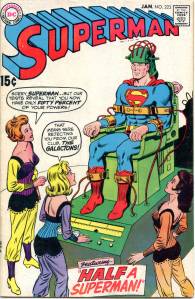
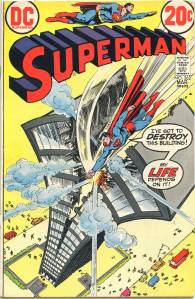
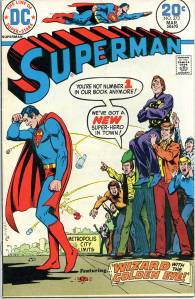
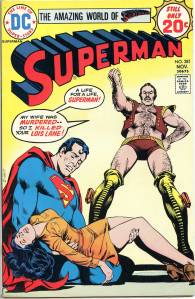
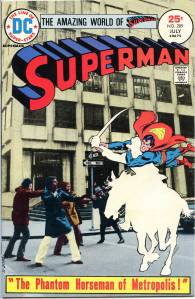
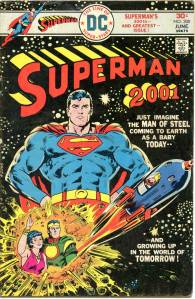
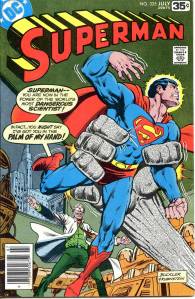
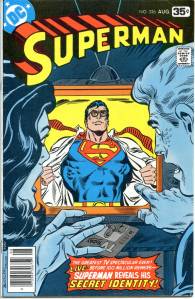
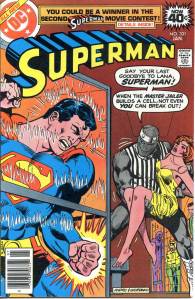
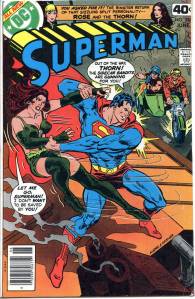
Superman (1970’s)

The early 1970s were a time of change for the Man of Steel. As Clark Kent shifted from being a newspaper reporter to a TV newscaster, his alter ego saw the destruction of all remaining Kryptonite on Earth! This period also featured many new villains, including Terra-Man, and the dramatic reintroductions of such foes as Lex Luthor — in green and purple armor!

Birds of Prey: Manhunt (1996)

The title series began with Chuck Dixon’s one shot Black Canary/Oracle: Birds of Prey (cover date 1996 / published December 1995). Initially, the two heroines featured were Barbara Gordon (formerly “Batgirl“) and Dinah Lance (currently “Black Canary”). From the beginning, Canary was written as passionate and idealistic. In an interview with Comics Bulletin, Dixon described this choice as a fertile clash of values: “Dinah’s more idealistic approach is at the heart of this book.

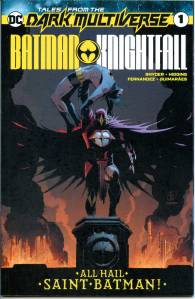
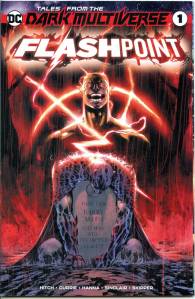
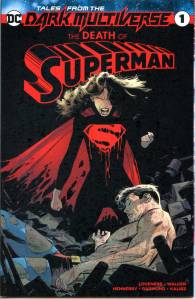
Tales from the Dark Multiverse (2019)

Tales from the Dark Multiverse is an American superhero/anthology comic book limited series published by DC Comics, beginning on October 16, 2019. The series takes some of the most famous events in the DC Universe and puts a twist on them.

Following the Source Wall being shattered at the end of Dark Nights: Metal, the mysterious watcher known as Tempus Fuginaut (introduced in Sideways) begins trying to recruit several “heroes” from across the Dark Multiverse in the wake of a coming crisis.

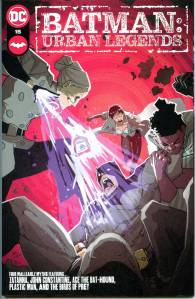
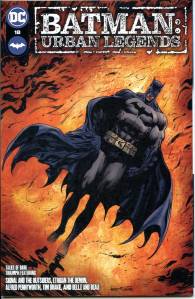
Batman: Urban Legends (2021)

Batman: Urban Legends is an ongoing anthology series, published by DC Comics. It began publication in 2021. It features stories staring various allies of Batman either in multi-part or one offs.

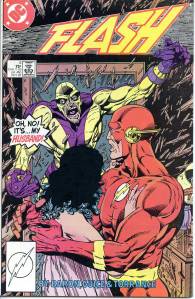
Flash V2 (1980’s)

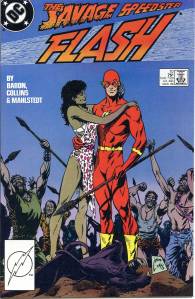
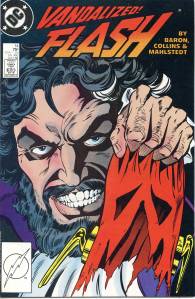
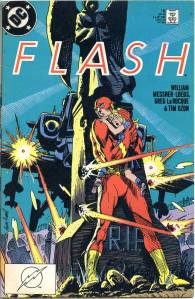
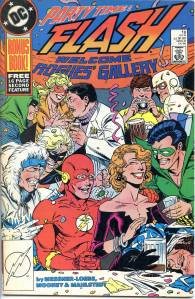
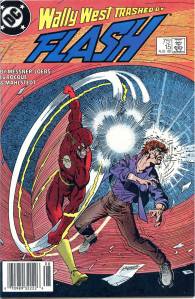
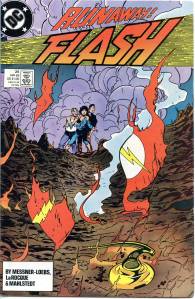
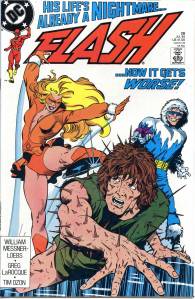
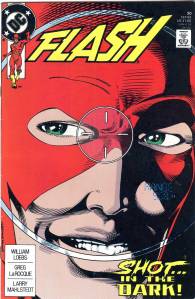
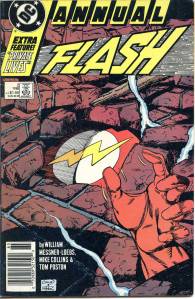
The third Flash was Wally West, introduced in The Flash (vol. 1) #110 (Dec. 1959) as Kid Flash. West, Allen’s nephew by marriage, gained the Flash’s powers through an accident identical to Allen’s. Adopting the identity of Kid Flash, he maintained membership in the Teen Titans for years. Following Allen’s death, West adopted the Flash identity in Crisis on Infinite Earths #12 and was given his own series, beginning with The Flash (vol. 2) #1 in 1987.[1] Many issues began with the catchphrase: “My name is Wally West. I’m the fastest man alive.”

Superboy V1 (1970’s)

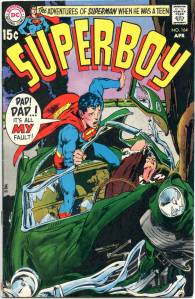
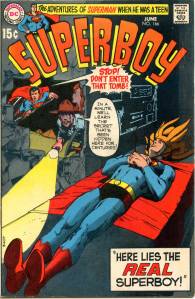
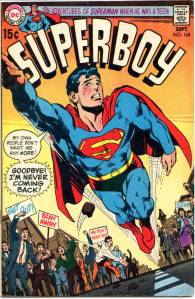
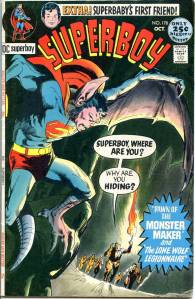
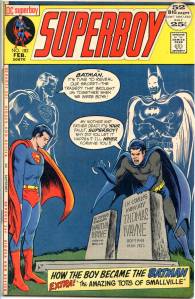
After the Legion pushed new Superboy stories out of Adventure Comics in 1963, Superboy became the only comic book to feature original Superboy stories. Less than two years after the Legion itself left Adventure ComicsSuperboy became the Legion’s new home. Starting with Superboy #172 (March 1971), the Legion appeared as an occasional backup feature. Once again, the Legion feature proved so popular that by Superboy #197 (Sept. 1973), the Legion had become the lead feature, and with the next issue, the title’s only feature. Although from issue #197, the cover logo read Superboy starring the Legion of Super-Heroes (and replaced starring with #222), the official title (shown in the indicia) of the comic remained Superboy until #231 (Sept. 1977), when the comic became Superboy and the Legion of Super-Heroes. In issue #259 (Jan. 1980).

Vigilante (1983)

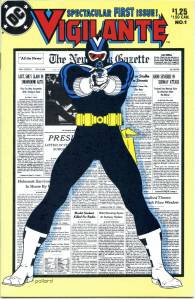
Vigilante was an ongoing series published from November of 1983 to February 1988. The series featured the honorable Adrian Chase, who was first introduced in the pages of New Teen Titans Annual #2. Spanning a total of fifty issues and two Annuals, the series ended with the death of the main character.

Justice Society of America V3 (2006)

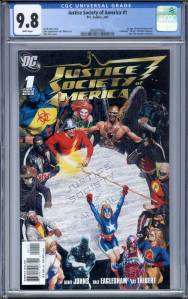
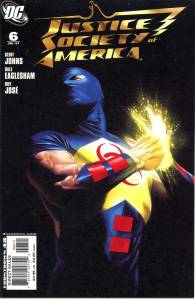
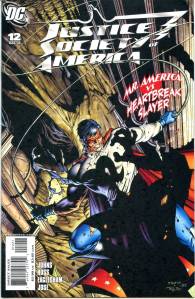
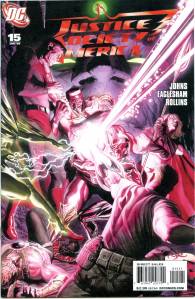
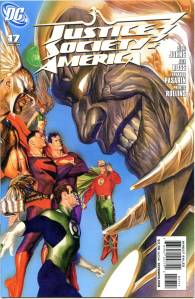
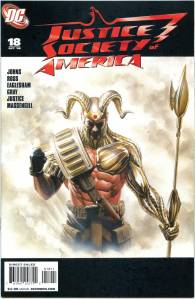
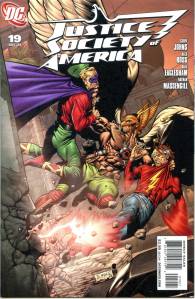
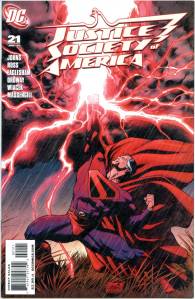
On December 6, 2006, a new series was launched with the creative team of Geoff Johns (writer), Dale Eaglesham (pencils), and Alex Ross (cover art). The beginning of the new series showed JSA veterans the Flash, Green Lantern, and Wildcat choosing members of the new generation of superheroes to train. Continuing a major theme from the previous JSA title, this new series focused on the team being the caretakers of the superhero legacy from one generation to the next.

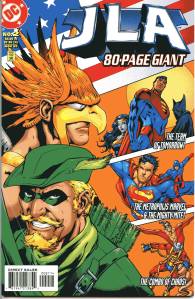
JLA (1997)

The low sales of the various Justice League spinoff books by the mid-1990s prompted DC to revamp the League as a single team (all the various branch teams were disbanded) on a single title. A Justice League of America formed in the September 1996 limited series Justice League: A Midsummer’s Nightmare by Mark Waid and Fabian Nicieza. In 1997, DC Comics launched a new Justice League series titled JLA, written by Grant Morrison with art by Howard Porter and inker John Dell. Morrison stayed as writer for the series through issue #41, though several issues had fill-in writers. JLA #18-#21 and #33 were written by Mark Waid. Mark Millar, Devin Grayson and Mark Waid, and J.M. DeMatteis wrote issues #27, #32 and #35 respectively.

This series, in an attempt at a “back-to-basics” approach, used as its core the team’s original and most famous seven members (or their successors): Superman, Batman, Wonder Woman, Aquaman, Flash (Wally West), Green Lantern (Kyle Rayner), and the Martian Manhunter. Additionally, the team received a new headquarters, the “Watchtower“, based on the Moon. JLA quickly became DC’s best-selling title, a position it enjoyed off and on for several years.