Justice League of America (Silver Age)

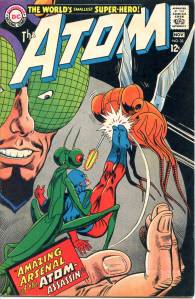
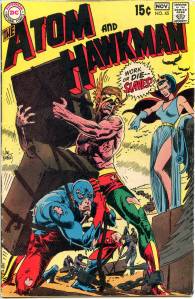
The initial Justice League lineup included seven of DC Comics’ superheroes who were regularly published at that time: SupermanBatman, Aquaman, Flash, Green Lantern, Martian Manhunter, and Wonder Woman. Rarely featured in most of the stories, Superman and Batman did not even appear on the cover most of the time. Three of DC’s other surviving or revived characters, Green Arrow, the Atom, and Hawkman were added to the roster over the next four years.

The title’s early success was indirectly responsible for the creation of the Fantastic Four. In his autobiography Stan Lee relates how in 1961, during a round of golf, DC publisher Jack Liebowitz mentioned to Marvel-Timely owner Martin Goodman how well DC’s new book (Justice League) was selling. Later that day Goodman, a publishing trend-follower aware of the JLA’s strong sales, told Lee, his comics editor, to come up with a team of superheroes for Marvel.

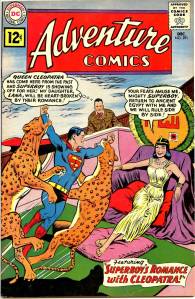
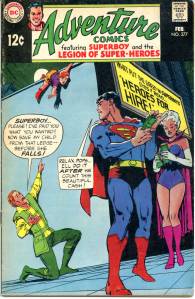
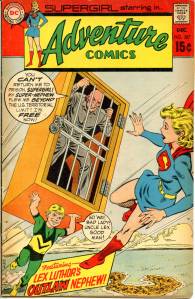
Action Comics (1960’s)

In the view of comics historian Les Daniels, artist Curt Swan became the definitive artist of Superman in the early 1960s with a “new look” to the character that replaced Wayne Boring’s version. Bizarro World first appeared in the story “The World of Bizarros!” in issue #262 (April 1960). Writer Jim Shooter created the villain the Parasite in Action Comics #340 (Aug. 1966).

Hawkman (Silver Age)

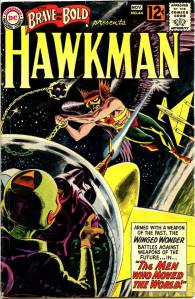
Hawkman was created by writer Gardner Fox and artist Dennis Neville, the original Hawkman first appeared in Flash Comics #1, published by All-American Publications in 1940.

Several incarnations of Hawkman have appeared in DC Comics, all of them characterized by the use of archaic weaponry and by large, artificial wings, attached to a harness made from the special Nth metal that allows flight. Most incarnations of Hawkman work closely with a partner/romantic interest named Hawkgirl or Hawkwoman.

Since DC’s continuity was rewritten in the 1985 series Crisis on Infinite Earths, Hawkman’s history has become muddled with several new versions of the character appearing throughout the years, some associated with ancient Egypt and some with the fictional planet Thanagar. These versions of the character have starred in several series of various durations.

Showcase (Silver Age)

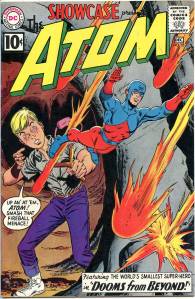
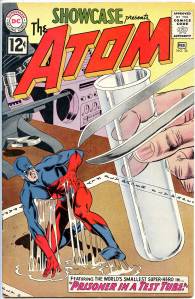
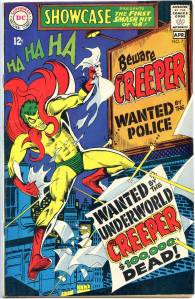
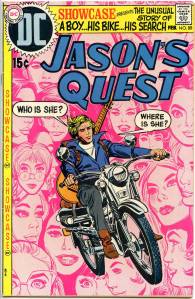
Showcase has been the title of several comic anthology series published by DC Comics. The general theme of these series has been to feature new and minor characters as a way to gauge reader interest in them, without the difficulty and risk of featuring “untested” characters in their own ongoing titles. The original series ran from March-April 1956 to September 1970 suspending publication with issue #93, and then was revived for eleven issues from August 1977 to September 1978.

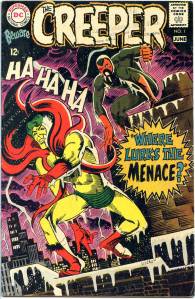
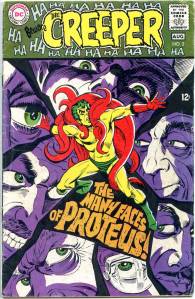
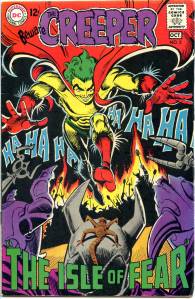
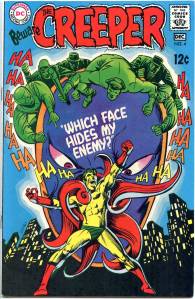
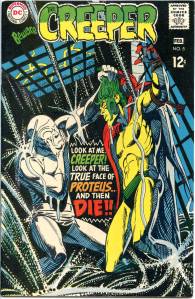
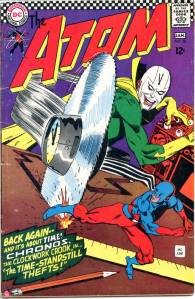
The Showcase series featured characters in either one-shot appearances or brief two or three issue runs as a way to determine reader interest, without the financial risk of featuring “untested” characters in their own ongoing titles. The series began in March-April 1956 and saw the first appearance of several major characters including the Silver Age Flash, the Challengers of the Unknown, Space Ranger, Adam Strange, Rip Hunter, the Silver Age Green Lantern, the Sea Devils, the Silver Age Atom, the Metal Men, the Inferior Five, the Creeper, Anthro, the Hawk and Dove,Angel and the Ape, Bat Lash and The Spectre.

World’s Finest (1960’s)

World’s Finest was initially a 96 page quarterly anthology, featuring various DC characters – always including Superman and Batman – in separate stories. Comics historian Les Daniels noted that “Pairing Superman and Batman made sense financially, since the two were DC’s most popular heroes.” When superheroes fell out of vogue in the early 1950s, DC shortened the size of the publication to that of the rest of its output, leaving only enough space for one story; this led to Superman and Batman appearing in the same story together starting with World’s Finest Comics #71 (July 1954). The series continued to feature Superman and Batman team-ups until issue #197. Noted Batman artist Neal Adams first drew the character in an interior story in “The Superman-Batman Revenge Squads” in issue #175 (May 1968).

Superman’s Girl Friend Lois Lane (1960’s)

Following a tryout in Showcase, DC decided to give Lois Lane her own ongoing series. The comic series focus on Lois’ solo adventures, and sometimes with stories centered on Lois’ romantic interest in Supermanand her attempts to maneuver him into marriage, only to fail due to a comic plot twist. In the early 1960s, Lana Lang made regular guest appearances, generally as Lois’ romantic rival. Artist Kurt Schaffenberger drew most of the stories for the first 81 issues of the series, missing only issue #29. Schaffenberger’s rendition of Lois Lane became cited by many as the “definitive” version of the character.

Superman (Silver Age)

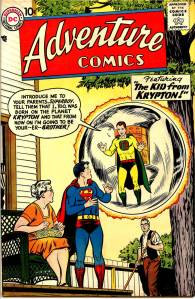
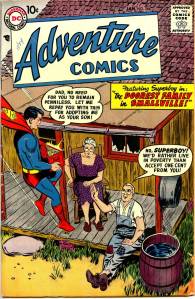
In the view of comics historian Les Daniels, artist Curt Swan became the definitive artist of Superman in the early 1960s with a “new look” to the character that replaced Wayne Boring’s version. Writer Jim Shooter and Swan crafted the story “Superman’s Race With the Flash!” in Superman #199 (Aug. 1967) which featured the first race between the Flash and Superman, two characters known for their super-speed powers. Another Silver Age first is the “Death of Superman,” from 1961’s Superman #149, by Jerry Siegel, Curt Swan and Sheldon Moldoff. The Silver Age was a fantastic period for Superman fans, giving us  characters such as Braniac, Bizzaro, Titano, Supergirl and The Legion of Superheroes.

Mystery in Space – Silver Age

 “Menace of the Robot Raiders!” (Mystery In Space #53, October 1959) featured one of the most enduring and fondly remembered space heroes of the next ten years, Adam Strange, in a 10-page tale which led to the best known period for the Mystery In Space title. Adam Strange had begun in a three-issue run in Showcase #17 (November–December 1958), and although DC considered that those issues had not sold sufficiently to warrant granting him his own title, his return a year later in Mystery In Space#53 was to last an impressive 42 appearances over the next seven years. The Adam Strange space opera tales were crafted by Gardner Fox in the best Flash Gordon tradition, with the hero caught between two planets and a love a galaxy away, giant menacing robots, dust devils, perils on two worlds, and distinctive art by Carmine Infantino and Murphy Anderson who drew almost all issues until #92 (June 1964). A number of these stories are considered among the finest of the 1960s, including the full-issue tale “The Planet That Came to a Standstill!” (Mystery In Space #75, May 1962), which won comic fandoms Alley Award for the “Best Book-Length Story” of 1962, and was fairly unusual for the time inasmuch as it featured a cross-over with other major DC characters, the Justice League of America.

DC Special (1968)

DC Special was a comic book anthology series published by DC Comics originally from 1968 to 1971; it resumed publication from 1975 to 1977. For the most part, DC Special was a theme-based reprint title, mostly focusing on stories from DC’s Golden Age; at the end of its run it published a few original stories. Issue #4 featured many supernatural characters and writer Mark Hanerfeld and artist Bill Draut crafted the first appearance of Abel, who later became (along with his brother Cain) a major character in Neil Gaiman‘s The Sandman. Paul Levitz and Joe Staton finished the series with a Justice Society of America story which revealed the team’s origin.

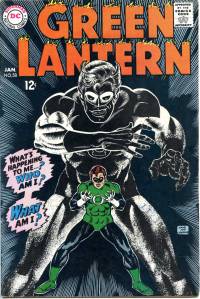
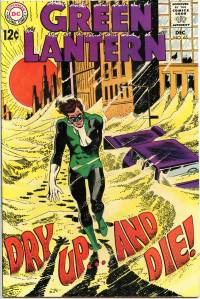
Green Lantern (Silver Age)

Following the successful revival of the Flash in Showcase #4 (Oct. 1956), a new Green Lantern was introduced in Showcase #22 (September–October 1959).

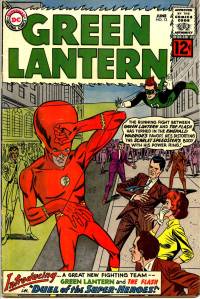
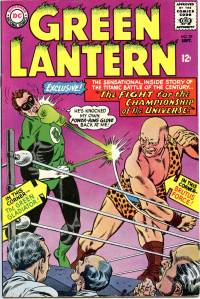
This Green Lantern was Hal Jordan, a test pilot who was given a power ring by a dying alien, Abin Sur, and who became a member of the Green Lantern Corps, an interstellar organization of police overseen by the Guardians of the Universe. The Corps’ rings were powerless against anything colored yellow, due to a yellow-colored “impurity,” or “dopant,” in the master power generator located on Oa, where the Guardians maintained their headquarters; the yellow dopant was described as being a “necessary” one, for without it, the master generator could not function as such.