JLA (1997)

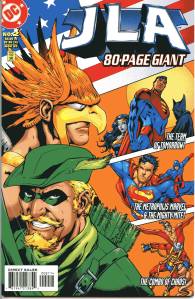
The low sales of the various Justice League spinoff books by the mid-1990s prompted DC to revamp the League as a single team (all the various branch teams were disbanded) on a single title. A Justice League of America formed in the September 1996 limited series Justice League: A Midsummer’s Nightmare by Mark Waid and Fabian Nicieza. In 1997, DC Comics launched a new Justice League series titled JLA, written by Grant Morrison with art by Howard Porter and inker John Dell. Morrison stayed as writer for the series through issue #41, though several issues had fill-in writers. JLA #18-#21 and #33 were written by Mark Waid. Mark Millar, Devin Grayson and Mark Waid, and J.M. DeMatteis wrote issues #27, #32 and #35 respectively.

This series, in an attempt at a “back-to-basics” approach, used as its core the team’s original and most famous seven members (or their successors): Superman, Batman, Wonder Woman, Aquaman, Flash (Wally West), Green Lantern (Kyle Rayner), and the Martian Manhunter. Additionally, the team received a new headquarters, the “Watchtower“, based on the Moon. JLA quickly became DC’s best-selling title, a position it enjoyed off and on for several years.

Vengeance of Bane (1993)

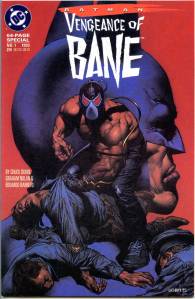
Chuck Dixon, Doug Moench and Graham Nolan created the character of Bane for the Knightfall storyline. Both Dixon and Moench wrote the character’s first appearance in Vengeance of Bane, with art by Graham Nolan. They developed the concept of Bane after an initial idea by Batman editor Dennis O’Neil.

O’Neil had previously created Bane’s birthplace of Santa Prisca in The Question and the drug Venom in the storyline of the same name (published in the pages of Legends of the Dark Knight #16–20, and later reprinted as a trade paperback). In the pages of Azrael, O’Neil introduced Bane’s perception of Venom as both an addiction and the weakness responsible for his earlier defeats.

Batman – Beyond the White Knight (2022)

Batman: Beyond the White Knight takes place 12 years after the events which are described in the previous volume Batman: Curse of the White Knight, which ended with Bruce Wayne exposed as Batman to the general public and donating his entire fortune to the people of Gotham City, and then turning himself in to the police. Since that, the city has evolved into a futuristic megalopolis known as “Neo-Gotham”. Following the murder of his father Warren, young Terry McGinnis — under the orders of his employer Derek Powers — steals a technologically advanced Batsuit to become the new Batman and avenge his father’s death. At the same time, a middle-aged Bruce escapes from prison in an attempt to rid Neo-Gotham of Batman for good, all while a civil war slowly rages through the city and Powers transforms into the supervillain Blight.
Justice Society of America V1 (1991)

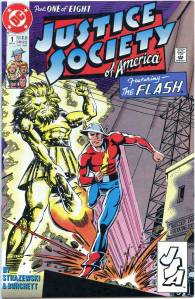
Fan interest resulted in the revival of the JSA in 1991. An eight-issue Justice Society of America limited series featuring a previously untold story set in the 1950s was published in 1991. In the final issues of the four-issue Armageddon: Inferno limited series, the JSA returns to the modern-day DC Universe when Waverider transported the “daemen” of the interdimensional Abraxis to Asgard as a substitute for the JSA in the Ragnarök cycle, allowing the team to return to Earth.

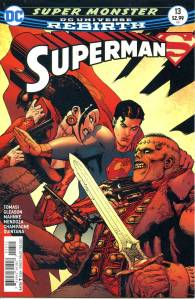
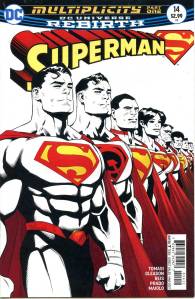
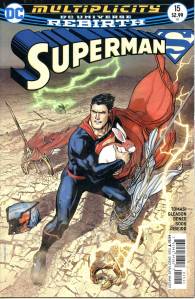
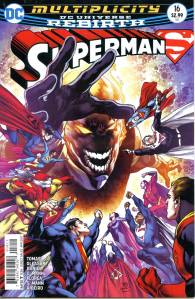
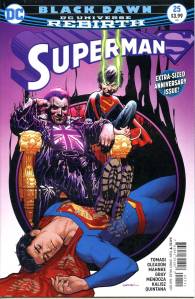
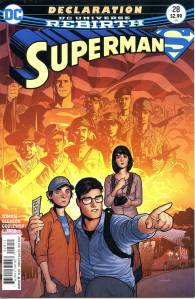
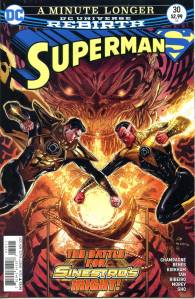
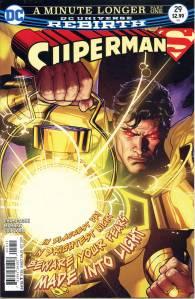
Superman V4 – Rebirth (2016)

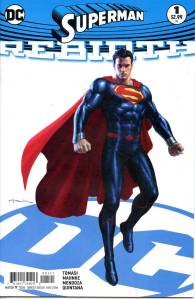
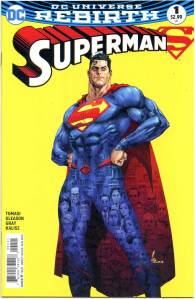
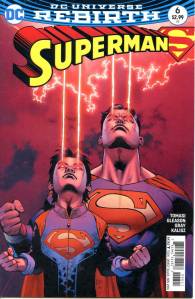
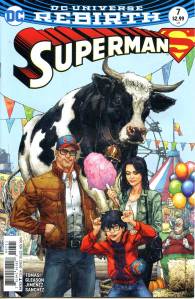
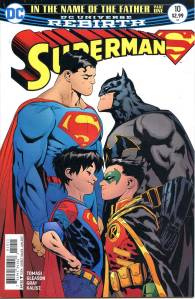
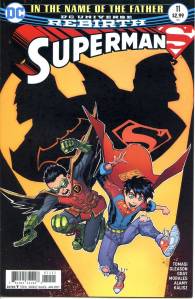
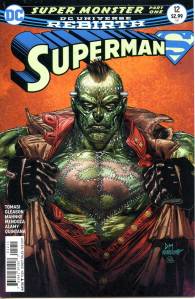
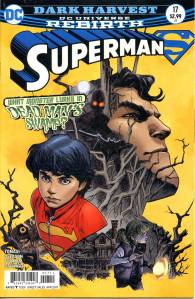
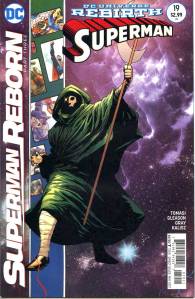
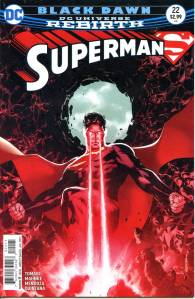
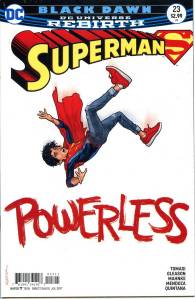
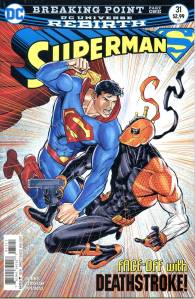
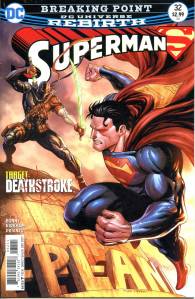
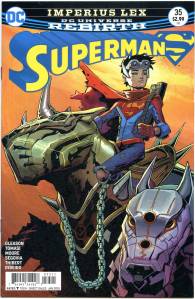
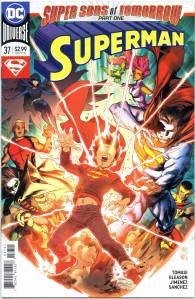
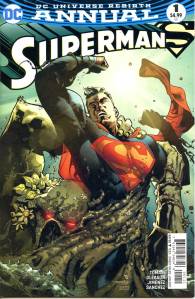
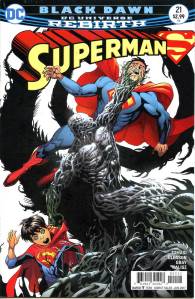
In June 2016, DC Comics once again relaunched its comic book titles with DC Rebirth. The publisher re-established the pre-New 52 Superman as the protagonist of the new comic books, with Lois Lane as his wife once more. He and Lois also conceive a biological son, Jonathan Samuel Kent, who eventually becomes Superboy. The story arc Superman Reborn smooths over the discrepancies between the two versions of the character. According to Mister Mxyzptlk, the creation of the New 52 caused Superman to be separated into two people: the New 52 character that served as the protagonist of the Superman books and the pre-Flashpoint character that took part in the Convergence event and sired Jon. Thanks to Jon, the new Superboy, the two Supermen merge into one complete version of Superman, rearranging their shared histories and accommodating them into the restored DC Universe. This complete Superman features a new suit that combines elements from the two eras. DC Comics ended the Rebirth branding in December 2017, opting to include everything under a larger “DC Universe” banner and naming. The continuity established by Rebirth continues across DC’s comic book titles, including volume one of Action Comics and the fourth volume of Superman.
Transmetropolitan (1997)

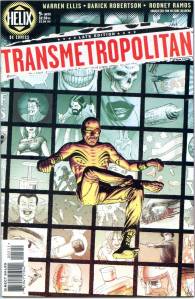
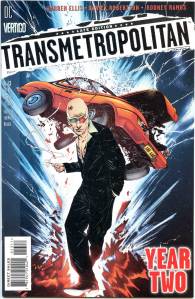
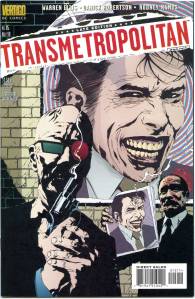
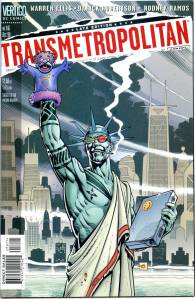
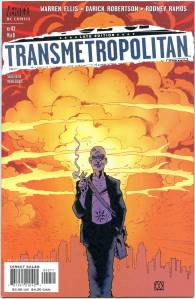
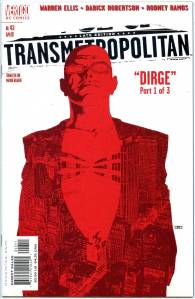
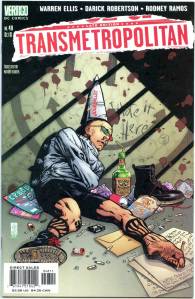
Transmetropolitan is a cyberpunk transhumanist comic book series written by Warren Ellis and co-created and designed by Darick Robertson; it was published by the American company DC Comics in 1997–2002. The series was originally part of the short-lived DC Comics imprint Helix, but upon the end of the book’s first year the series was moved to the Vertigo imprint after DC Comics shut down their Helix imprint. Transmetropolitan chronicles the battles of Spider Jerusalem, infamous renegade gonzo journalist of the future.

Lex Luthor: Man of Steel (2005)

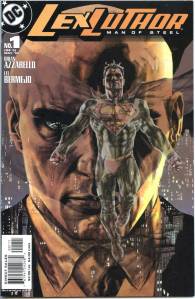
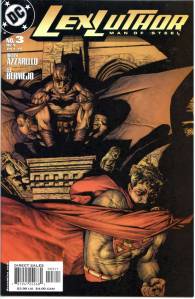
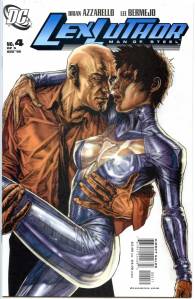
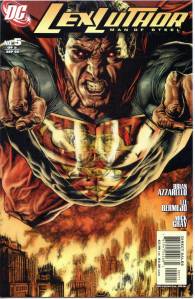
Lex Luthor: Man of Steel (later collected as simply Luthor) is a five-issue monthly limited series written by Brian Azzarello and illustrated by Lee Bermejo, which features Superman‘s nemesis Lex Luthor as the protagonist.

It explores Luthor’s motivations behind being a constant foe to the Man of Steel inside a city that has largely embraced him. Luthor views Superman as a demigod who looks down on humanity and believes that in order to “save” the human race from extraterrestrial threats, Superman must be stopped.

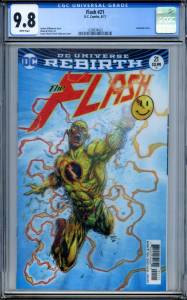
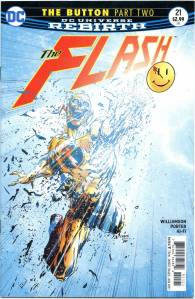
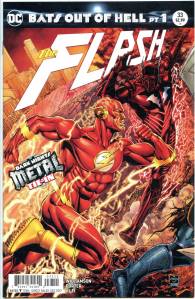
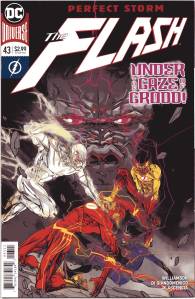
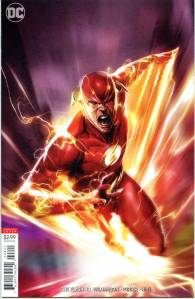
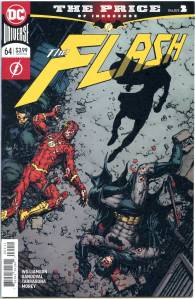
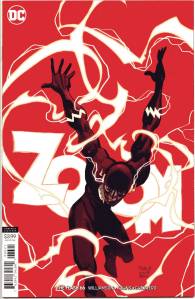
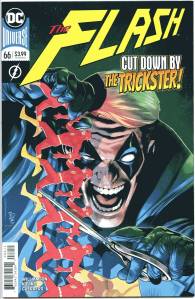
Flash V5- Rebirth (2016)

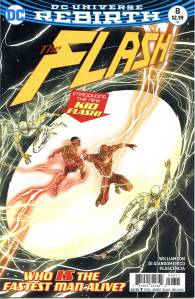
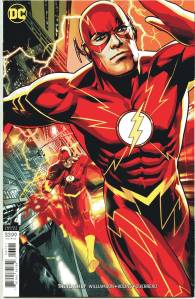
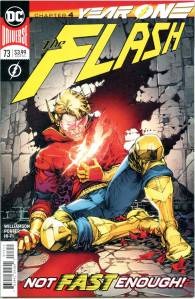
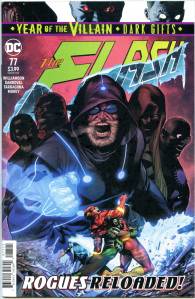
A new storm brews over Central City and disproves the old adage about lightning never, well…you know. Just as Barry begins to feel overwhelmed fighting crime, a new speedster debuts—but just where did this amazing new friend come from?

Spinning directly out of the epic events of DC UNIVERSE: REBIRTH #1, the Fastest Man Alive finds himself at the center of a DC Universe at a crossroads.

The Dark Knight Returns (1986)

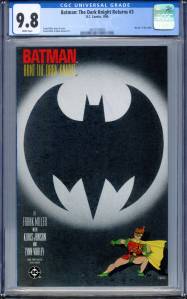
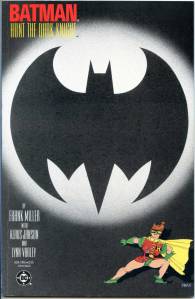
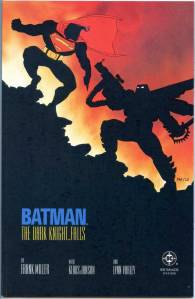
The Dark Knight Returns is a 1985 four-issue comic book miniseries starring Batman, written by Frank Miller, illustrated by Miller and Klaus Janson, and published by DC Comics. When the series was collected into a single volume later that year, the story title for the first issue was applied to the entire series. The Dark Knight Returns tells the story of Bruce Wayne, who at 55 years old returns from retirement to fight crime and faces opposition from the Gotham City police force and the United States government.

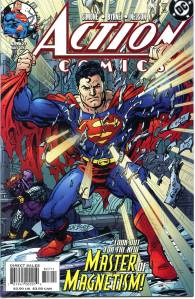
Action Comics (2000’s)

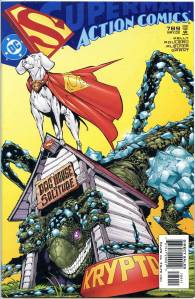
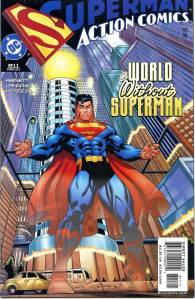
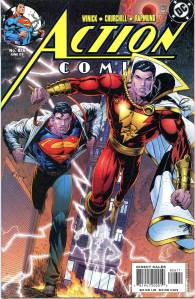
Several major Superman storylines crossed over with Action Comics including “Emperor Joker” in 2000[and “Our Worlds at War” in 2001. John Byrne returned to Action Comics for issues #827–835 working with writer Gail Simone in 2005-2006.

After the “One Year Later” company-wide storyline, Action Comics had a crossover arc with the Superman series, titled “Up, Up and Away!” which told of Clark Kent attempting to protect Metropolis without his powers until eventually regaining them.

The “Last Son” storyline was written by Geoff Johns and Richard Donner, the director of the 1978 film Superman: The Movie, and was pencilled by Adam Kubert. This story introduced the original character, Christopher Kent and adapts the classic Superman film villains, General Zod, Ursa and Non into the regular DC Universe continuity. Issue #851 (August 2007) was presented in 3-D.

Starting with issue #875 (May 2009), written by Greg Rucka and drawn by Eddy Barrows, Thara Ak-Var and Chris Kent, took Superman’s place as the main protagonists of the comic, while Superman left Earth to live on New Krypton. A Captain Atom back-up feature began in issue #879 (September 2009).