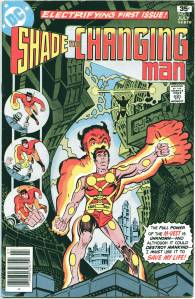
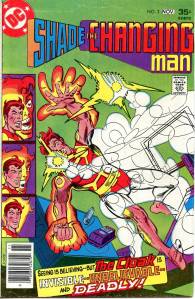
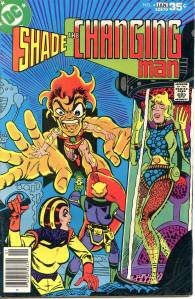
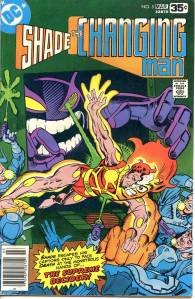
Shade, the Changing Man told the story of a fugitive from the militant planet Meta in another dimension. Shade (whose full name is Rac Shade) was powered by a stolen “M-vest” (or Miraco-Vest, named for its inventor) which protected him with a force field and enabled him to project the illusion of becoming a large grotesque version of himself. The character was the first Ditko had created, or helped to create, for a mainstream publisher for many years. Prior to rejoining DC Comics, Ditko had worked on characters such as his Mr. A. title. Shade was very much a return to mainstream superheroics, although Shade indicated no particular connection with the DC Universe (although the letters columns stated that there is no reason it could not be shown to be there). Michael Fleisher scripted the series based on Ditko’s plotting and art.
DC 100 Page Super Spectacular was published by DC Comics from 1971 through 1973, featuring only reprints initially and later including new stories. The “100 Page” count included both sides of the front and back covers as pages. Each numbered issue appearing under this title featured a wrap-around cover with all editorial content and no advertisements. Versions after late 1973 included advertisements.
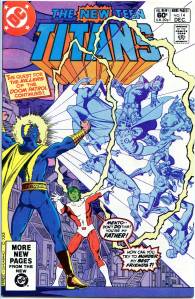
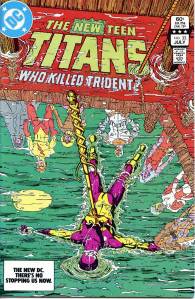
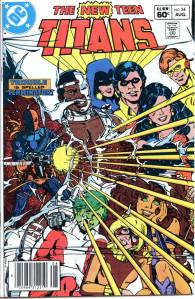
In 1980, Teen Titans relaunched as The New Teen Titans, aging the characters to young adulthood. Original members Robin, Wonder Girl and Kid Flash were joined by new characters Cyborg, Starfire and Raven, as well as the former Doom Patrol member Beast Boy, as Changeling. The group had several encounters with the original Titans of Greek mythology, particularly Hyperion.
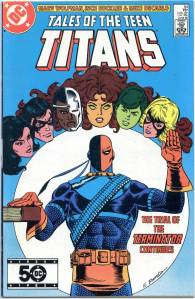
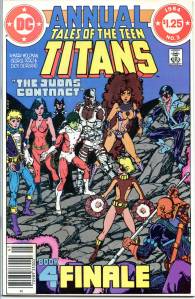
The team’s adversaries included Deathstroke the Terminator, a mercenary who takes a contract to kill the Titans to fulfill a job his son had been unable to complete. This led to perhaps the most notable Titans storyline of the era. 1984’s “The Judas Contract,” in Tales of the Teen Titans #42-44 and Teen Titans Annual #3 featured a psychopathic girl named Terra with the power to manipulate earth and all earth-related materials. She infiltrates the Titans in order to destroy them. “The Judas Contract” won the Comics Buyer’s Guide Fan Award for “Favorite Comic Book Story” of 1984, and was later reprinted as a standalone trade paperback in 1988. Robin adopts the identity of Nightwing, while Wally West gives up his Kid Flash persona and quits the Titans. It also featured the introduction of a new member in Jericho, Deathstroke’s other son.
New Teen Titans V1 #14 NM- $4
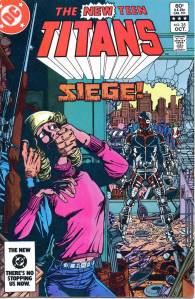
New Teen Titans V1 #33 NM- $3
New Teen Titans #34 VF+ $3
New Teen Titans V1 #35 NM- $3
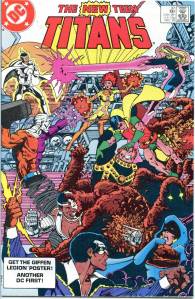
New Teen Titans V1 #36 VF-NM $3
New Teen Titans V1 #37 NM $5
New Teen Titans V1 #40 NM- $3
Tales of the Teen Titans #54 VF- $4
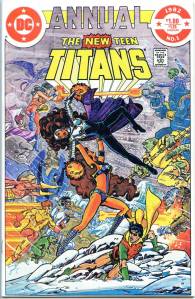
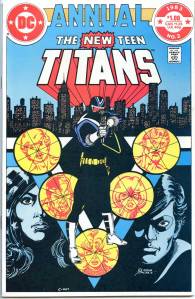
New Teen Titans V1 Annual #1 NM $5
New Teen Titans V1 Annual #2 NM $29
Tales of the Teen Titans Annual #3 VF $6
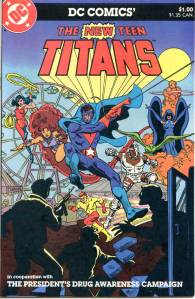
New Teen Titans 1983 Drug Awareness Campaign NM $5
The title was the first to feature Neal Adams‘ version of Batman, generating fan interest that led to Adams’ style defining the modern Batman image to this day. In addition, Adams updated Green Arrow‘s visual appearance by designing a new costume for the character in issue #85 (Aug.–Sept 1969). The primary artist for the second half of the run was Jim Aparo, starting with #98 (October–November 1971). Haney frequently disregarded continuity by scripting stories which contradicted DC’s canon or by writing major heroes in an out-of-character fashion. Issue #100 (Feb.–March 1972) featured Batman and “4 Famous Co-Stars” (Green Lantern, Green Arrow, Black Canary, and Robin) in a story by Haney and Aparo. Issues #112 (April–May 1974) to #117 (Feb.–March 1975) of the series were in the 100 Page Super Spectacular format.
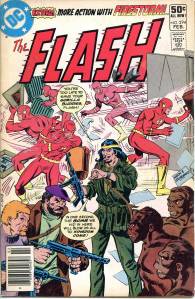
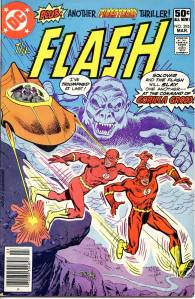
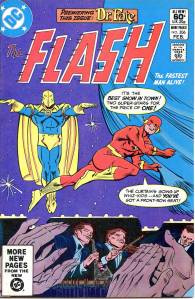
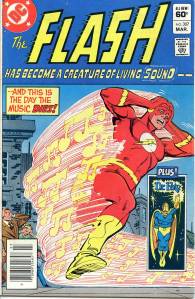
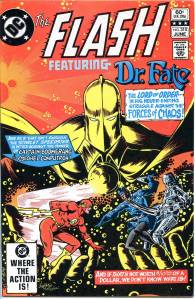
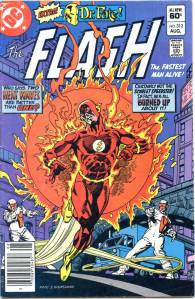
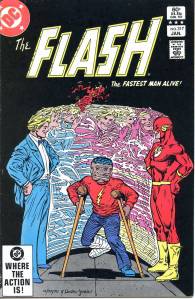
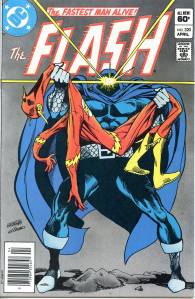
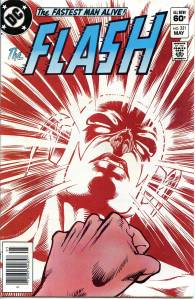
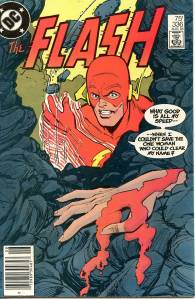
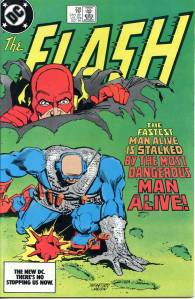
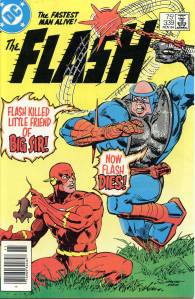
Barry Allen’s adventures continued in his own title until the event of Crisis on Infinite Earths. The Flash ended as a series with issue #350. Allen’s life had become considerably confused in the early 1980s, and DC elected to end his adventures and pass the mantle on to another character. Allen died heroically in Crisis on Infinite Earths #8 (1985). Thanks to his ability to travel through time, he would continue to appear occasionally in the years to come.
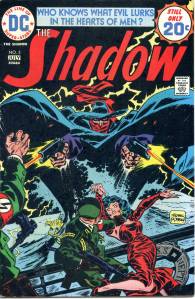
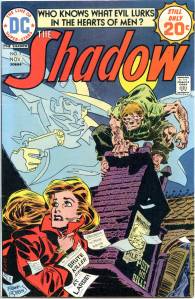
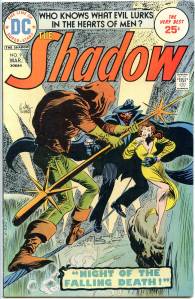
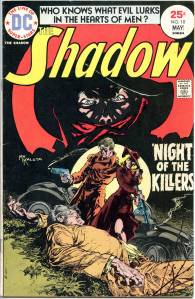
During the mid-1970s, DC Comics published an “atmospheric interpretation” of the character by writer Dennis O’Neil and artist Michael Kaluta in a 12-issue series (Nov. 1973 – Sept. 1975). Kaluta drew issues 1–4 and 6 and was followed by Frank Robbins and then E. R. Cruz. Attempting to be faithful to both the pulp-magazine and radio-drama character, the series guest-starred fellow pulp fiction hero the Avenger in issue #11.
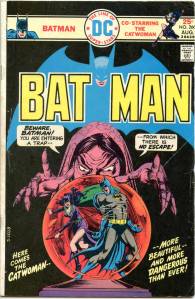
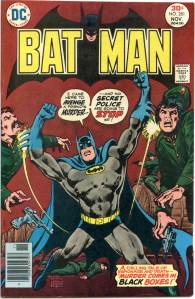
Starting in 1969, writer Dennis O’Neil and artist Neal Adams made a deliberate effort to distance Batman from the campy portrayal of the 1960s TV series and to return the character to his roots as a “grim avenger of the night”. O’Neil said his idea was “simply to take it back to where it started. I went to the DC library and read some of the early stories. I tried to get a sense of what Kane and Finger were after.”
O’Neil and Adams first collaborated on the story “The Secret of the Waiting Graves” (Detective Comics #395, January 1970). Few stories were true collaborations between O’Neil, Adams, Schwartz, and inker Dick Giordano, and in actuality these men were mixed and matched with various other creators during the 1970s; nevertheless the influence of their work was “tremendous”.Giordano said: “We went back to a grimmer, darker Batman, and I think that’s why these stories did so well…” While the work of O’Neil and Adams was popular with fans, the acclaim did little to improve declining sales; the same held true with a similarly acclaimed run by writer Steve Englehart and penciler Marshall Rogers in Detective Comics #471–476 (August 1977 – April 1978), which went on to influence the 1989 movie Batman and be adapted for Batman: The Animated Series, which debuted in 1992.Regardless, circulation continued to drop through the 1970s and 1980s, hitting an all-time low in 1985.
Supergirl starred in her first solo eponymous monthly series beginning in 1972 until October 1974, when her monthly title merged with Superman’s Girl Friend, Lois Lane, and Superman’s Pal Jimmy Olsen to produce a new title: then-highest DC selling series called The Superman Family, where she eventually became the steady lead story. Linda worked as a student advisor at New Athens Experimental School, before leaving for New York to follow a career in acting with daytime soap Secret Hearts.
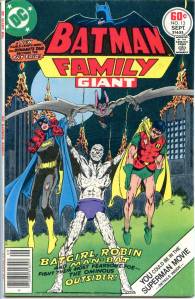
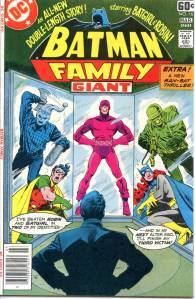
The Batman Family ran twenty issues from September-October 1975 to October-November 1978 and featured solo and team-up stories starring Batgirl and Robin. The lead story in the first issue teaming Batgirl and Robin was originally intended for publication in an issue of 1st Issue Special.The series additionally featured reprints of Golden Age and Silver Age stories. Many issues of Batman Family featured Batman supporting characters such as Alfred Pennyworth, Vicki Vale, the Elongated Man, the Huntress, and Ace the Bat-Hound. Writer Bob Rozakis introduced the Duela Dent character in issue #6 (July–August 1976)and revived the original Batwoman in issue #10 (March–April 1977).The series began featuring only new material as of issue #11 (May-June 1977) and Man-Bat began appearing as a regular feature. Batman Family converted to the Dollar Comics format with issue #17 (April–May 1978).
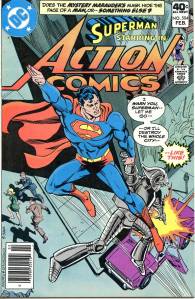
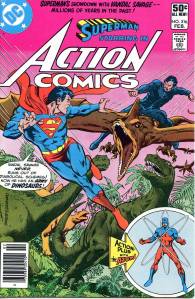
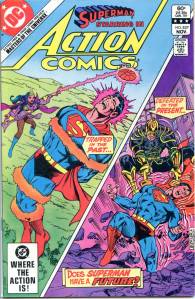
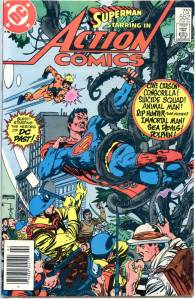
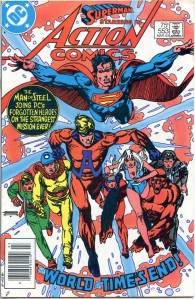
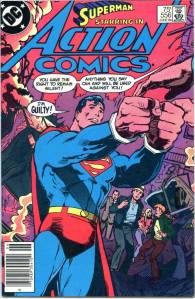
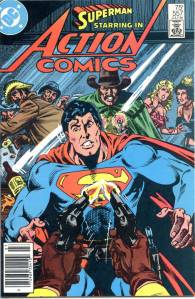
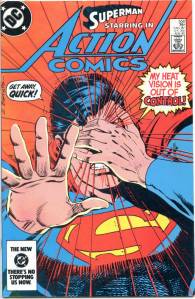
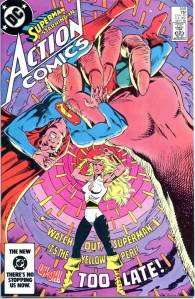
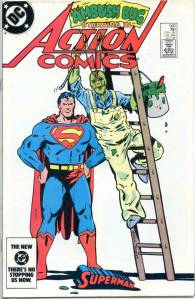
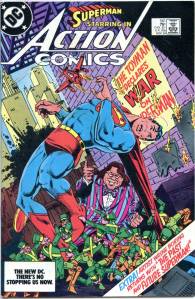
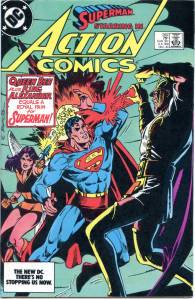
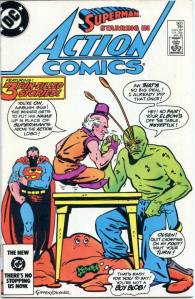
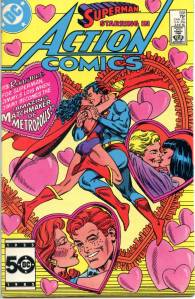
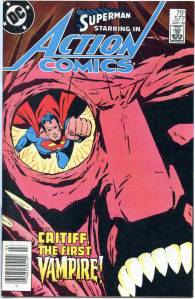
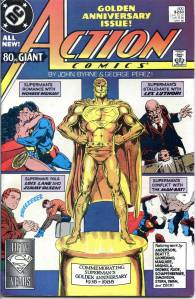
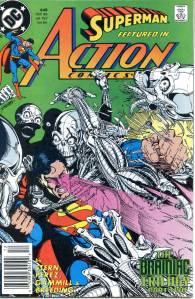
The superheroine Vixen made her first appearance in Action Comics #521 (July 1981). To mark the 45th anniversary of the series, Lex Luthor and Brainiac were both given an updated appearance in issue #544 (June 1983). Lex Luthor dons his war suit for the first time in the story “Luthor Unleashed!” and Brainiac’s appearance changes from the familiar green-skinned android to the metal skeletal-like robot in the story “Rebirth!”. Schwartz ended his run as editor of the series with issue #583 (September 1986) which featured the second part of the “Whatever Happened to the Man of Tomorrow?” story by Alan Moore and Curt Swan.
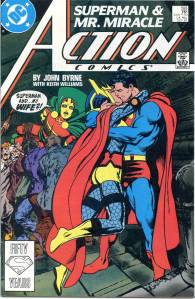
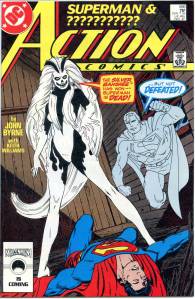
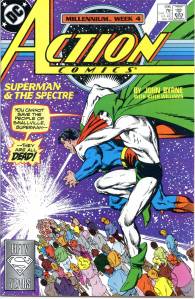
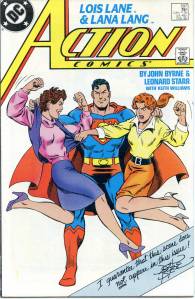
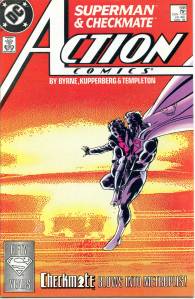
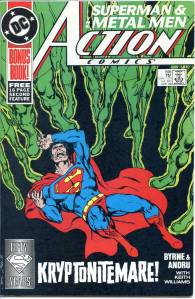
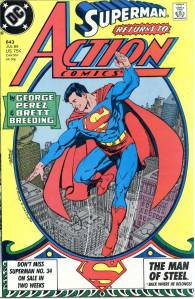
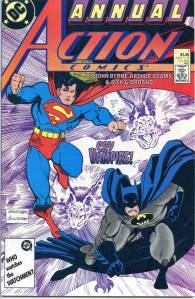
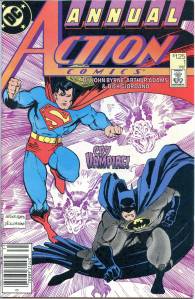
Following the events of Crisis on Infinite Earths, writer/artist John Byrne relaunched the Superman franchise in The Man of Steel limited series in 1986.Action Comics became a team-up title with issue #584 (January 1987). The first Action Comics Annual was published in 1987 and featured Superman teaming with Batman in a story written by Byrne and drawn by Arthur Adams. A DC Comics Bonus Book was included in issue #599 (April 1988).
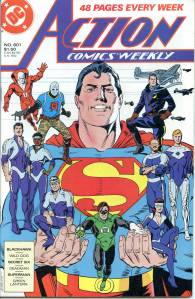
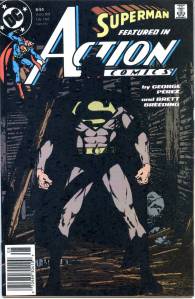
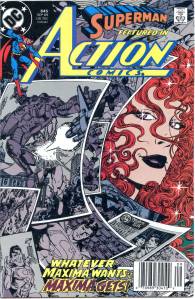
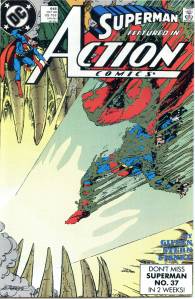
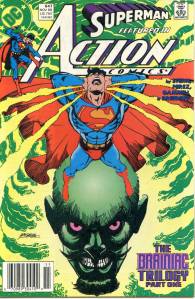
From May 24, 1988 – March 14, 1989, the publication frequency was changed to weekly, the title changed to Action Comics Weekly, and the series became an anthology. Prior to its launch, DC cancelled its ongoing Green Lantern Corps title, and made Green Lantern and his adventures exclusive to Action Comics Weekly.

































 EHT Comics