Lloyd Llewellyn (1986)

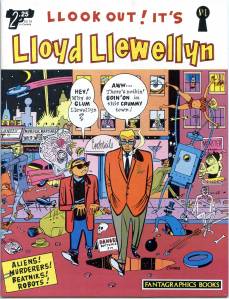
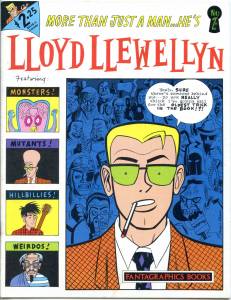
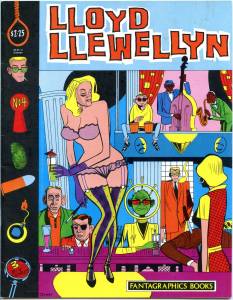
Lloyd Llewellyn (sometimes abbreviated LLLL) is a comic book by Daniel Clowes. The black-and-white series, published by Fantagraphics Books, ran for six issues from April 1986 to June 1987. A final “special” issue was published in December 1988.

The series’ title character is a detective who has humorous adventures inspired by film noir and stereotypical 1950s lounge culture. Llewellyn has a sidekick who goes by the name of Ernie Hoyle. The series’ police sergeant is called “Red” Hoerring. The series’ visual style is influenced by lowbrow art.
The story “The Nightmare” from Lloyd Llewellyn #6 foreshadowed the approach of Clowes’s next comic, Eightball, by breaking the conventions of the series’ crime setting and turning to social satire. Also in that issue, the author announces:

… And who knows … somewhere along that lonesome road we might see a new LLLL mag with a brand new format so dazzling, so breathtaking, so monumentally fantastic that I haven’t even thought of it yet!

Early issues of Eightball included several additional Lloyd Llewellyn episodes. The character also made various cameo appearances in other Eightball stories.

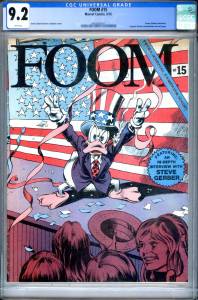
Foom (1973)

Jim Steranko, in his first-issue introduction, wrote that he had “dropped in at the Marvel bullpen to rap with [publisher] Stan Lee about the current comic scene” and that Lee told him about plans to start an in-house fan club. EC Comics had had its “EC Fan-Addict” club in the 1950s, and Marvel the Merry Marvel Marching Society beginning 1964; after the MMMS had run its course by 1969, Marvel licensed a small company in Culver City, California to produce the fanzine/product catalog Marvelmania, which lasted a year. Steranko, writing that he nostalgically “recalled the days of radio, with all the clubs and super-premiums that were perpetually offered over the air”, volunteered “my services as a designer, writer and comic historian”. Ken Bruzenak served as associate editor, with Marvel editor-in-chief Roy Thomas as consulting editor and Ed Noonchester, Joel Thingvall, and Gary Brown as staff.

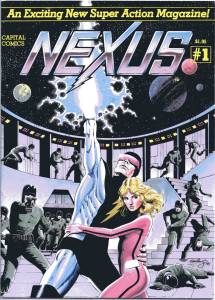
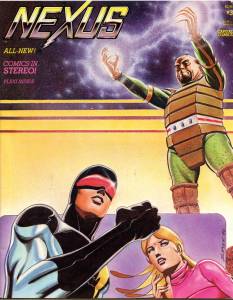
Nexus V1 – Capital Comics (1981)

Nexus is a comic book series created by writer Mike Baron and penciler Steve Rude in 1981. The series is a combination of the superhero and science fiction genres, set 500 years in the future.

The series debuted as a three-issue black-and-white limited series (the third of which featured a 33 RPM flexi disc with music and dialogue from the issue), followed by an eighty-issue ongoing full-color series. The black-and-white issues and the first six color issues were published by Capital Comics; after Capital’s demise, First Comics took over publication.

On the creation of the series: Baron noted that they had originally pitched a series called Encyclopaedias to Capital Comics, but the company rejected this, saying they were looking for a superhero title. Over a drink at a restaurant, Baron outlined his ideas for Nexus to Rude.
Nexus was entirely Baron’s idea. He even came up with the lightning bolt for the costume. All that we needed then was a name… a few weeks passed. Baron calls, and, without preamble, just says “Nexus.” We finally had our name.”

Creepy V1 (1964)

Creepy was an American horror-comics magazine launched by Warren Publishing in 1964. Like Mad, it was a black-and-white newsstand publication in a magazine format and thus did not require the approval or seal of the Comics Code Authority. The anthology magazine was initially published quarterly but later went bimonthly. Each issue’s stories were introduced by the host character, Uncle Creepy. Its sister publications were Eerie and Vampirella.

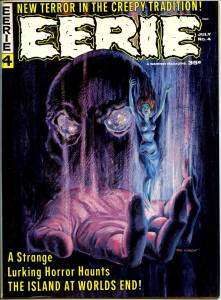
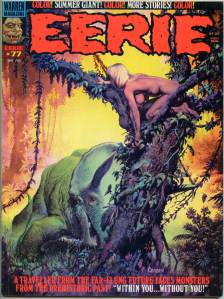
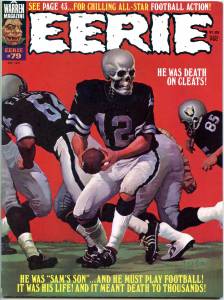
Eerie (1966)

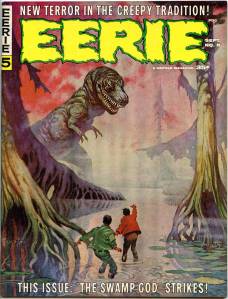
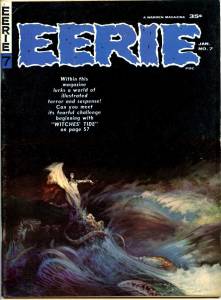
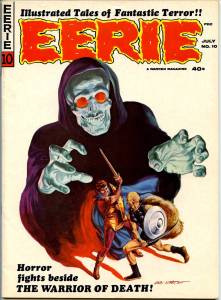
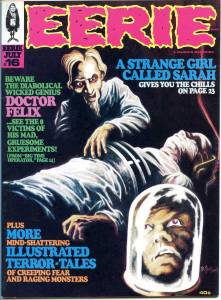
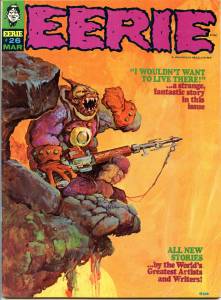
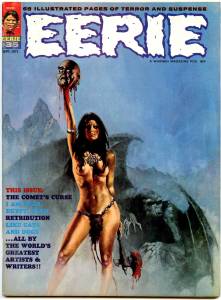
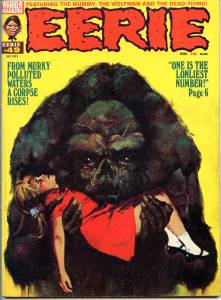
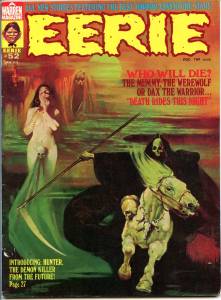
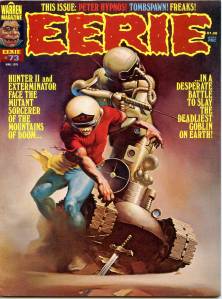
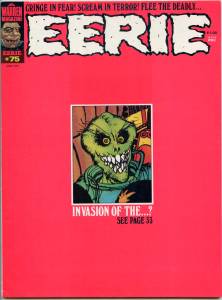
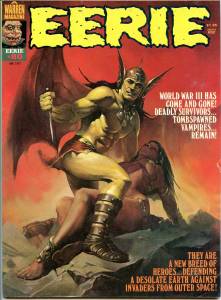
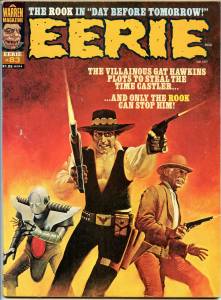
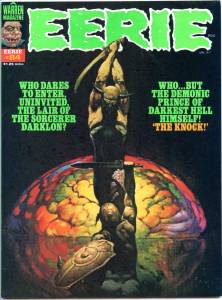
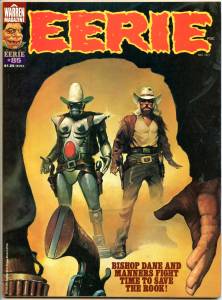
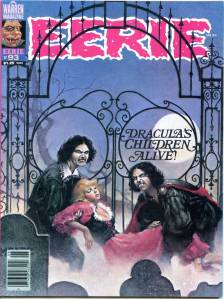
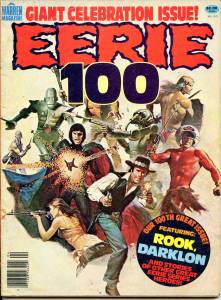
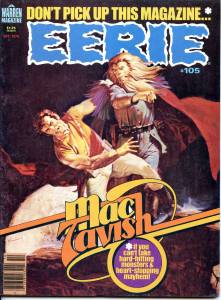
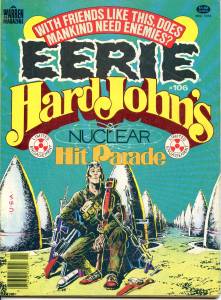
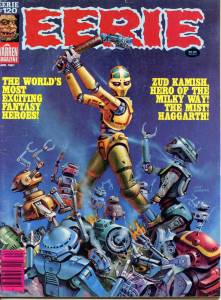
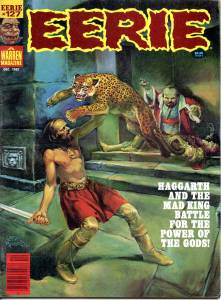
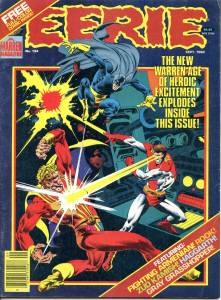
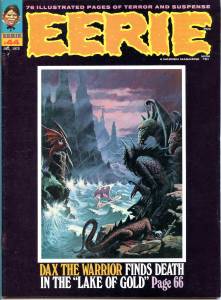
Eerie was an American magazine of horror comics introduced in 1966 by Warren Publishing. Like Mad, it was a black-and-white newsstand publication in a magazine format and thus did not require the approval or seal of the Comics Code Authority. Each issue’s stories were introduced by the host character, Cousin Eerie. Its sister publications were Creepy and Vampirella.

The first issue, in early 1966, had only a 200-issue run of an “ashcan” edition. With a logo by Ben Oda, it was created overnight by editor Archie Goodwin and letterer Gaspar Saladino to establish publisher Jim Warren’s ownership of the title when it was discovered that a rival publisher would be using the name. Warren explained, “We launched  Eerie because we thought Creepy ought to have an adversary. The Laurel and Hardy syndrome always appealed to me. Creepy and Eerie are like Boris Karloff and Peter Lorre.”

The Spirit (1974)

From 1974 to 1976, James Warren‘s Warren Publishing published 16 issues of The Spirit (also known as The Spirit Magazine), a large black-and-white magazine consisting of reprints with original covers (primarily by Eisner), concluding with a separate 1975 color issue, The Spirit Special, which includes an afterword by Bill DuBay. Kitchen Sink picked up the series beginning in 1977 with issue 17, eventually concluding with issue 41 (June 1983). Issue 30 of the Kitchen Sink series (July 1981) features “The Spirit Jam“, with a script from Eisner and a few penciled pages, plus contributions from 50 artists, including Fred HembeckTrina RobbinsSteve LeialohaFrank MillerHarvey KurtzmanHoward CruseBrian BollandBill SienkiewiczJohn Byrne, and Richard Corben.

1984 (1978)

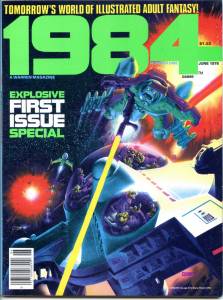
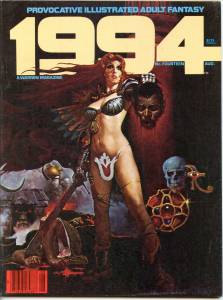
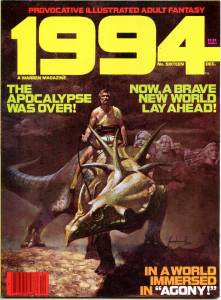
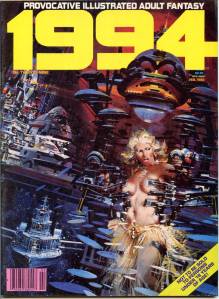
1984 was an American black and white science-fiction comic magazine published in New York City by Warren Publishing from 1978 to 19831984 was edited by Bill Dubay. The title of the magazine was changed to 1994 starting with issue #11 in February, 1980 based on a request by the estate of George Orwell. The magazine ceased publication with issue #29 in February, 1983 due to the bankruptcy of Warren Publishing.

Similar to its sister publications Eerie and Vampirella1984 featured numerous recurring series and characters. This included the following:

  • Mutant World (Artist: Richard Corben; Writer; Jan Strnad)
  • Ghita of Alizarr (Drawn and written by Frank Thorne)
  • Idi Amin (Artist: Esteban Maroto; Writer: Bill Dubay)
  • Rex Havoc (Artist: Abel Laxamana; Writer: Jim Stenstrum)
  • The Starfire Saga (Artist: Rudy Nebres; Writer: Bill Dubay)
  • Young Sigmond Pavlov (Artist: Alex Niño; Writer: Bill Dubay)

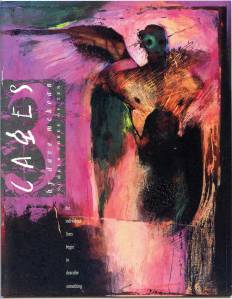
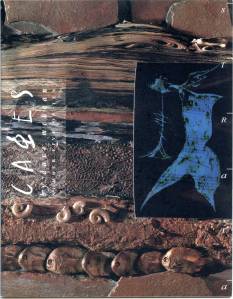
Cages (1990)

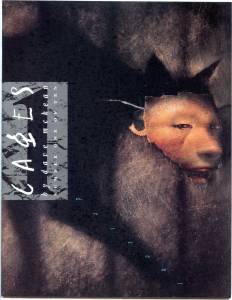
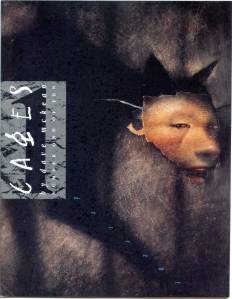
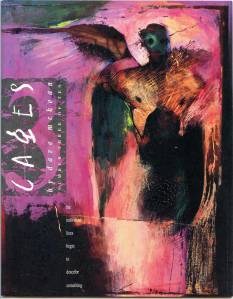
Cages is a ten-issue comic book limited series by Dave McKean. It was published between 1990 and 1996, and later collected as a single volume.

Cages is a story about artists, belief, creativity and cats, illustrated in a stripped-down pen and ink style.

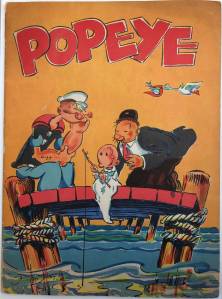
Popeye (1936)

Popeye Story book published in 1936 by King Features. Full color, oversized format 9 1/4-in. x 13-in. Bound in linen-like material. Published before the Feature Book series

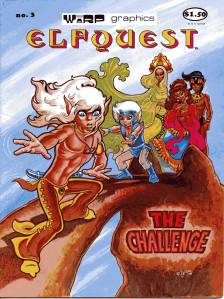
Elfquest – Warp Graphics (1978)

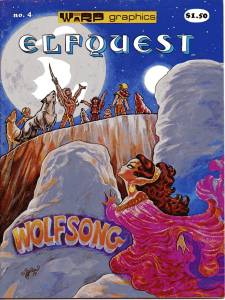
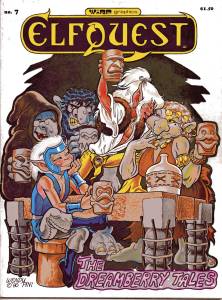
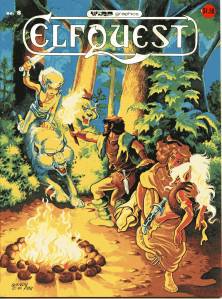
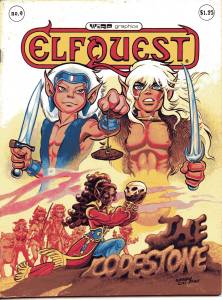
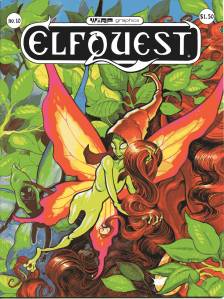
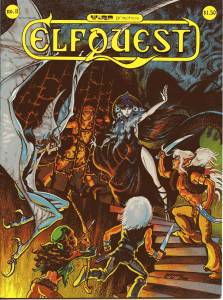
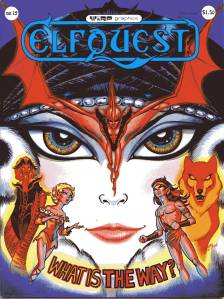
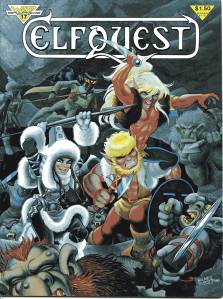
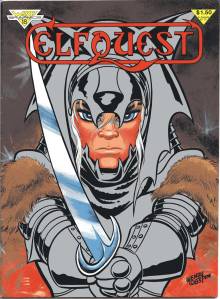
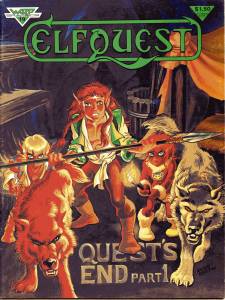
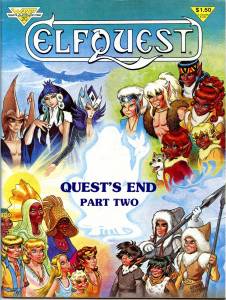
Elfquest (or ElfQuest) is a cult hit comic book property created by Wendy and Richard Pini in 1978. It is a fantasy story about a community of elves and other fictional species who struggle to survive and coexist on a primitive Earth-like planet with two moons. Several published volumes of prose fiction also share the same setting. Elfquest was one of the first comic book series to have a planned conclusion. Over the years Elfquest has been self-published by the Pinis through their own company Warp Graphics, then Marvel Comics,[ then the Pinis again, more recently DC Comics and then Dark Horse Comics.