In 1993, Deadpool received his own miniseries, titled The Circle Chase, written by Fabian Nicieza and penciled by Joe Madureira. It was a relative success and Deadpool starred in a second, self-titled miniseries written in 1994 by Mark Waid, pencilled by Ian Churchill, and inked by Jason Temujin Minorand Bud LaRosa. Waid later commented, “Frankly, if I’d known Deadpool was such a creep when I agreed to write the mini-series, I wouldn’t have done it. Someone who hasn’t paid for their crimes presents a problem for me.”
In The Circle Chase, Deadpool must make his way through a battalion of mercenaries in Sarajevo, Yugoslavia. Little does he know that Weapon X is lying in wait to take him down!
In July 2018, Laura to returned her to original moniker in a fourth volume of X-23 by writer Mariko Tamaki and artist Juann Cabal. Tamaki said, “This is a story about being in the very weird kind of family that someone like Laura/X-23 finds herself in. It’s about what it means to wrestle with legacy and identity when you were created to be a weapon and not someone with a birthday and a sister.”
House of M is a follow-up to the events of the “Planet X” and “Avengers Disassembled” storylines, in which the superheroScarlet Witch suffered a mental breakdown and tried to alter the fabric of reality to recreate her lost children. Scarlet Witch’s father, Magneto, and her twin brother, Quicksilver, played major roles in the series. Like the 1995–1996 “Age of Apocalypse” storyline, “House of M” replaced the Earth-616 as the main reality for a brief time until Scarlet Witch reverted it to normal. The events of the storyline were later indicated to have occurred on Earth-58163.
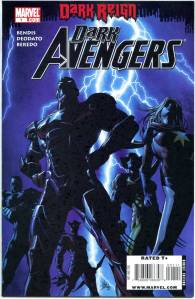
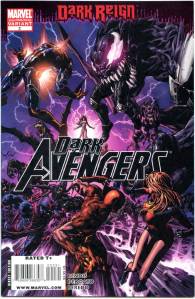
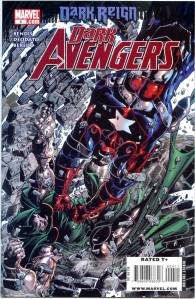
The series debuted with issue #1, dated January 2009, as part of a multi-series story arc entitled “Dark Reign.” In the premiere, writer Brian Michael Bendis and artist Mike Deodato (working from a continuity begun in a previous, company-wide story arc, “Secret Invasion,” involving an infiltration of Earth by the shape-shifting alien Skrulls and that race’s eventual defeat) chronicled the aftermath of the U.S. government’s disbanding of the federally sanctioned superhero team, the Avengers. Bendis described the thinking behind the team: “These are bad-ass, hardcore get-it-done types. They’ll close the door and take care of business and he’s dressing them up to make them something that the people want. This is in contrast to the changes Norman Osborn is shown making to the Thunderbolts, where, according to writer Andy Diggle, he turns that team into “something much more covert and much more lethal: his own personal hit squad”.
The series ended with Dark Avengers #16, at the culmination of the Siege storyline.
The Thunderbolts comic book was renamed Dark Avengers beginning with issue #175, but the creative team remained unchanged. Dark Avengers ended with issue #190.
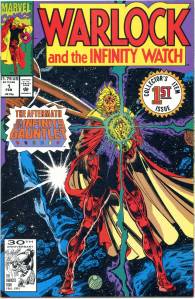
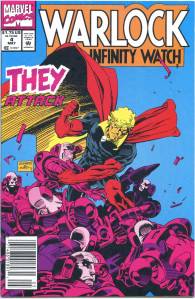
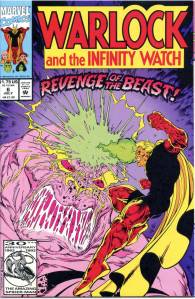
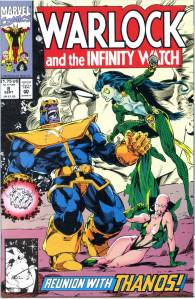
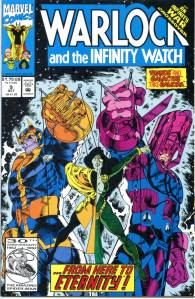
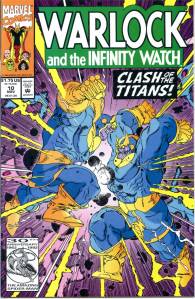
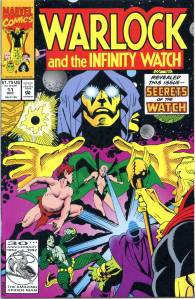
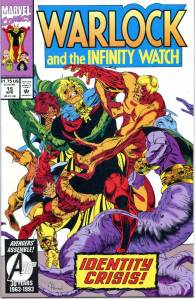
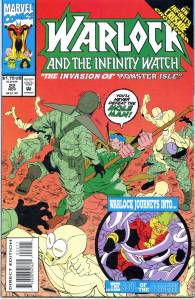
After saving the universe from Thanos and ultimately acquiring his prize, the Infinity Gauntlet, Adam Warlock finds himself on trial, judged by the very cosmic beings who supported him in the conflict. Presiding over the trial is the Living Tribunal, and the one making the case that Warlock is not fit to be the supreme master of the universe is Eternity. Eventually, the Living Tribunal rules against Warlock, and he is forced to surrender his godhood by dividing the six Infinity Gems.
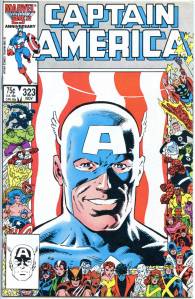
The 1980s included a run by writer Roger Stern and artist John Byrne. Stern had Rogers consider a run for President of the United States in Captain America #250 (June 1980), an idea originally developed by Roger McKenzie and Don Perlin. Stern, in his capacity as editor of the title, originally rejected the idea but later changed his mind about the concept. McKenzie and Perlin received credit for the idea on the letters page at Stern’s insistence. Stern additionally introduced a new love interest, law student Bernie Rosenthal, in Captain America #248 (Aug. 1980).
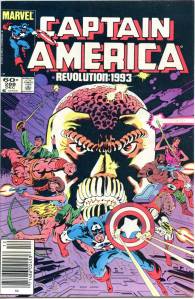
Writer J. M. DeMatteis revealed the true face and full origin of the Red Skull in Captain America #298-300, and had Captain America take on Jack Monroe, Nomad, as a partner for a time. Around this time, the heroes gathered by the Beyonder elect Rogers as leader during their stay on Battleworld in the 1984 miniseries Secret Wars. Homophobia is dealt with as Rogers runs into a childhood friend named Arnold Roth who is gay.
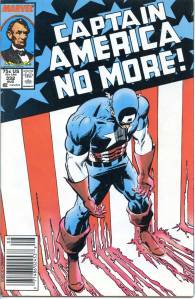
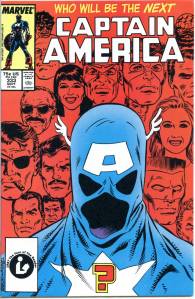
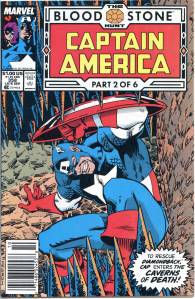
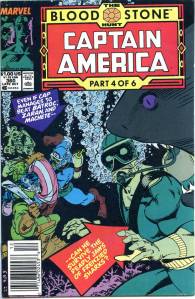
Mark Gruenwald became the writer of the series with issue #307 (July 1985) and wrote 137 issues for 10 consecutive years from until #443 (Sept. 1995) the most issues by any single author in the character’s history. Gruenwald created several new foes, including Crossbones and the Serpent Society. Other Gruenwald characters included Diamondback, Super Patriot, and Demolition Man. Gruenwald explored numerous political and social themes as well, such as extreme idealism when Captain America fights the anti-nationalist terrorist Flag-Smasher; and vigilantism when he hunts the murderous Scourge of the Underworld.
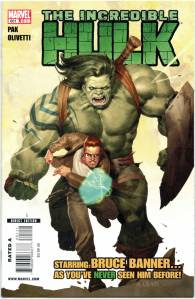
The Incredible Hulk returns as an ongoing series written by acclaimed PLANET HULK and WORLD WAR HULK scribe Greg Pak! Get ready for Bruce Banner as you’ve never seen him, the Son of Hulk in a whole new world of smash, and an insane new adventure that changes everything for everyone’s favorite Green Goliath!
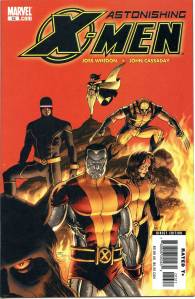
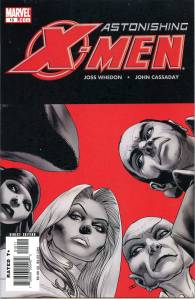
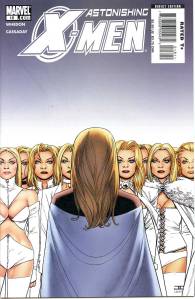
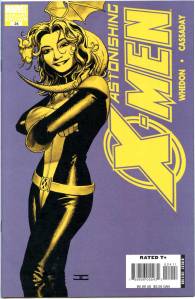
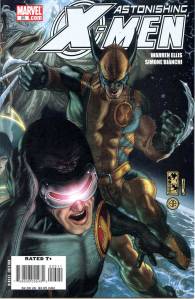
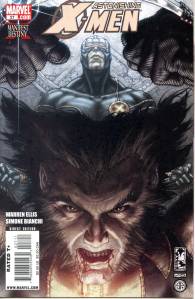
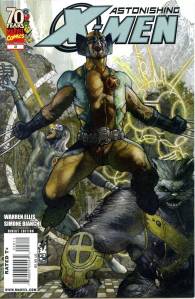
In 2004, Marvel used the title Astonishing X-Men for an ongoing X-Men series written by Joss Whedon and illustrated by John Cassaday. It is a continuation of Grant Morrison‘s New X-Men title and features a similar line-up of characters, including Cyclops and Emma Frost (as co-team leaders), Beast, Kitty Pryde, Colossus, Lockheed, and Wolverine. This team became the usual focus for most X-Men limited series published during Whedon’s run as well.
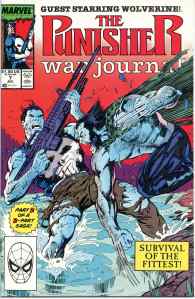
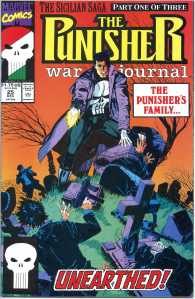
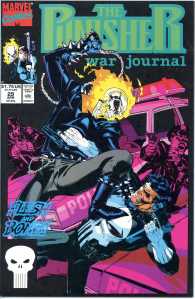
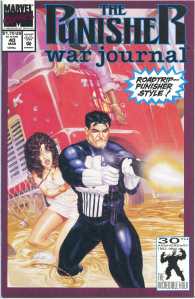
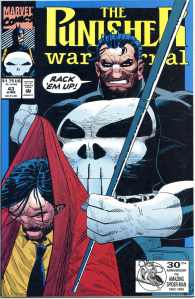
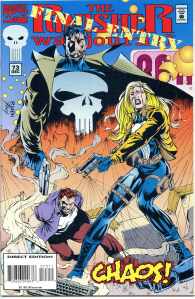
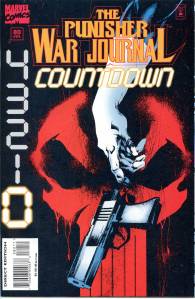
The first volume of The Punisher War Journal ran 80 issues, cover-dated November 1988 to July 1995. Originally written and penciled by Carl Potts, and inked by Jim Lee, who soon became series penciler, it changed creative teams with issue #25 (December 1990) to writer Mike Baron and penciler-inker Mark Texeira. Chuck Dixon took over as writer with #38 (January 1992), continuing with it to the final issue, except for #65-74 (April 1994 – January 1995) which were written by Steven Grant. Others associated with the title include multi-issue pencilers Tod Smith, Ron Wagner, John Hebert, Hugh Haynes, Melvin Rubi, and penciler-inker Gary Kwapisz.
Jim Scully was an adventurer whose plane went through a time warp in the Bermuda Triangle, marooning him and three companions in an alternate Earth where dinosaurs, primitives, and aliens co-existed. Scully and his three companions were eventually rescued and returned to their own world by the Thing of the Fantastic Four. He served in Doctor Druid‘s team of occult investigators the Shock Troop, alongside Sepulchre and N’Kantu, the Living Mummy.































 EHT Comics