X-Men Origins: Deadpool (2010)

Wade Wilson’s heard there’s a Deadpool movie in the works – and he’s determined to tell his own story before Hollywood screws it up. Deadpool even hires his own screenwriter, who manages to get the Merc With a Mouth to open up like never before-revealing not only his origin story, but shocking details you’ve never heard before.

Dead No More – The Clone Conspiracy (2016)

“Dead No More: The Clone Conspiracy” is a 2016 – 2017 Marvel Comics storyline starring Spider-Man. The story was notable for bringing long-dead Spider-Man supporting character Ben Reilly back to life. The storyline later led Reilly to reclaim the heroic Scarlet Spider mantle and appearing in his own comic book series.

Supernatural Thrillers (1972)

Supernatural Thrillers ran 15 issues (cover-dated December 1972 – October 1975). The title was one of four launched by Marvel Comics editor-in-chief Roy Thomas to form a line of science fiction and horror anthologies with more thematic cohesiveness than the company’s earlier attempts that decade, which had included the series Chamber of Darkness and Tower of Shadows. Whereas those titles generally presented original stories, these new books would instead adapt genre classics and other stories.
Issue #5 (August 1973) introduced the Living Mummy in a standalone story about an African tribal prince enslaved by Egyptians and mummified by an evil priest, who eventually reawakens in modern times. The character, created by writer Steve Gerber and penciler Rich Buckler, returned two issues later as the starring character in a generally 15-page solo series that ran from #7 to the final issue, #15 (June 1974 – October 1975). The cover logo during this time was “Supernatural Thrillers featuring The Living Mummy”.

Wolverine – The End (2003)

As part of Marvel‘s The End series the comic details Wolverine’s last adventure.  The story, written by Paul Jenkins, depicts Wolverine as an old man living in the Canadian wilderness facing his own mortality. Events depicted within Wolverine: The End have been contradicted in other works, which leaves the work’s status within continuity and a future canon uncertain.

Strange Tales (1970’s)

Doctor Strange was canceled with #183 (Nov. 1969). Four years later, Strange Tales resumed at its old numbering with #169 (Sept. 1973), which introduced the supernatural feature Brother Voodoo by writer Len Wein and artist Gene Colan. This lasted only to issue #173 (April 1974), with Brother Voodoo continuing briefly in the black-and-white Marvel horror-comics magazine Tales of the Zombie. This was followed by two different creative teams producing three stories of The Golem in four issues (#174–177), the second of these a fill-in monster-reprint issue.

The next feature was writer-artist-colorist Jim Starlin‘s take on Adam Warlock, picking up the character from the 1972–73 series Warlock (a.k.a. The Power of Warlock) and reviving him in Strange Tales #178 (Feb. 1975). Another creative high-water mark, this feverishly imaginative feature from Starlin, who had similarly reinvigorated Captain Marvel, introduced the Marvel characters Gamora, Pip the Troll and The Magus, and helped establish the mythos Starlin would mine in his many “Infinity” sagas of the 1990s. After issue #181 (Aug. 1975), the story would continue in Warlock #9 (Oct. 1975), picking up from the old series’ numbering. Strange Tales soldiered on with Doctor Strange reprints through issue #188 (Nov. 1976).

Star Wars: Doctor Aphra (2020)

With the Rebel Alliance back on the run after their defeat at the Battle of Hoth, it’s never been a more dangerous time for outlaws, scoundrels and the errant rogue archaeologist to make their way in the galaxy. But after a string of bad luck and near escapes, Doctor Aphra is back on the job!

What If V2 (1989)

From July 1989 to November 1998, Marvel published 114 monthly What If issues. The second series revisited and revised ideas from Volume 1. In Volume 2, stories could span multiple issues (the Volume 1 stories were contained within a single issue). Also, sometimes, the Volume 2 stories would offer multiple plots and endings. The reader could decide which to adopt. For example, in What If the War Machine Had Not Destroyed the Living Laser?, three endings were offered. The humorous aspect of Volume 1 was retained through Volume 2 culminating in issue #34, What If No One Was Watching the Watcher? which was humorous throughout. It contained mostly single page gags, with a few longer stories. Volume 2 contains a subtle crossover with the “Acts of Vengeance” storyline. In the pages of the mainstream Quasar, the hero pursues “The Living Laser” into the Watcher’s lair on the moon. He then flees through Uatu’s portal into other universes. In the corresponding month’s What if issue, “The Living Laser” had a cameo appearance as a streak of light. Later, Uatu directs “Quasar” to track down “The Living Laser” through several What If universes. Eventually, “Quasar” arrives in the New Universe, where he receives the Star Brand. The What if format became well known. By issue #87, direct reference to the plot divergence was not required. Instead, the issue cover art closely, but not exactly, resembled the corresponding mainstream story. The What if logo was enough to denote its “alternate universe” status. In issue #105, What If introduced Spider-Girl. The new character was popular enough for a spin off series. From this, the MC2 line of publications were developed.

New X-Men (2001)

In July 2001 during a revamp of the X-Men franchise, X-Men (vol. 2) was retitled to New X-Men starting with issue 114, featuring an ambigram logo. Along with these modifications, a new writer, Grant Morrison, was assigned to the title. These changes by the newly appointed Marvel Comics editor-in-chief, Joe Quesada, reflected his idea for flagship titles like X-Men to regain some of their former glory, as well as regaining critical acclaim.

Morrison’s tenure on the title dealt with Cyclops,  WolverinePhoenix,  BeastEmma Frost and Xorn. While the second squad of X-Men in Uncanny continued on as (now undercover) super heroes, Grant Morrison redirected these X-Men’s mission to that of teachers. Additionally, New X-Men artist Frank Quitely redesigned the look of the team, giving them sleek, leather / polyester outfits instead of their traditional superhero uniforms for a more contemporary look and feel.

Wolverine and the X-Men (2011)

During the 2011 crossover X-Men: Regenesis, Wolverine left Utopia with a group of X-Men and students. They moved back to Westchester, New York, where they founded the Jean Grey School for Higher Learning.

The initial issues of Wolverine and the X-Men mainly featured the Jean Grey School and its faculty and students. The main antagonist in the book was a new Hellfire Club made up of homicidal genius children, led by Kade Kilgore. Starting from issue #9 the series became a tie-in to the Avengers vs. X-Men event until issue #18, except for issue #17 which featured a standalone story. Starting from issue #19, the series became part of the Marvel NOW! event. According to writer Jason Aaron, the book would follow the events of issue #18, in which the character Broo was shot in the head, and would return to the same type of stories that they were doing before Avengers vs. X-Men. “This is our first Marvel NOW! issue, issue #19, so if anything we’re trying to get back to where we were before the ‘AvX’ madness. It picks up right after the events of 18. There were a lot of angry people on the Internet, which was great. It made my day.”. It was also said that Husk would leave the school and a new member will join the faculty who was later revealed to be Storm.

Ghost Rider V1 (1970’s)

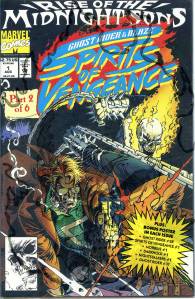
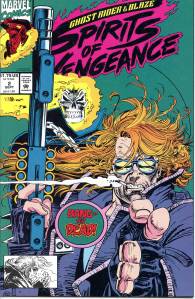
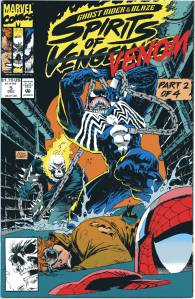
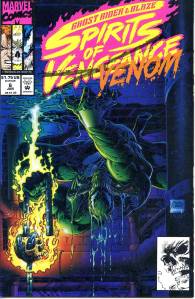
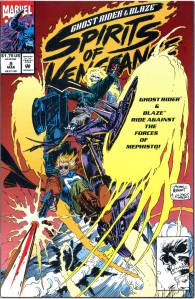
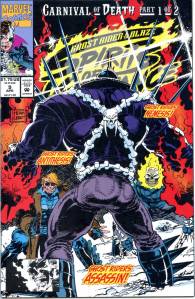
Ghost Rider is the name of several fictional supernatural antiheroes published by Marvel Comics. Marvel had previously used the name for a Western character whose name was later changed to Phantom Rider.

The first supernatural Ghost Rider is stunt motorcyclist Johnny Blaze, who, in order to save the life of his father, agreed to give his soul to “Satan” (later revealed to be an arch-demon named Mephisto). At night and when around evil, Blaze finds his flesh consumed by hellfire, causing his head to become a flaming skull. He rides a fiery motorcycle and wields trademark blasts of hellfire from his skeletal hands. He eventually learns he has been bonded with the demon Zarathos. Blaze starred in the series from 1972–1983.