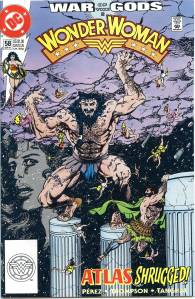
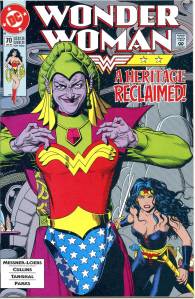
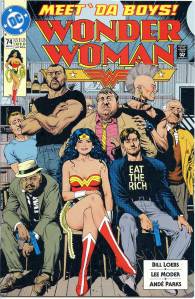
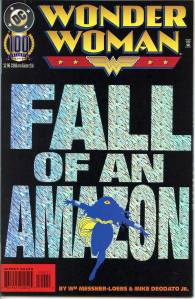
Wonder Woman V2 (1990’s)

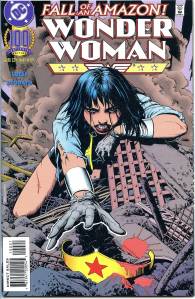
Wonder Woman is a warrior princess of the Amazons (based on the Amazons of Greek mythology) and is known in her homeland as Princess Diana of Themyscira. When outside her homeland, she is sometimes known by the secret identity Diana Prince. She is gifted with a wide range of superhuman powers and superior combat and battle skills. She possesses an arsenal of weapons, including the Lasso of Truth, a pair of indestructible bracelets, a tiara which serves as a projectile, and, in some stories, an invisible airplane.

Starting in Wonder Woman Vol 2 #51, The Amazons, who had revealed their presence to the world in Wonder Woman Vol 2 #50, are blamed for a series of murders and for the theft of various artifacts. The Amazons are then taken into custody, Queen Hippolyta is nowhere to be found and Steve Trevor is forced by General Yedziniak to attack Themyscira. These events lead to the “War of the Gods” occurring. The culprit of the murders, thefts and the framing of the Amazons is revealed to be the witch Circe, who “kills” Diana by reverting her form back into the clay she was born from. Later, Wonder Woman is brought back to life and together with Donna Troy, battles Circe and ultimately defeats her. Circe would later return by unknown means.

What If V2 (1989)

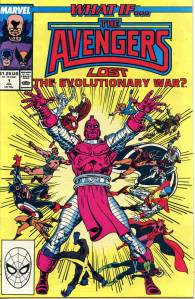
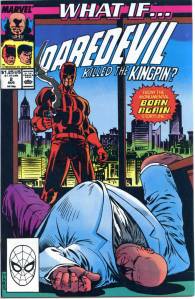
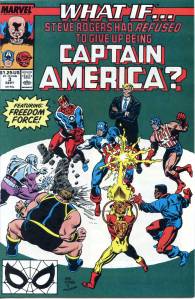
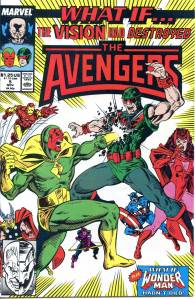
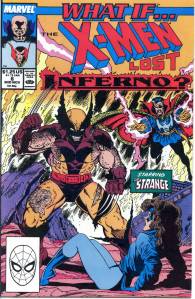
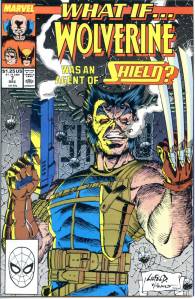
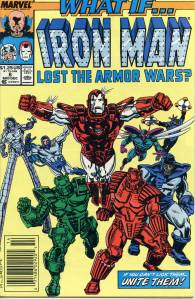
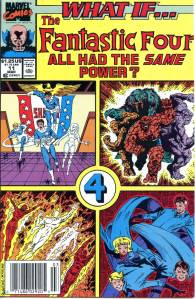
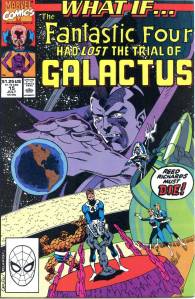
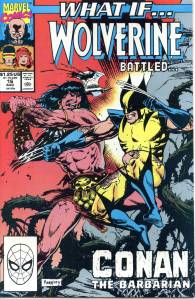
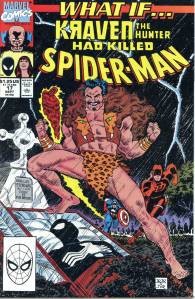
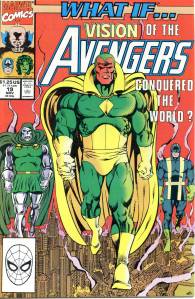
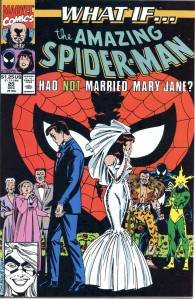
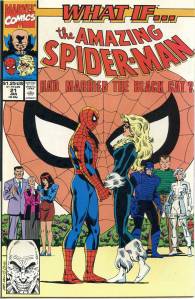
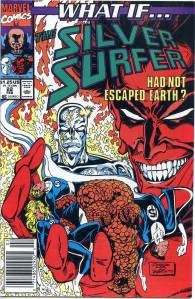
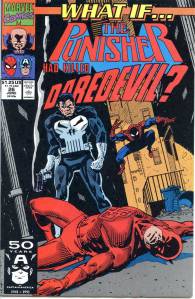
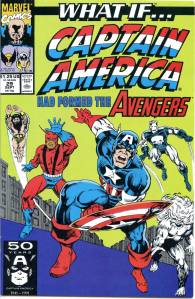
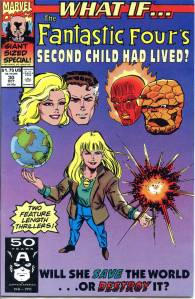
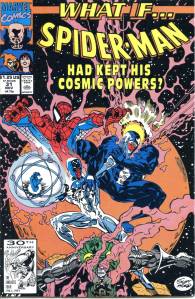
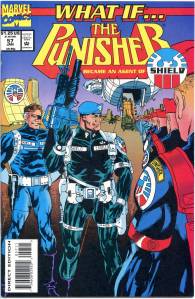
From July 1989 to November 1998, Marvel published 114 monthly What If issues. The second series revisited and revised ideas from Volume 1. In Volume 2, stories could span multiple issues (the Volume 1 stories were contained within a single issue). Also, sometimes, the Volume 2 stories would offer multiple plots and endings. The reader could decide which to adopt. For example, in What If the War Machine Had Not Destroyed the Living Laser?, three endings were offered. The humorous aspect of Volume 1 was retained through Volume 2 culminating in issue #34, What If No One Was Watching the Watcher? which was humorous throughout. It contained mostly single page gags, with a few longer stories. Volume 2 contains a subtle crossover with the “Acts of Vengeance” storyline. In the pages of the mainstream Quasar, the hero pursues “The Living Laser” into the Watcher’s lair on the moon. He then flees through Uatu’s portal into other universes. In the corresponding month’s What if issue, “The Living Laser” had a cameo appearance as a streak of light. Later, Uatu directs “Quasar” to track down “The Living Laser” through several What If universes. Eventually, “Quasar” arrives in the New Universe, where he receives the Star Brand. The What if format became well known. By issue #87, direct reference to the plot divergence was not required. Instead, the issue cover art closely, but not exactly, resembled the corresponding mainstream story. The What if logo was enough to denote its “alternate universe” status. In issue #105, What If introduced Spider-Girl. The new character was popular enough for a spin off series. From this, the MC2 line of publications were developed.
Robin V4 (2000’s)

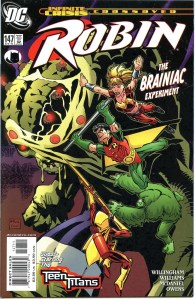
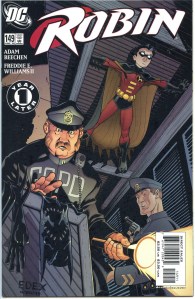
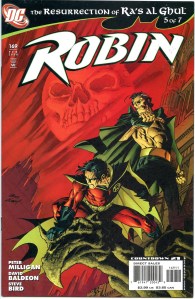
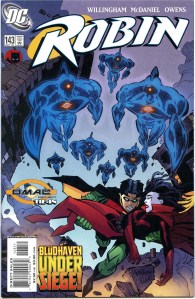
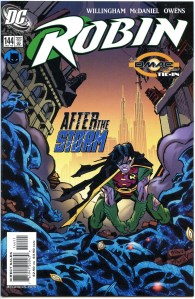
In 1993, the success of the three Robin miniseries led to the ongoing Robin series which ran 183 issues until 2009 and helped his transition from sidekick to a superhero in his own right. In 2004 storylines, established DC Comics character Stephanie Brown became the fourth Robin for a short while before the role reverted to Tim Drake. Batman’s son Damian Wayne then succeeds Drake as Robin in the 2009 story arc “Battle for the Cowl“, until his death in 2013 story. Following the 2011 continuity rebootThe New 52“, Tim Drake is revised as having assumed the title Red Robin out of deference to the deceased Jason Todd; Jason Todd, as he exists today, operates as the Red Hood and has been slowly repairing his relationship with Batman; Dick Grayson is Nightwing, and later fakes his death to become an undercover operative; and Stephanie Brown is introduced anew as Spoiler once again in the pages of Batman Eternal (2014).

New X-Men (2001)

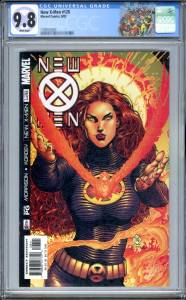
In July 2001 during a revamp of the X-Men franchise, X-Men (vol. 2) was retitled to New X-Men starting with issue 114, featuring an ambigram logo. Along with these modifications, a new writer, Grant Morrison, was assigned to the title. These changes by the newly appointed Marvel Comics editor-in-chief, Joe Quesada, reflected his idea for flagship titles like X-Men to regain some of their former glory, as well as regaining critical acclaim.

Morrison’s tenure on the title dealt with Cyclops,  WolverinePhoenix,  BeastEmma Frost and Xorn. While the second squad of X-Men in Uncanny continued on as (now undercover) super heroes, Grant Morrison redirected these X-Men’s mission to that of teachers. Additionally, New X-Men artist Frank Quitely redesigned the look of the team, giving them sleek, leather / polyester outfits instead of their traditional superhero uniforms for a more contemporary look and feel.

Razor (1992)

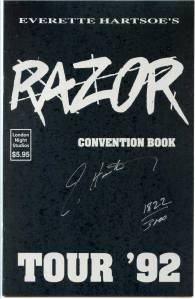
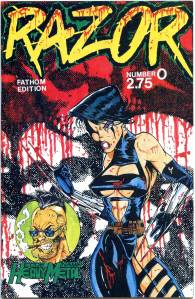
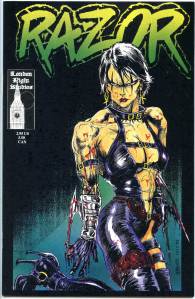
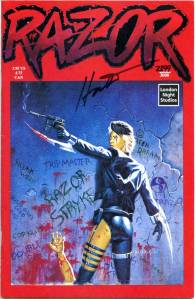
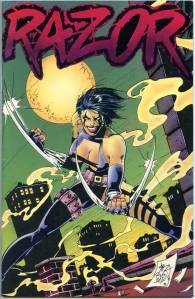
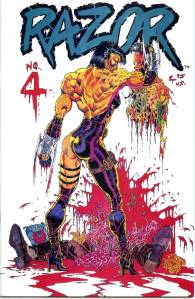
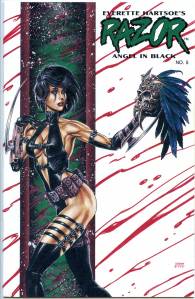
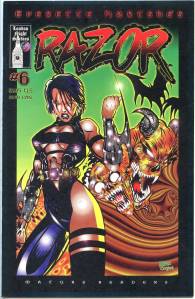
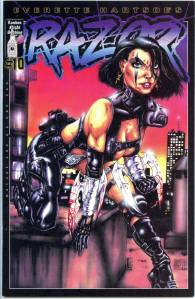
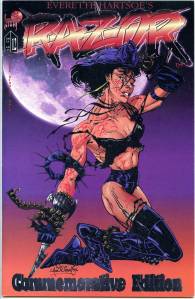
Everette Hartsoe first published Razor after founding London Night Studios with $1200 that he received in an income tax refund. With the book’s violent content and “pin-up friendly” artistic style, Razor is often considered part of the “bad girl” genre that rose in popularity during the early-mid-1990s. Razor Annual #1, published in 1993, contained the first appearance of Shi. Writer-artist Eric Powell‘s first paid job in comics was drawing three issues of Razor. The series also featured early artwork by Georges Jeanty. She had a Swimsuit Special in 1995 (a pin-up edition with various artists including Mike Wolfer).

Lobo: Infanticide (1992)

They’re galactic pariahs – the rejected and downtrodden scum of the universe: hated an despised by all. They’re the legion of illegitimate children of Lobo…and they’re none too fond of dear old daddy. But when Su, one of his daughters, unites a hundred spawn of Lobo to get revenge on their marauding pop, she must choose their plan of attack carefully, making sure that Lobo is in a certain place at a certain time…so she arranges to have Lobo drafted! Written by Keith Giffen and Alan Grant, with art and cover by Giffen.

Wolverine and the X-Men (2011)

During the 2011 crossover X-Men: Regenesis, Wolverine left Utopia with a group of X-Men and students. They moved back to Westchester, New York, where they founded the Jean Grey School for Higher Learning.

The initial issues of Wolverine and the X-Men mainly featured the Jean Grey School and its faculty and students. The main antagonist in the book was a new Hellfire Club made up of homicidal genius children, led by Kade Kilgore. Starting from issue #9 the series became a tie-in to the Avengers vs. X-Men event until issue #18, except for issue #17 which featured a standalone story. Starting from issue #19, the series became part of the Marvel NOW! event. According to writer Jason Aaron, the book would follow the events of issue #18, in which the character Broo was shot in the head, and would return to the same type of stories that they were doing before Avengers vs. X-Men. “This is our first Marvel NOW! issue, issue #19, so if anything we’re trying to get back to where we were before the ‘AvX’ madness. It picks up right after the events of 18. There were a lot of angry people on the Internet, which was great. It made my day.”. It was also said that Husk would leave the school and a new member will join the faculty who was later revealed to be Storm.

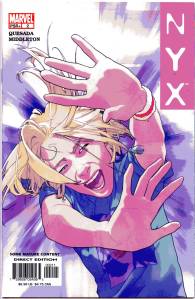
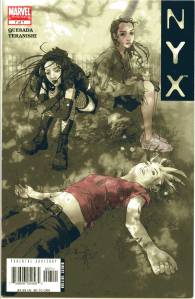
NYX – Vol. 1 (2003)

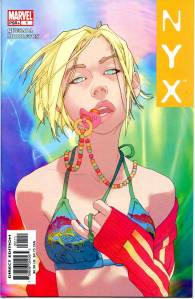
NYX is a limited series by Marvel Comics, consisting of seven issues, published between 2003 and 2005. It is written by Joe Quesada with art by Joshua Middleton (issues #1–4) and Rob Teranishi (issues #5-7). NYX stands for District X, New York City.

The series features homeless teenage mutants in New York City: time-freezing Kiden, shape-shifting Tatiana, body-shifting Bobby, his mysterious brother Lil Bro, the female-Wolverine X-23 and Cameron, a woman with no powers. The series featured the first comic book appearance of X-23, a character originally created on the X-Men: Evolution cartoon. Although the series was cancelled in 2005, 2009 saw the 6-issue miniseries, NYX: No Way Home.

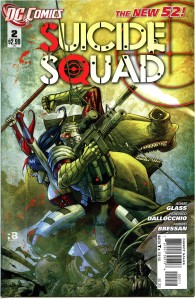
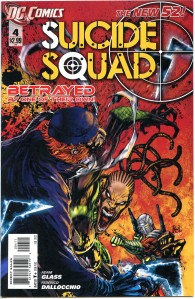
Suicide Squad – New 52 (2011)

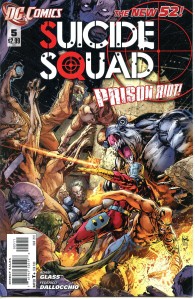
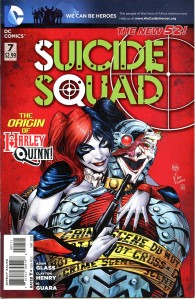
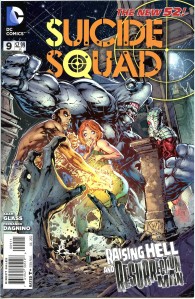
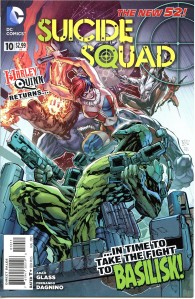
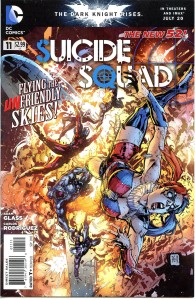
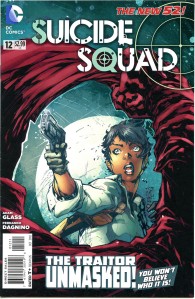
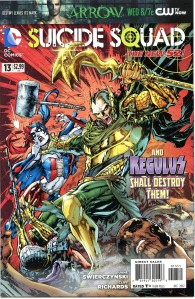
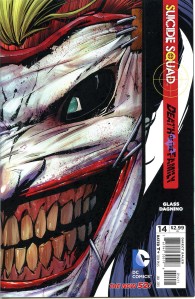
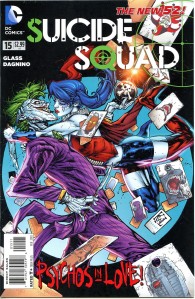
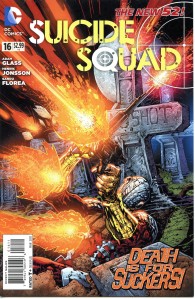
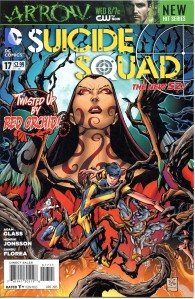
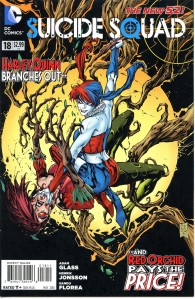
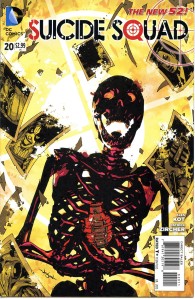
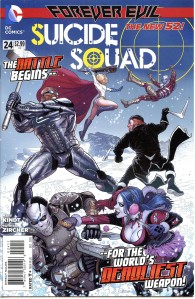
A new Suicide Squad title, written by Adam Glass with art by Federico Dallocchio and Ransom Getty, launched in September 2011 as part of The New 52 (a reboot of the DC Comics universe). Amanda Waller once again directs a crew of black ops agents on covert government missions, with Deadshot serving as the field team’s leader. The ongoing series is notable as serving as something of a showpiece for Batman villain Harley Quinn, and it has crossed over with other New 52 titles, including Resurrection ManGrifter, and Justice League of America’s Vibe.

Dune: House Atreides (2020)

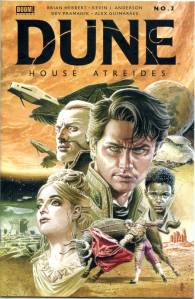
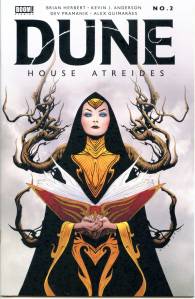
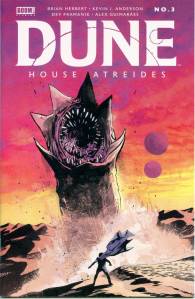
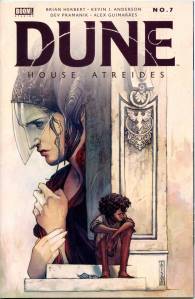
Welcome to the far future on the desert planet Arrakis where Pardot Kynes seeks its secrets. Meanwhile, a violent coup is planned by the son of Emperor Elrood; an eight-year-old slave Duncan Idaho seeks to escape his cruel masters; and a young man named Leto Atreides begins a fateful journey. These unlikely souls will come together as renegades and soon discover that fate has decreed they will change the very shape of history.