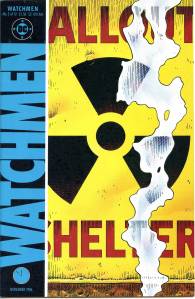
Watchmen (1986)

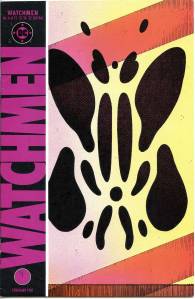
The series was created by a British collaboration consisting of writer Alan Moore, artist Dave Gibbons, and colorist John Higgins. Watchmen originated from a story proposal Moore submitted to DC featuring superhero characters that the company had acquired from Charlton Comics. As Moore’s proposed story would have left many of the characters unusable for future stories, managing editor Dick Giordano convinced Moore to create original characters instead.

Moore used the story as a means to reflect contemporary anxieties and to deconstruct and parody the superhero concept. Watchmen depicts an alternate history where superheroes emerged in the 1940s and 1960s and their presence changed history so that the United States won the Vietnam War and the Watergate scandal was never exposed. In 1985, the country is edging toward World War III with the Soviet Union, freelance costumed vigilantes have been outlawed and most former superheroes are in retirement or working for the government. The story focuses on the personal development and moral struggles of the protagonists as an investigation into the murder of a government-sponsored superhero pulls them out of retirement.
The Hobbit (1989)

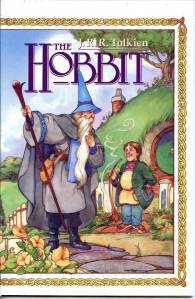
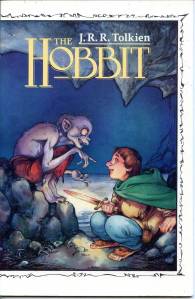
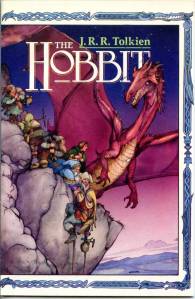
In 1989, Eclipse comics published a three-part comic book adaptation with a script by Chuck Dixon and Sean Deming and illustrations by David Wenzel.

  • Unwin Paperbacks released a one-volume edition in 1990, with cover artwork by the original illustrator David Wenzel.
  • Del Rey Books released a reprint collected in one volume in 2001. Its cover, illustrated by Donato Giancola, was awarded the Association of Science Fiction Artists Award for Best Cover Illustration in 2002.

Adventures of Superman (1990’s)

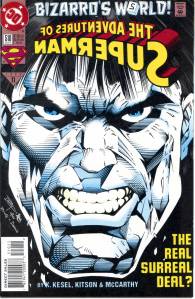
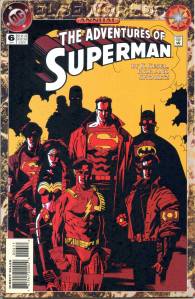
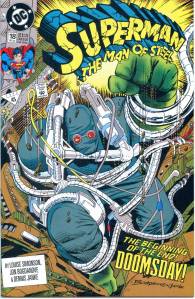
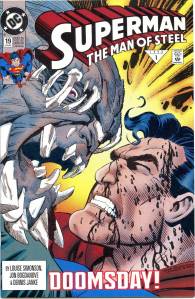
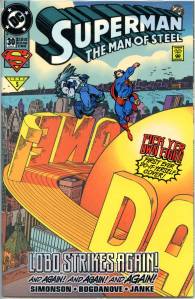
Writer/artist Dan Jurgens worked on the title from 1989–1991. Hank Henshaw, a character who would later become the Cyborg Superman, first appeared in issue #466 (May 1990). By the late 1980s, the plots of the Superman books were often linked. To coordinate the storyline and sequence of event, from January 1991 to January 2002, “triangle numbers” (or “shield numbers”) appeared on the cover of each Superman comic book. During these years, the Superman storylines ran with the story continuing through the titles SupermanAction Comics and later in two further series, Superman: The Man of Steel and Superman: The Man of Tomorrow.

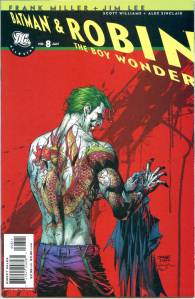
All Star Batman & Robin the Boy Wonder (2005)

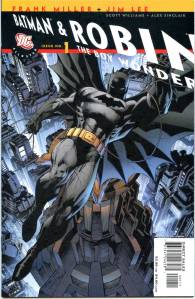
All Star Batman & Robin the Boy Wonder is an American comic book series written by Frank Miller and penciled by Jim Lee. It was published by DC Comics, with a sporadic schedule, between 2005[1] and 2008. The series was to be rebooted under the title Dark Knight: Boy Wonder in 2011, when both Miller and Lee were to finish the last six issues. The series retells the origin story of Dick Grayson, who became Batman‘s sidekick Robin.

This was the first series to be launched in 2005 under DC’s All Star imprint. These series are helmed by renowned writers and artists in the American comic book industry and attempt to retell some of the history of prominent DC Universe characters, but outside of DC Universe continuity, and not be restricted by it, in order to appeal to new and returning readers. Each title under the All Star imprint is set in its own continuity and separate universe.[2] According to Miller, the series takes place in the same continuity as Miller’s other Batman-related works, such as The Dark Knight Returns.
Since its initial publication, Miller’s writing of All Star Batman has consistently received an overwhelmingly negative critical response, though Lee’s artwork has been praised.

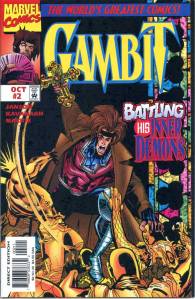
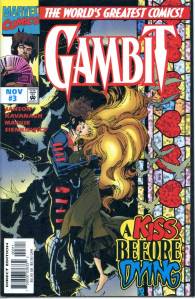
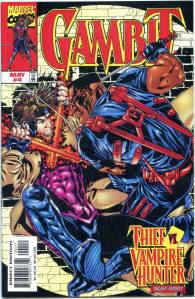
Gambit V3 (1997)

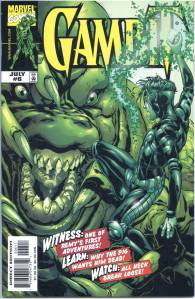
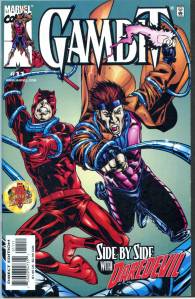
Gambit plays his cards right and vaults into his own kinetically charged solo adventures! He’s a lover and a thief, but what else does ragin’ Cajun Remy LeBeau get up to when he isn’t hangin’ wit’ de X-Men? Would you believe raiding lost temples of Doom? Clashing with the deadly X-Cutioner? Or teaming up with Sabretooth? Still, there’s always time for the ladies- like old friend Storm and his favorite cherie, Rogue. But who is Gambit’s gaseous green guardian?

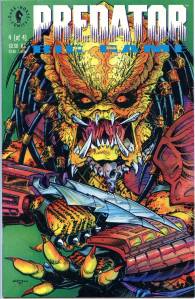
Predator: Big Game (1991)

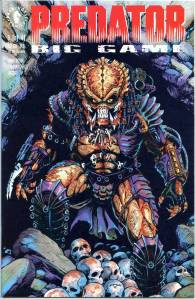
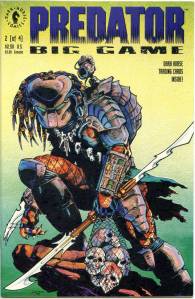
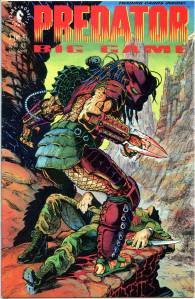
Predator: Big Game was written by John Arcudi, illustrated by Evan Dorkin, inked by Armando Gil, colored by Julia Lacquement, lettered by Kurt Hathaway and edited by Diana Schutz, with cover art by Chris Warner. The comic was later adapted as a novel of the same name by Sandy Schofield.

Big Game was eventually followed by a direct sequel, Predator: Blood on Two-Witch Mesa, which continued the adventurea of Big Game’s lead character.

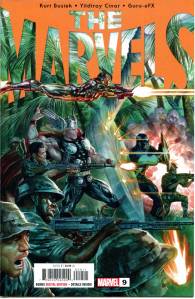
The Marvels (2021)

A thriller that will take readers across the Marvel Universe – and beyond! Kurt Busiek (MARVELS) is back, with the biggest, wildest, most sprawling series you’ve ever seen – telling stories that span decades and range from cosmic adventure to intense human drama, from street-level to the far reaches of space, starring literally anyone from Marvel’s first heroes to the superstars of tomorrow! Featuring Captain America, Spider-Man, the Punisher, the Human Torch, Storm, the Black Cat, the Golden Age Vision, Melinda May, Aero, Iron Man, Thor and more – and introducing characters destined to be fan-favorites! Get to know Kevin Schumer – an ordinary guy with some big secrets – and the mysterious Threadneedle! But who (or what) is KSHOOM?


Superman: The Man of Steel (1991)

Beginning an all-new monthly Superman title. Over a year ago, Superman fought the urge to become the Krypton Man…now the Krypton Man is born anew from the Earth’s fiery sun, where the Man of Steel buried the mysterious Kryptonian Eradicator! In the wake of the rebirth of his nemesis, Earth’s yellow sun begins turning red – causing natural disasters planetwide!

Creatures on the Loose V1 (1971)

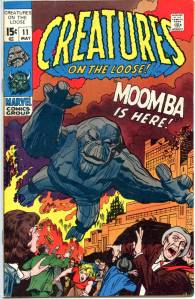
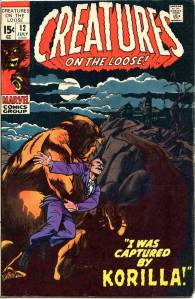
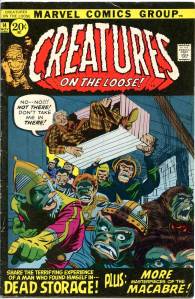
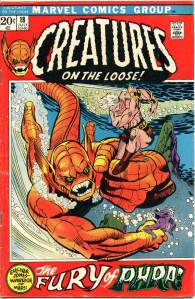
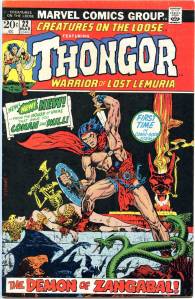
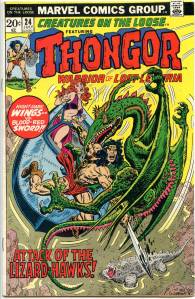
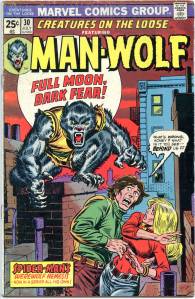
Tower of Shadows was re titled Creatures on the Loose with issue #10 (March 1971), this version led off with a seven-page King Kull story by Thomas and artist Bernie Wrightson. The book then became all-reprint until issue #16 (March 1972), when writer Thomas and the art team of Gil Kane and Bill Everett introduced the series “Gullivar Jones, Warrior of Mars”, starring an interplanetary Earthman created by author Edwin L. Arnold in his 1905 book Lieut. Gullivar Jones: His Vacation. Following another issue by Thomas and one by Gerry Conway, science fiction novelist George Alec Effinger wrote the final three installments.
Effinger continued as writer for the series that immediately followed, in issue #22 (March 1973): “Thongor! Warrior of Lost Lemuria!”, adapting asword-and-sorcery barbarian character created by author Lin Carter. Following writers Tony Isabella and Gardner Fox, Carter himself co-wrote (with Steve Gerber) the final two installments.

Thomas, Marvel’s associate editor at the time, recalled in 2007 that Thongor had been the company’s first choice when Marvel decided to published a licensed fantasy character, rather than the eventual hit Conan the Barbarian. Publisher Martin Goodman “authorized us to go after a character. I first went after Lin Carter’s Thongor, who was a quasi-Conan with elements of John Carter of Mars, partly became editor-in-chiefStan Lee liked that name the most … I soon got stalled by Lin Carter’s agent on Thongor (he was hoping I’d offer more than the $150 per issue I was authorized to offer), and I got a sudden impulse to go after Conan”.

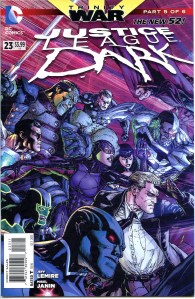
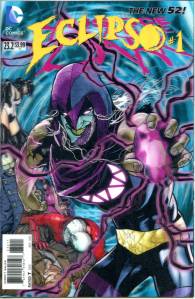
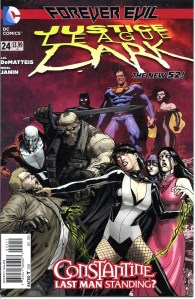
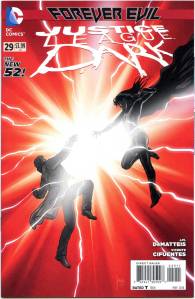
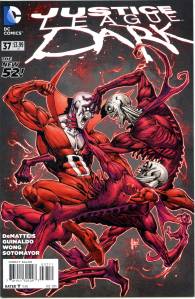
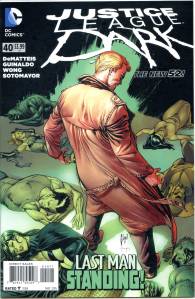
Justice League Dark (2011)

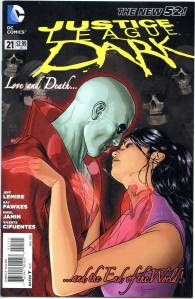
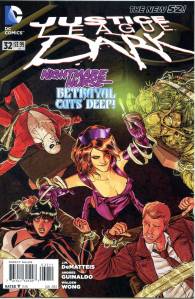
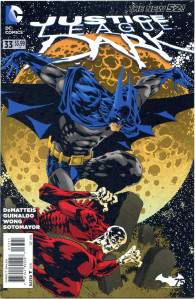
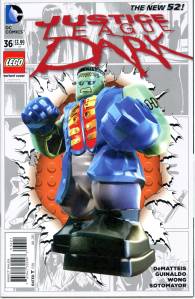
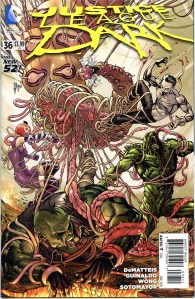
Justice League Dark was announced on May 31, 2011 as a First Wave title of The New 52 The title and team was created by Peter Milligan, with art by Mikel Janín. The title launched on September 28, 2011. The title brought several of DC Comics’ occult and offbeat characters, something which had been a trait of sister imprint Vertigo, back into the main DC Universe following Vertigo’s editorial change to publish purely new, creator owned content.