
Blade vol. 4 by writer Christopher Hinz and artist Steve Pugh, ran six issues, published by Marvel MAX in 2002. It was launched during the time that Blade II was in the theater.
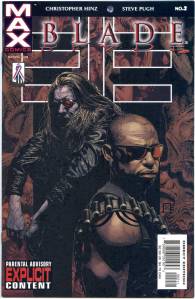
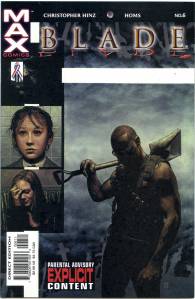
Blade vol. 4 by writer Christopher Hinz and artist Steve Pugh, ran six issues, published by Marvel MAX in 2002. It was launched during the time that Blade II was in the theater.
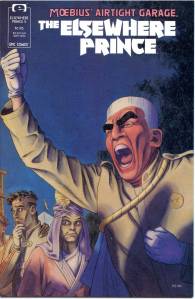
Explore the world of Moebius’s Airtight Garage in this limited series of all-new adventures! A young artist joins a group of soldiers who embark on the greatest adventure of their lives! Plus: an all-new tale of Major Grubert.



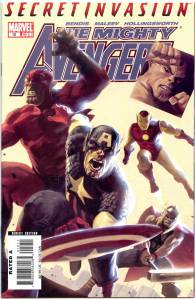
The team first appears in The Mighty Avengers #1 (May 2007), written by Brian Michael Bendis and pencilled and inked by Frank Cho. The roster, led by Ms. Marvel, also consisted of Ares, Black Widow, Iron Man, Sentry, Wasp and Wonder Man. In the wake of the superhero “Civil War“, Iron Man recruits Ms. Marvel as leader of the revamped team. Together they select the first roster.
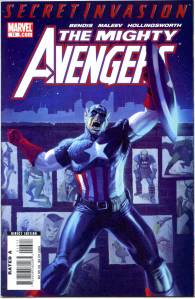
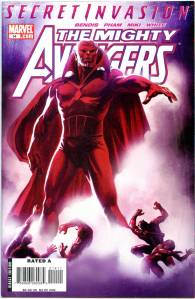
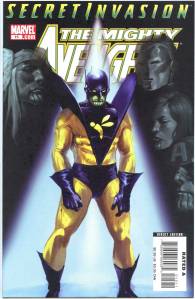
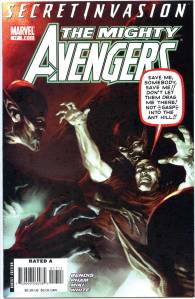
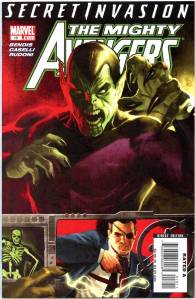
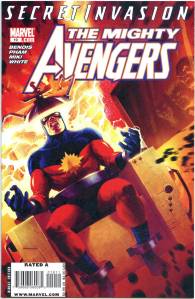
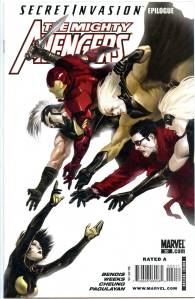
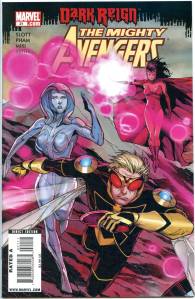
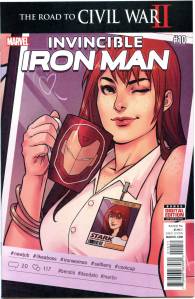
Exploding out of the pages of SECRET WARS, one of the most popular super heroes in the world gets a gigantic new series. From the creators that brought you ULTIMATE SPIDER-MAN comes new armor, new supporting cast, new villains and a new purpose that is going to tear itself across the entire Marvel Universe and beyond. Also, who are Tony’s biological parents? The quest begins here!
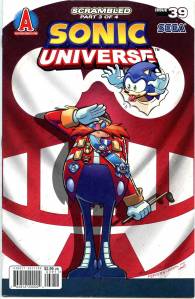
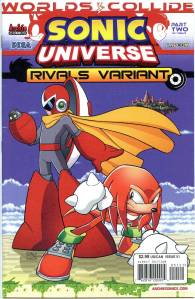
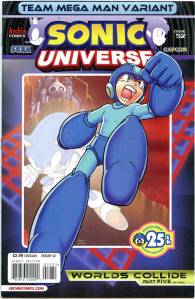
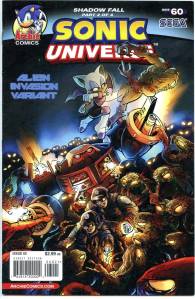
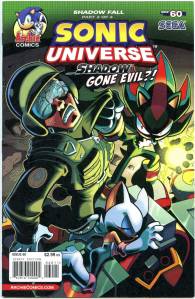
Sonic Universe was published by Archie Comics in association with Sega, based on the latter’s video game series of the same name. It is a spin-off of Archie’s Sonic comic book series, and shared continuity with that title. Sonic Universe centers on several characters featured throughout the franchise and comics, including Shadow the Hedgehog, Blaze the Cat, Silver the Hedgehog.

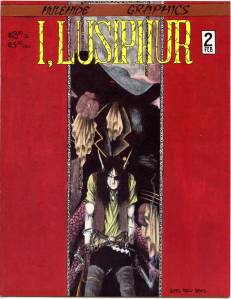
I, Lusiphur (December 1991 – December 1992) – Poison Elves (February 1993 – February 1995) Hayes originally self-published the series during the early 90s under his company Mulehide Graphics under the title of I, Lusiphur. The title was changed to Poison Elves because the similarity of Lusiphur to Lucifer led to the misconception that the series was Satanic in nature. Sales were reported to have increased significantly after the name change. Drew claimed in one of his Starting Notes that the name change was prompted by a letter from a teen-aged fan whose mother had thrown out his comics after finding I, Lusiphur comics amongst his collection.
The first ten issues of the Mulehide series were published in a larger magazine size format.
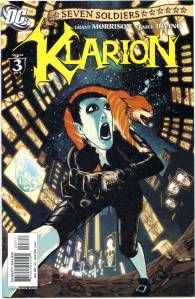
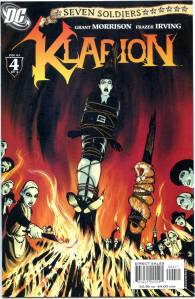
Grant Morrison is joined by artist Frazer Irving for the tale of Klarion! Deep in the bowels of a subterranean city, young dissenter Klarion has been handpicked to join the Submissionary Order, a group made up of brutal lawgivers who maintain order with the help of their familiars.
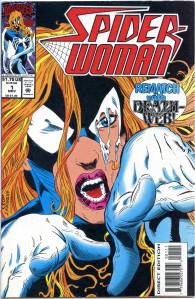
While she frequently appears as a member of a team, such as the Avengers West Coast and Force Works, Julia Carpenter starred in her own four-part Spider-Woman miniseries which explained her origin and the origin of her enemies, Death Web. As Spider-Woman, Carpenter has appeared as a starring character in Avengers West Coast and Force Works as well as a supporting character in the third Spider-Woman series, whose main character was Mattie Franklin.
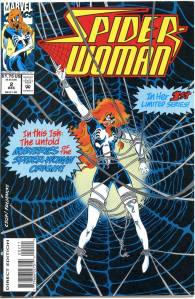
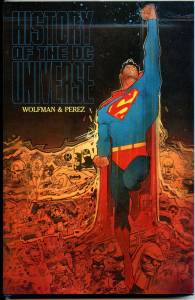
History of the DC Universe is a two-issue limited series created by Marv Wolfman and George Pérez, and published by DC Comics following the end of Crisis on Infinite Earths.
History of the DC Universe was an attempt to summarize the new history of the DC Universe to establish what was canonical after Crisis reformed the multiverse into a single universe. In the original planning of Crisis on Infinite Earths, the History would have formed the final two issues, following the destruction of the Multiverse at the Beginning of Time, but this was changed. History of the DC Universe had been one of the working titles for Crisis on Infinite Earths.
The loose plotline of the series involves the character Harbinger chronicling the past, present, and future of the post-Crisis DC Universe. The history is mostly told through one- and two-page splash pages, accompanied by brief prose. At the end of the series, Harbinger places the history in a capsule and launches it into space. In the subsequent series Millennium, this history is intercepted by the Manhunters and used against Earth’s superheroes.
The series was reprinted in hardcover by Graphitti Designs in 1988 with a painted cover by Bill Sienkiewicz. It featured additional material not included in the original series including an introduction by Wolfman and the following:
The series was reprinted as a trade paperback in 2002. It had a new cover painting by Alex Ross but did not include the bonus material from the 1988 hardcover edition.
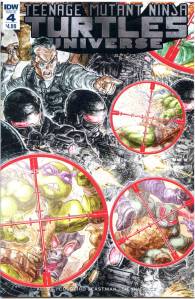
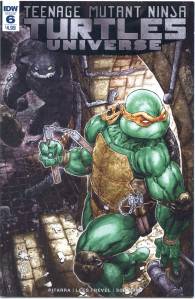
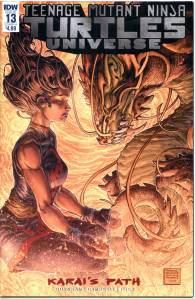
A spin-off series similar to Mirage’s Tales of the Teenage Mutant Ninja Turtles, which started publication on August 31, 2016. It serves as a narrative expansion to the main series with the introduction of crucial sideplots and additional characters. The series ended after 25 issues in August 2018.
 EHT Comics