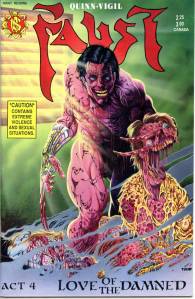
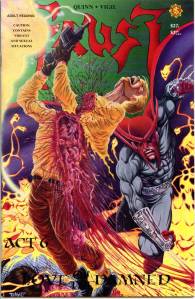
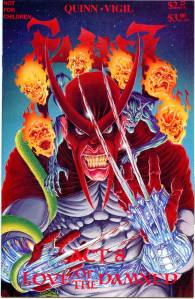
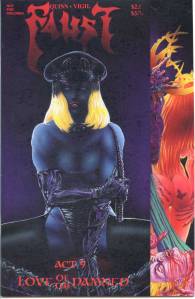
Alongside contemporaries Watchmen, The Crow, and The Dark Knight Returns, Faust was credited with popularizing the “deconstructed superheroes” genre and the notion that “comics aren’t just for kids.” One of the bestselling independent comics of the era, Faust issue 1 sold over 100,000 copies with later issues averaging 50,000 sales per issue, most of which sold through several printings and editions.
The series features strong graphic violence and sexual situations. The main series is known as Faust: Love of The Damned and debuted in 1988, with new issues published irregularly, roughly once a year, or sometimes every two years. David Quinn completed a script in 1996 (when writing the proposal to sell the film). The gap between issues grew wider with time. Issue 13 was published in 2005. It then took seven years for the authors to deliver the two last issues, 14 and 15, which concluded the story 25 years after the first episode.
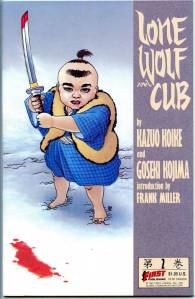
When Lone Wolf and Cub was first released in Japan in 1970, it became wildly popular (some 8 million copies were sold in Japan) for its powerful, epic samurai story and its stark and gruesome depiction of violence during Tokugawa era Japan.
Lone Wolf and Cub is one of most highly regarded manga due to its epic scope, detailed historical accuracy, masterful artwork and nostalgic recollection of the bushido ethos. The story spans 28 volumes of manga, with over 300 pages each (totaling over 8,700 pages in all). Many of the frames of the series are hauntingly beautiful depictions of nature, historical locations in Japan and traditional activities done in the classical ukiyo-e style.
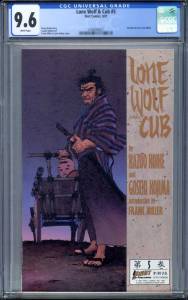
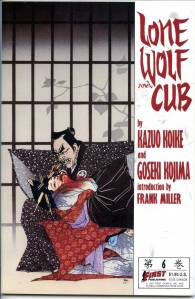
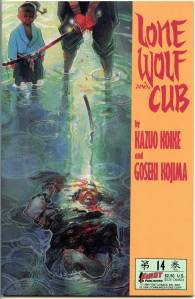
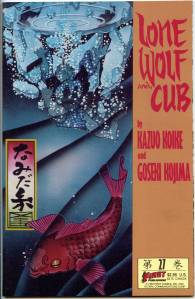
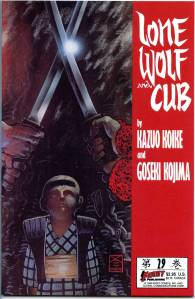
Lone Wolf and Cub was initially released in North America in a translated English edition by First Comics in 1987, as a series of monthly, comic-book-sized, square-bound prestige-format black-and-white comics containing between 64 and 128 pages, with covers by Frank Miller, and later by Bill Sienkiewicz, Matt Wagner, Mike Ploog, and Ray Lago. Sales were initially strong, but fell sharply as the company went into a general decline. First Comics shut down in 1991 without completing the series, publishing less than a third of the total series in 45 prestige-format issues.
Starting in September 2000, Dark Horse Comics began to release the full series in 28 smaller-sized trade paperback volumes, similar to the volumes published in Japan, completing the series with the 28th volume in December 2002. Dark Horse reused all of Miller’s covers from the First Comics edition, as well as several done by Sienkiewicz, and commissioned Wagner, Guy Davis, and Vince Locke to produce new covers for several volumes of the collections. In October 2012, Dark Horse completed the release of all 28 volumes in digital format, as part of their “Dark Horse Digital” online service.
What if “The Smoking Man” from X-Files was a real person, and his daughter found out what he did for a living? The daughter of an assassinated globalist kingpin breaks out of an internment camp and leads her fellow escaped prisoners in a battle against an elitist conspiracy of shadow governments, megabanks, and military juntas in this edgy and subversive thriller that channels Fight Club by way of Girl With The Dragon Tattoo.
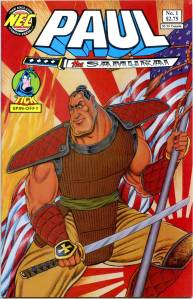
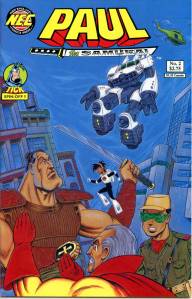
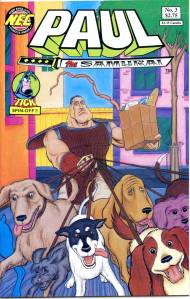
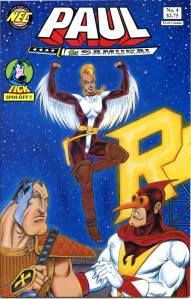
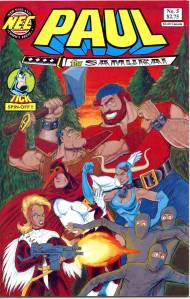
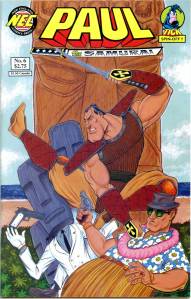
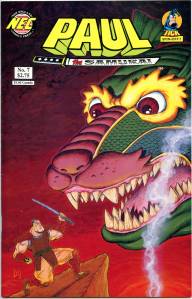
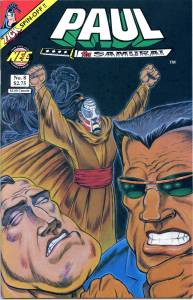
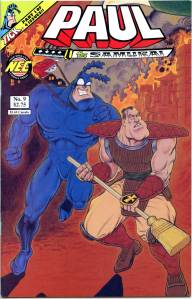
Paul begins adapting to the unusual barbarians inhabiting his new land. He confronts The Detroit Fury a metal monster created by a disgruntled American autoworker; He also encounters THE MITI MEN a superhero group sent from Japan to protect Japanese interests from the Detroit Fury’s attacks!
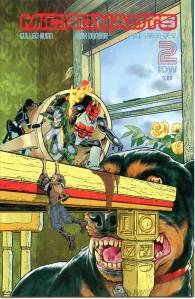
In 2015, IDW Publishing acquired publishing rights from Hasbro to produce new comic books for the Micronauts and Rom the Space Knight, both formerly popularized by Marvel as licensed properties. IDW released the first issue of their Micronauts series in April 2016, with scripts by Cullen Bunn and art by David Baldeon. The comic ran for eleven issues from 2016 to 2017. It was followed by two five-issue miniseries Micronauts: Wrath of Karza and Rom & the Micronauts which were released between 2017 and 2018.
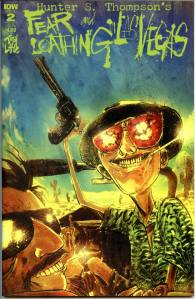
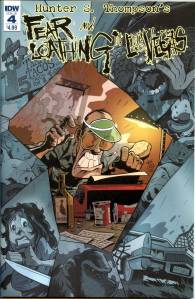
“What were we doing out here…? What was the meaning of this trip? Did I actually have a big red convertible out there on the street? Was I just roaming around these Mint Hotel escalators in a drug frenzy of some kind, or had I really come out here to Las Vegas to work on a story?” — Hunter S. Thompson, Fear and Loathing in Las Vegas
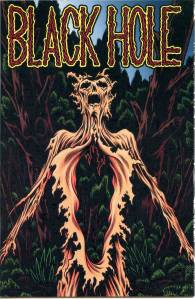
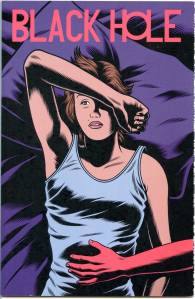
Set in the suburbs of Seattle during the 1970s, the story follows a group of teenagers who contract a mysterious sexually transmitted disease referred to as “the Bug, which causes them to develop bizarre unique physical mutations and subsequently become social outcasts, many of them running away from home to live in the nearby woodland.
Whiz Comics #2 (cover-dated Feb. 1940) was published in late 1939. The comic’s lead feature introduced audiences to Billy Batson, an orphaned boy who, by speaking the name of the ancient wizard Shazam, is struck by a magic lightning bolt and transformed into the adult superhero Captain Marvel. Shazam’s name was an acronym derived from the six immortal elders who grant Captain Marvel his superpowers: Solomon, Hercules, Atlas, Zeus, Achilles and Mercury.
In addition to introducing the main character, his alter ego, and his mentor, Captain Marvel’s first adventure in Whiz Comics #2 also introduced his archenemy, the evil Doctor Sivana, and found Billy Batson talking his way into a job as an on-air radio reporter with station WHIZ. Captain Marvel was an instant success, with Whiz Comics #2 selling over 500,000 copies. By 1941, he had his own solo series, Captain Marvel Adventures, while he continued to appear in Whiz Comics, as well as periodic appearances in other Fawcett books, including Master Comics.
Captain Marvel Adventures #115 CGC 7.5 Off-White to White $495
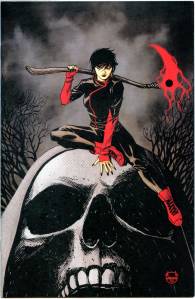
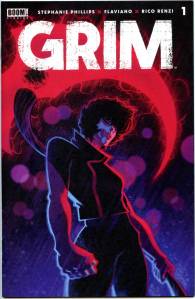
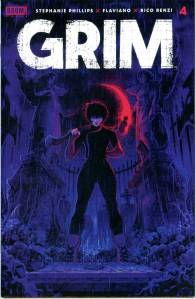
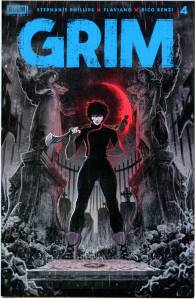
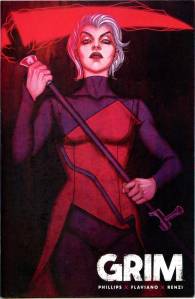
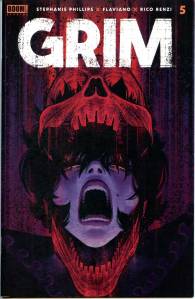
Jessica Harrow is dead. But her journey has only just begun! Discover the world of the afterlife, where Jessica has been recruited as a Reaper, tasked with ferrying countless souls to their final destination. But unlike the rest of the Reapers, she has no memory of what killed her and put her into this predicament. In order to unravel the mystery of her own demise, she’ll have to solve an even bigger one – where is the actual GRIM REAPER?
Glamourpuss is a Canadianindependent comic book written and illustrated by Dave Sim which was published from April 2008 to July 2012 and ran for 26 issues. The comic was published bimonthly, with 24 pages of story and art, and back issues remaining available throughout the comic’s print run. The premise of the book is threefold: a parody of fashion magazines, a history of photorealism in comics, and a surrealsuper-heroine comic.


























 EHT Comics