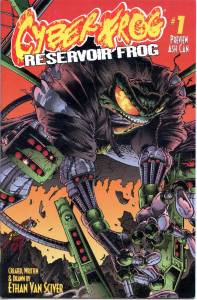
Cyberfrog: Resevoir Frog (1996)

Cyberfrog attacks a band of cybernetic insects known as the Swarm who murdered a young couple in their apartment. As the Swarm gain the advantage Cyberfrog finds two large cannons have appeared on his arms. Unsure of the origins of the weapons Cyberfrog quickly drives the Swarm away. Meanwhile, the spirit of Ben Riley appears to a suicidal teen named Yoshi and offers Yoshi his artifact. Later, the Swarm have assembled underground and rally together, vowing to rid the streets of those who created and abandoned them; Traffik. Heather arrives at Cyberfrog’s apartment shortly before the Swarm attacks in full force.

A large spacecraft emerges from a swamp and flies away as the Swarm surrounds Cyberfrog’s apartment and begins their attack. Cyberfrog has again found himself bearing powerful weapons. The leader of the Swarm kills the leader of Traffik, and Ben passes his artifact to Yoshi, christening him as Dragon-Fly. Cyberfrog engages the Swarm in a heated battle and is eventually overwhelmed. Heather investigates the battle and is targeted by the Swarm. Cyberfrog jumps in front of the shots meant for Heather and is heavily wounded.The spacecraft from the swamp suddenly arrives at the battle, kills all members of the Swarm and informs Heather that it is Cyberfrog’s mother.
XYZ Comics (1972)

XYZ Comics —“The Last Word in Comics!”— was first published in 1972. This classic underground comic book leads off with “Cubist Be Bop Comics,” a stream-of-consciousness tour de force lasting eight-pages. “Girls, Girls, Girls” follows, Robert Crumb’s analytic look at female anatomy that results from reducio absurdem. Several short pieces featuring Bo Bo Bolinski, “Comical Comics,” Boingy Baxter, John Q. Public and the tongue-in-cheek nostalgia of “Remember Keep on Truckin’?” are followed by the autobiographical “The Many Faces of R. Crumb.” XYZ ends withRobert’s “Fuzzy the Bunny,” a thinly-disguised piece about his older brother Charles, who suffered from mental illness (as seen in theTerry Zwigoff documentary Crumb).

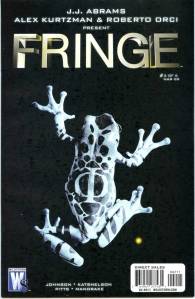
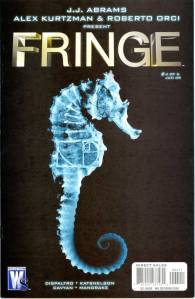
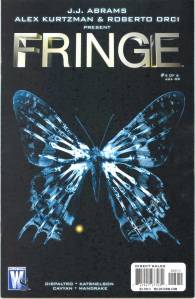
Fringe (2008)

FBI Agent Olivia Dunham, brilliant scientist Walter Bishop and his estranged son Peter investigate the world of “fringe science” (telepathy, time travel, etc.) following suspicions that the large scientific research company, Massive Dynamic, is experimenting on the general public.

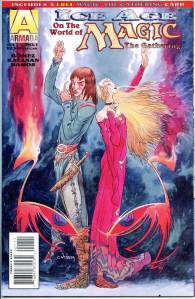
Magic the Gathering – Ice Age (1995)

“The Twilight Kingdom” – Set in the world of Dominia, this series of adventures is set during a time in history when glaciers and snow covered most of the world. Closely tied to the release of the Ice Age expansion deck for The Gathering, published by Wizards of the Coast early in 1995. Written by Jeff Gomez, with art by Rafael Kayanan and Rodney Ramos. Painted cover by Charles Vess.

Satanika V2 (1996)

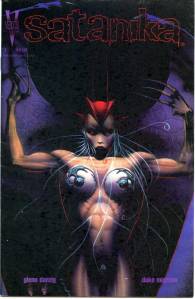
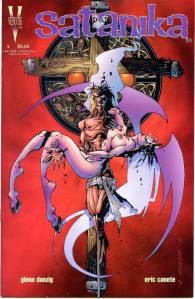
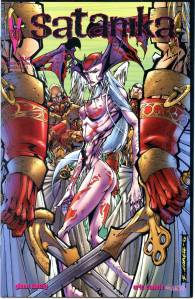
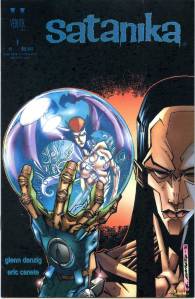
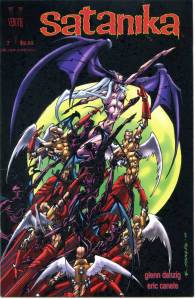
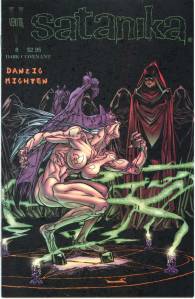
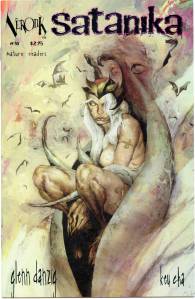
2nd Series. Satanika is a comic book character created by Glenn Danzig that first appeared in Satanika #0. Satanika was described as a demoness with some succubus-like aspects, but generally did not have a true succubus aspect to her. Through the series Satanika indulged in her sexual appetites and attracted a wide variety of attention from other demons and angels which eventually brought about her downfall.
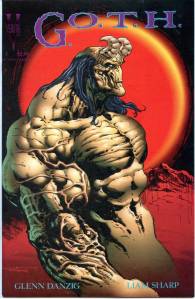
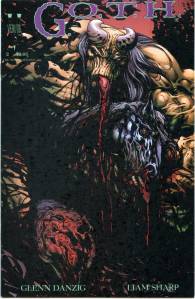
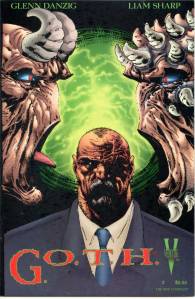
G.O.T.H. (1995)

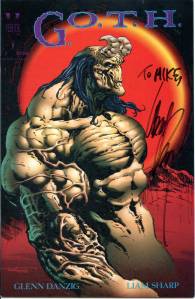
Liam Sharp, best known for his work on the Hulk and Deaths Head II and Glenn Danzig bring you the story of a covert scientific experiment that becomes uncontrollable. G.O.T.H. (Government Operation Total Hate) is the perfect blend of government intrigue and genetic horror. G.O.T.H. is a three issue mini-series with covers and interiors by Liam Sharp and story by Glenn Danzig.

Red Room (2021)

Aided by the anonymous dark web and nearly untraceable cryptocurrency, a criminal subculture has emerged. It livestreams murders as entertainment. Who are the killers? Who are the victims? Who is paying to watch? How to stop it? Red Room is constructed as a series of interconnected stories, shining a light on the characters who exist in the ugliest of corners in cyberspace. Piskor cuts the graphic horror with his sharp sense of humor, gorgeous cartooning, and dynamic storytelling. Red Room peels back the curtain on the side of humanity few of us knew existed, let alone understood.

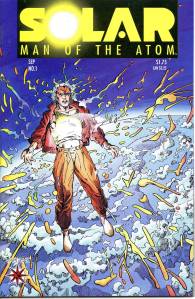
Solar, Man of the Atom (1991)

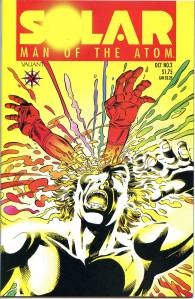
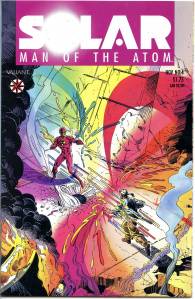
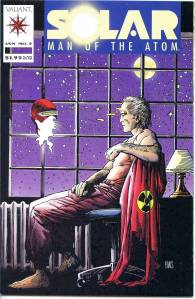
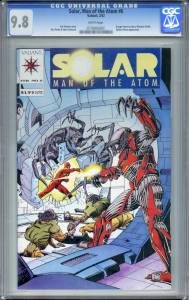
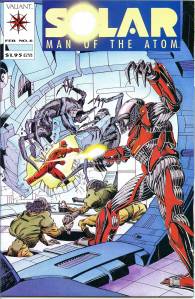
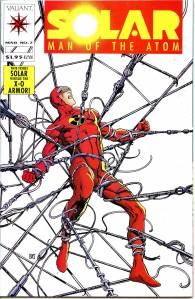
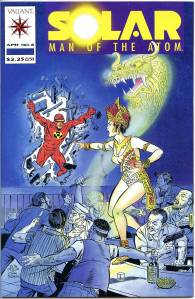
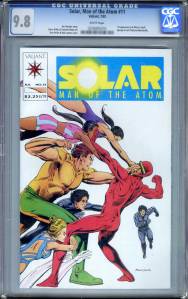
Valiant’s Solar, Man of the Atom began with three multi-part stories all written by Jim Shooter: “Alpha and Omega” with artwork by Barry Windsor-Smith and Bob Layton, spanned the first ten issues and told of the origin story of how the protagonist, Phil Seleski, became Solar, until the time he accidentally destroys the world; “Second Death”, with artwork by Don Perlin, Bob Layton and Thomas Ryder, spanned the first four issues and tells of Seleski’s attempt to prevent another version of himself from destroying the world; “First Strike”, with artwork by Don Perlin and Stan Drake, spanned issues #5 to #8 and follows Solar as he fights spider aliens. These first year stories included first appearances by Eternal Warrior, the Harbinger FoundationGeomancers, and the X-O Manowar armor – all of which would be spun off into their own series.

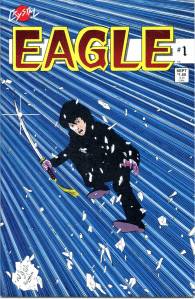
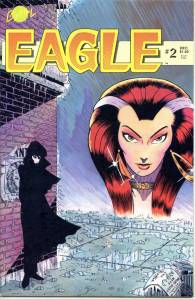
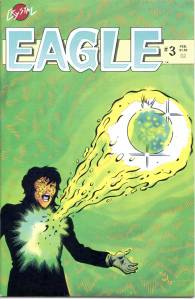
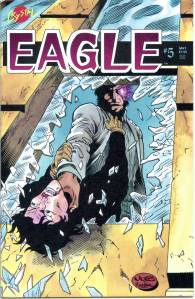
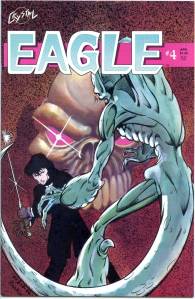
Eagle (1986)

Eagle is a black-and-white indie comic book series which originated in 1986 by artists Neil Vokes and Rich Rankin. Most issues were written by Jack Herman, although some were written by Herman, Vokes and Rankin.[2] It was originally published by its creators as Crystal Comics (Crystal Publications), then by Apple Comics. Initially the Eagle series ran for 23 issues, ending in 1989; the last 7 issues were published by Apple Comics. The series achieved a cult following. It was revived in 2016 by publisher American Mythology Productions and again features art by Vokes and writing by Herman.

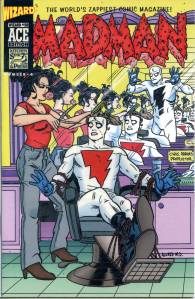
Madman – Kitchen Sink/Tundra (1993)

Created by Mike Allred, the character first appeared in Creatures of the Id (Oct. 1990). Frank Einstein was born Zane Townsend, an agent of the Tri-Eye Agency. Townsend was killed in a car accident, then stitched back together and brought to life by two scientists, Dr. Egon Boiffard and Dr. Gillespie Flem. This resurrection left him amnesiac, and the resurrected John Doe was named after Boiffard’s artistic and scientific heroes, Frank Sinatra and Albert Einstein, respectively. The procedure left Frank with supernatural reflexes and a slight degree of precognitive and empathic power; however, he remembers nothing about his former life, but faint, troubling memories relating to his death. Madman’s costume is based on the only thing he can clearly remember: a fascination with a comic book character called Mr. Excitement.