Strange Tales (Silver Age)

Strange Tales switched to superheroes during the Silver Age of Comic Books, retaining the sci-fi, suspense and monsters as backup features for a time. Strange Tales‘ first superhero, in 12- to 14-page stories, was the Fantastic Four‘s Human Torch, Johnny Storm, beginning in #101 (Oct. 1962). Here, Johnny still lived with his elder sister, Susan Storm, in fictional Glenview, Long Island, New York, where he continued to attend high school and, with youthful naivete, attempted to maintain his “secret identity” (later retconned to reveal that his friends and neighbors knew of his dual identity from Fantastic Four news reports, but simply played along).

The title became a “split book” with the introduction of sorcerer Doctor Strange, by Lee and artist Steve Ditko. This 9- to 10-page feature debuted in #110 (July 1963), and after an additional story and then skipping two issues returned permanently with #114. Ditko’s surrealistic mystical landscapes and increasingly head-trippy visuals helped make the feature a favorite of college students, according to Lee himself. Eventually, as co-plotter and later sole plotter, in the “Marvel Method“, Ditko would take Strange into ever-more-abstract realms, which yet remained well-grounded thanks to Lee’s reliably humanistic, adventure/soap opera dialog. Adversaries for the new hero included Baron Mordo introduced in issue #111 (Aug. 1963) and Dormammu in issue #126 (Nov. 1964). Clea, who would become a longtime love interest for Doctor Strange, was also introduced in issue #126.

Doctor Strange V2 (1980’s)

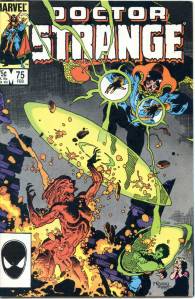
Strange met his allies Topaz in #75 (Feb, 1986) and Rintrah in #80 (December 1986). The series ended with a cliffhanger as his home, the Sanctum Sanctorum, was heavily damaged during a battle. Among the losses was Doctor Strange’s entire collection of mystic books and other important artifacts. As a consequence, Strange was now considerably weaker and several spells designed to protect humanity from vampires and the evil serpent god Set expired.
The title was discontinued so that the character’s adventures could be transferred to another split book format series. Strange Tales vol. 2, #1-19 (April 1987 – Oct. 1988) was shared with street heroes Cloak and Dagger. This new Doctor Strange series resolved Strange’s quest to reclaim his power and missing artifacts, as well as resurrecting the Defenders, who had died in the last issue of that team’s title.

Doctor Strange V2 (1974)

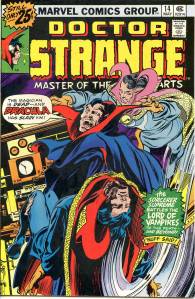
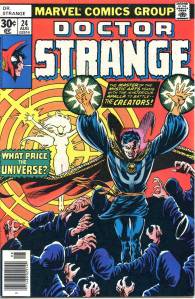
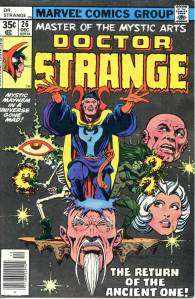
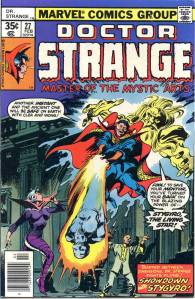
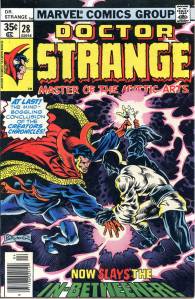
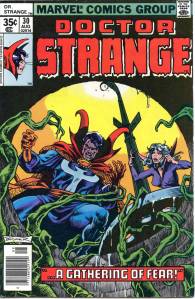
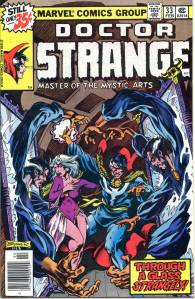
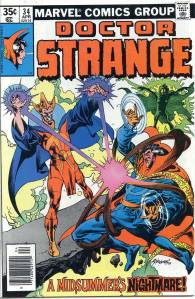
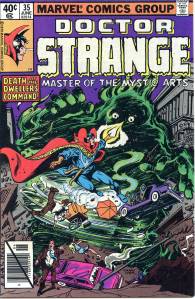
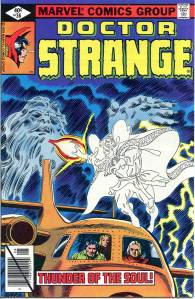
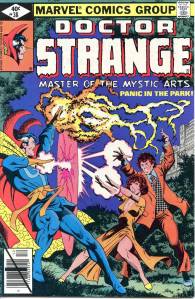
Doctor Strange: Master of the Mystic Arts, also known as Doctor Strange vol. 2, ran 81 issues (June 1974-February 1987). Doctor Strange #14 featured a crossover story with The Tomb of Dracula #44, another series which was being drawn by Gene Colan at the time. In Englehart’s final story, he sent Dr. Strange back in time to meet Benjamin Franklin. In 2010, Comics Bulletin ranked Englehart’s work on Doctor Strange with artists Brunner and Colan ninth on its list of the “Top 10 1970s Marvels.”

Midnight Sons Unlimited (1990’s)

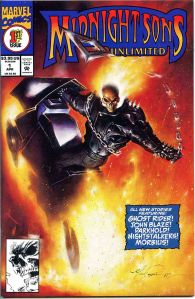
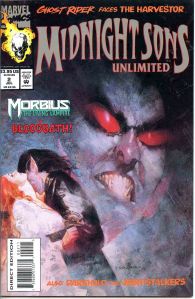
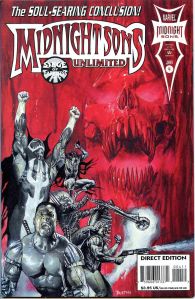
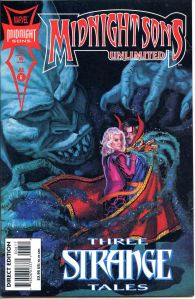
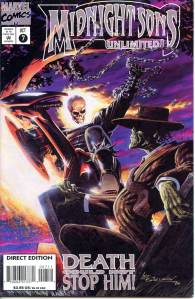
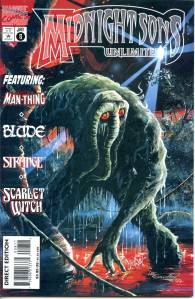
The Midnight Sons is fictional team of supernatural superheroes in the Marvel Comics universe. Including Hellstorm, Jennifer Kale, Morbius, Werewolf by Night, and Ghost Riders Danny Ketch and Johnny Blaze, the team first appeared in Ghost Rider (vol. 2) #28 (August 1992). From December 1993–August 1994, Marvel branded all stories involving the group with a distinct family imprint and cover treatment.

Doctor Strange V5 (2018)

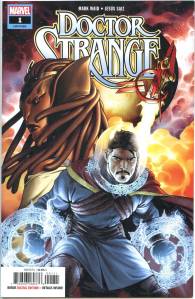
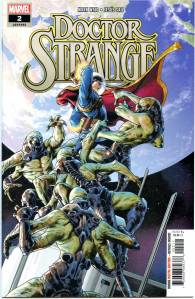
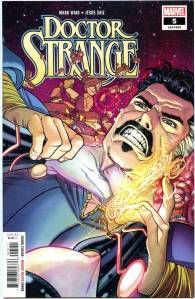
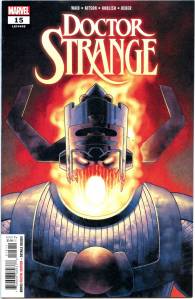
The Eye of Agamotto is closed! Doctor Stephen Strange has lost his connection to the Earth’s arcane power, and he can’t wait to recover while nightmares press against the seams of our reality. Tony Stark offers a 21st-century solution: When astral travel fails, try astronautical travel. Enter Doctor Strange: Space-Explorer Supreme!