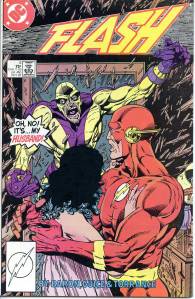
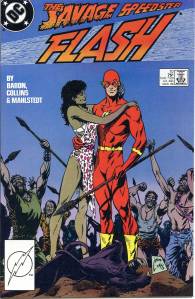
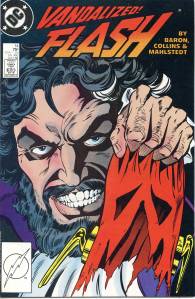
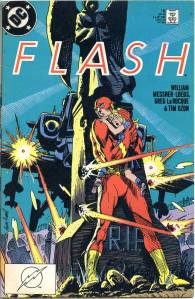
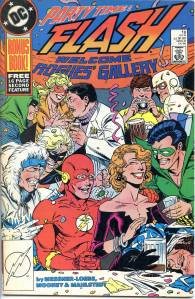
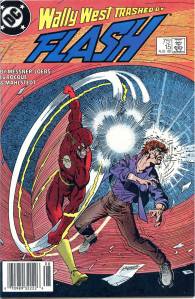
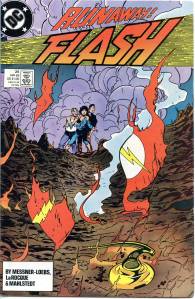
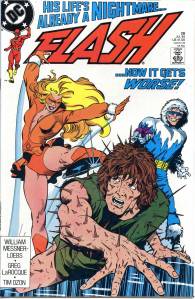
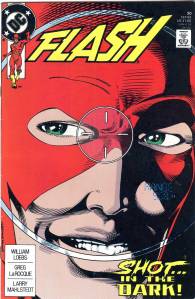
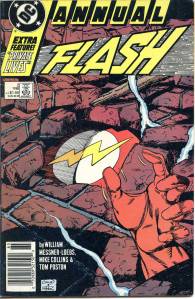
The third Flash was Wally West, introduced in The Flash (vol. 1) #110 (Dec. 1959) as Kid Flash. West, Allen’s nephew by marriage, gained the Flash’s powers through an accident identical to Allen’s. Adopting the identity of Kid Flash, he maintained membership in the Teen Titans for years. Following Allen’s death, West adopted the Flash identity in Crisis on Infinite Earths #12 and was given his own series, beginning with The Flash (vol. 2) #1 in 1987.[1] Many issues began with the catchphrase: “My name is Wally West. I’m the fastest man alive.”
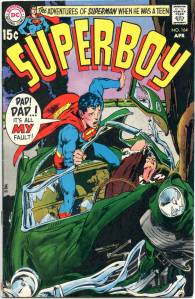
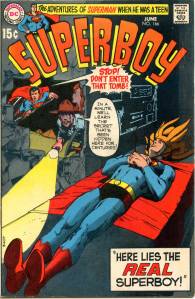
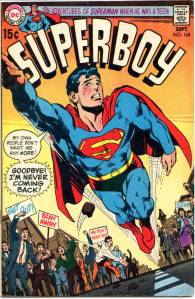
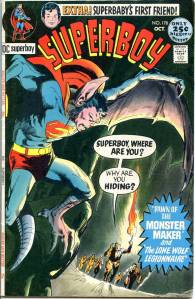
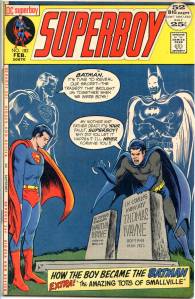
After the Legion pushed new Superboy stories out of Adventure Comics in 1963, Superboy became the only comic book to feature original Superboy stories. Less than two years after the Legion itself left Adventure Comics, Superboy became the Legion’s new home. Starting with Superboy #172 (March 1971), the Legion appeared as an occasional backup feature. Once again, the Legion feature proved so popular that by Superboy #197 (Sept. 1973), the Legion had become the lead feature, and with the next issue, the title’s only feature. Although from issue #197, the cover logo read Superboy starring the Legion of Super-Heroes (and replaced starring with #222), the official title (shown in the indicia) of the comic remained Superboy until #231 (Sept. 1977), when the comic became Superboy and the Legion of Super-Heroes. In issue #259 (Jan. 1980).
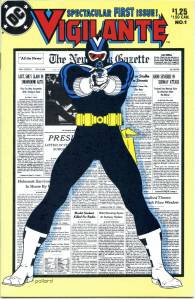
Vigilante was an ongoing series published from November of 1983 to February 1988. The series featured the honorable Adrian Chase, who was first introduced in the pages of New Teen Titans Annual #2. Spanning a total of fifty issues and two Annuals, the series ended with the death of the main character.
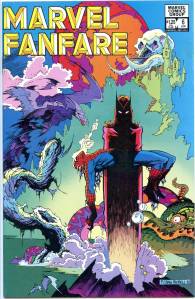
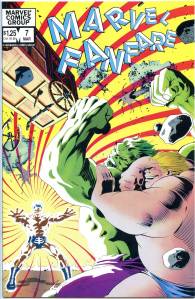
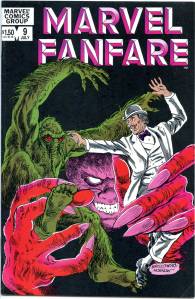
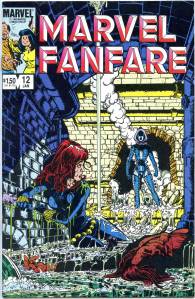
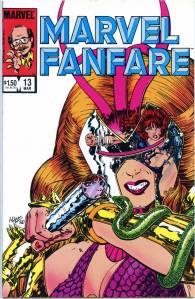
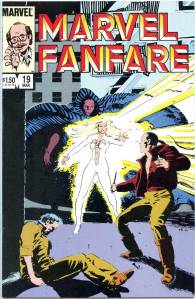
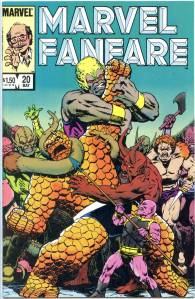
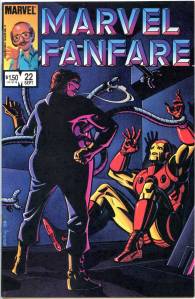
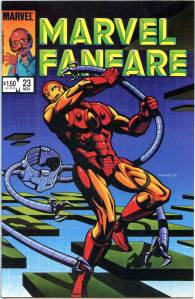
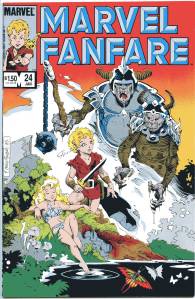
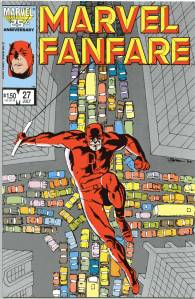
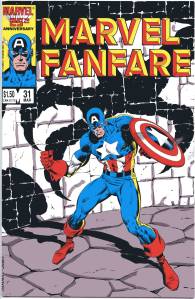
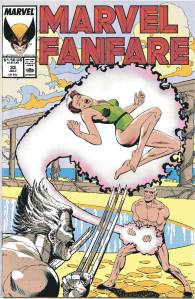
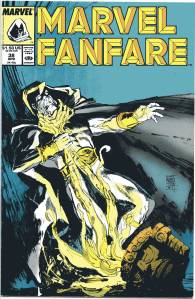
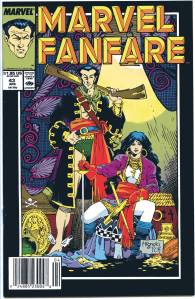
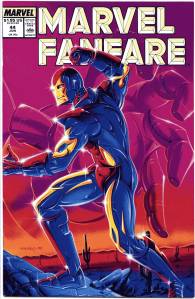
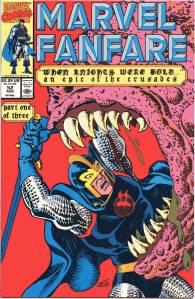
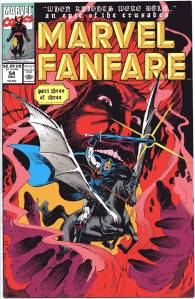
Marvel Fanfare was envisioned as a showcase of the comics industry’s best talent. Each issue featured 36 pages of material with no advertisements and it was printed on magazine-style slick paper. It was more than twice as expensive as standard comic books ($1.25 in 1982 when most titles were 60 cents and $2.25 in 1991 when most were $1).
DC Comics was a hotbed of experimentation during the 1970s, and in 1975 the character became the first villain to feature as the title character in a comic book series, The Joker. The series followed the character’s interactions with other supervillains, and the first issue was written by O’Neil. Stories balanced between emphasizing the Joker’s criminality and making him a likable protagonist whom readers could support. Although he murdered thugs and civilians, he never fought Batman; this made The Joker a series in which the character’s villainy prevailed over rival villains, instead of a struggle between good and evil. Because the Comics Code Authority mandated punishment for villains, each issue ended with the Joker being apprehended, limiting the scope of each story.
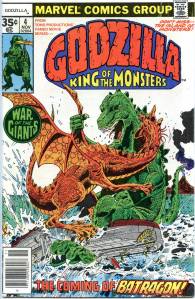
From 1977-79, Godzilla starred in a 24-issue run of comics written by Doug Moench, drawn by Herb Trimpe and published by Marvel Comics entitled Godzilla, King of the Monsters. The series thrusts Godzilla completely into the Marvel Universe. In a nod to King Kong vs. Godzilla, Godzilla first appears by bursting out of an iceberg near Alaska; although how the prehistoric creature came to be trapped again in ice is never revealed (although it is stated in the issue that this “will doubtless be determined in the future.”). Over the course of the series, he crosses the continental United States and eventually ends up in New York City.
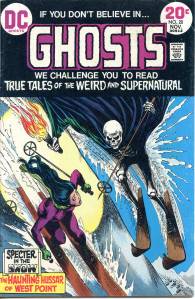
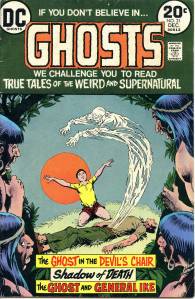
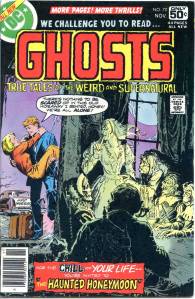
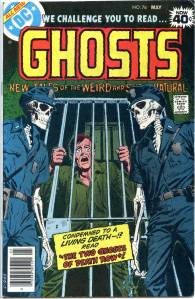
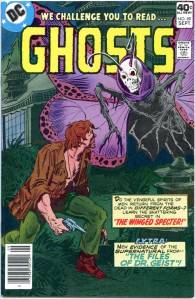
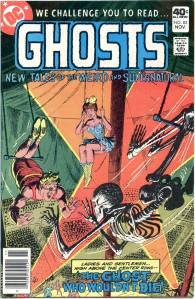
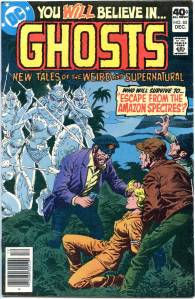
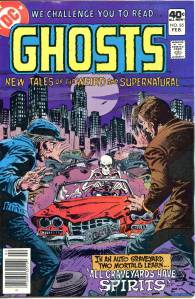
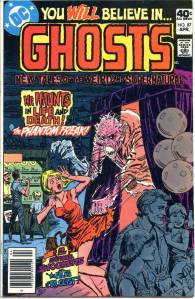
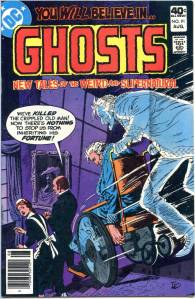
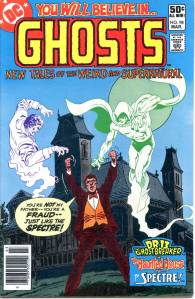
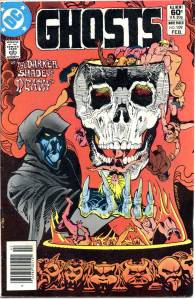
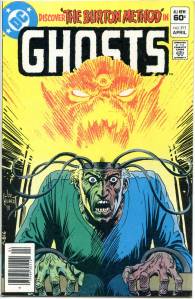
Each issue of Ghosts carried multiple stories of the supernatural. The stories were prefaced by a short description introducing the premise and ended with a summation of how a mysterious justice was dealt to the evildoers of the tale. The first issue of this series carried the singular title Ghost in its indicia, but everywhere else, including advance promotional house ads and even on its own cover, it was the plural Ghosts, as even the indicia would read from #2 on. Limited Collectors’ Edition #C–32 (Dec. 1974–Jan. 1975) reprinted stories from Ghosts #1, 3–6 and featured new material by Leo Dorfman and artists Gerry Talaoc, E. R. Cruz, and Frank Redondo.
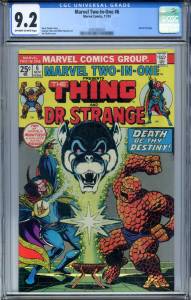
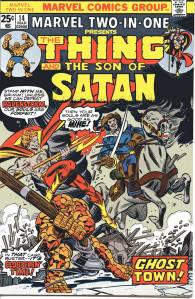
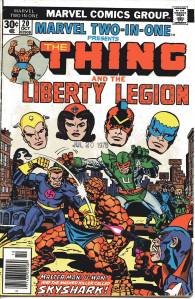
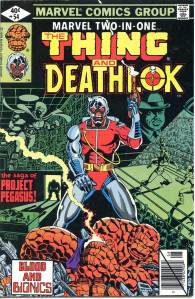
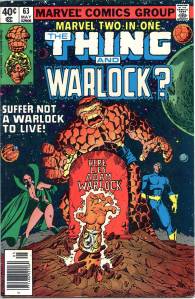
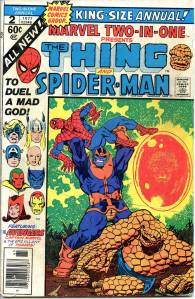
Marvel Two-in-One continued from the team-up stories starring the Thing in the final two issues of Marvel Feature and lasted for 100 issues from January 1974 through June 1983. Seven annuals were also published. Artist Ron Wilson began his long association with the title with issue #12 (November 1975) and worked on it throughout its run. With issue #17, the series had a crossover with Marvel Team-Up #47, which featured Spider-Man. The second Marvel Two-in-One Annual was a crossover with Avengers Annual #7 both of which were written and drawn by Jim Starlin. The “Project Pegasus” storyline in Marvel Two-in-One #53-58 saw the introduction of the name “Quasar” for the Wendell Vaughn characterand the transformation of Wundarr into the Aquarian.
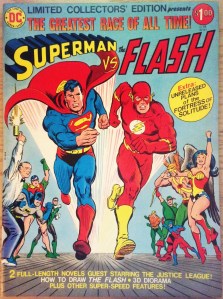
Limited Collectors’ Edition was launched with a collection of Rudolph the Red-Nosed Reindeer stories which went on sale October 24, 1972. DC Comics vice president Sol Harrison had suggested the format stating that “We could create a tabloid size comic that would stand out on the newsstand.”Limited Collectors’ Edition shared its numbering with two other treasury format series, Famous First Edition and All-New Collectors’ Edition. The final issues of the latter two series were tie-ins to the release of Superman: The Movie. DC later published treasuries as part of DC Special Series in 1981 and as a number of one-shots from 1999 to 2003 primarily produced by Paul Dini and Alex Ross.
DC Limited Collectors Edition V5 C48 – Superman Vs Flash VF- $35
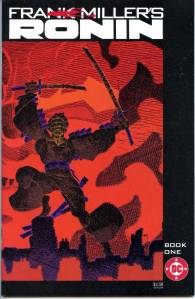
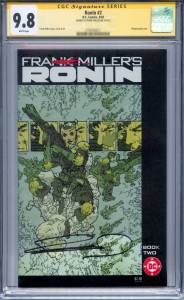
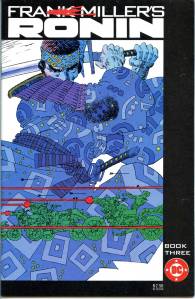
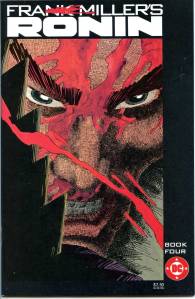
Ronin (formally written as Rōnin) is a limited series published between 1983 and 1984, by DC Comics. The series was written and drawn by Frank Miller with artwork painted by Lynn Varley. It takes place in a dystopic near-future New York in which a ronin is reincarnated. The six-issue work shows some of the strongest influences of manga and bande dessinée on Miller’s style, both in the artwork and narrative style.
Ronin was in part inspired by Kazuo Koike and Goseki Kojima‘s manga series Kozure Okami. (Though Kozure Okami would receive an English localization several years later as Lone Wolf and Cub, at the time Miller could not read the text and had to rely on the artwork for his understanding of the story.) According to former Marvel Comics editor-in-chief Jim Shooter, Ronin was originally slated to be released as part of Marvel’s Marvel Graphic Novel series. Ultimately, however, Miller was persuaded by publisher Jenette Kahn that DC Comics would give him as much freedom as he desired for the series, and the first issue of Ronin was published by that company in 1983.
Ronin #1 NM $12
Ronin #2 CGC SS 9.8 White Pages signed by Frank Miller $229












































 EHT Comics