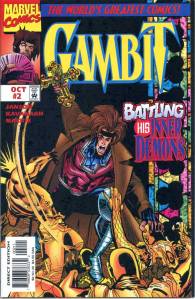
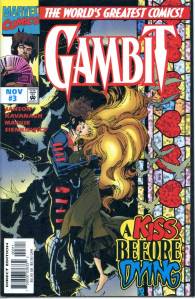
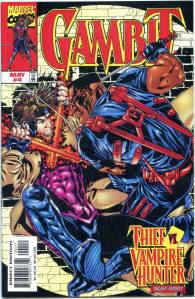
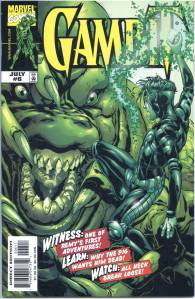
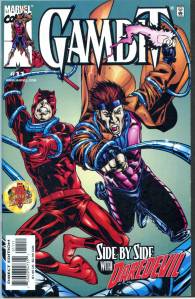
Gambit plays his cards right and vaults into his own kinetically charged solo adventures! He’s a lover and a thief, but what else does ragin’ Cajun Remy LeBeau get up to when he isn’t hangin’ wit’ de X-Men? Would you believe raiding lost temples of Doom? Clashing with the deadly X-Cutioner? Or teaming up with Sabretooth? Still, there’s always time for the ladies- like old friend Storm and his favorite cherie, Rogue. But who is Gambit’s gaseous green guardian?
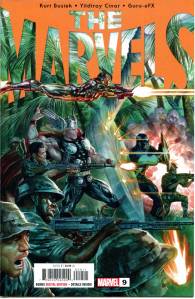
A thriller that will take readers across the Marvel Universe – and beyond! Kurt Busiek (MARVELS) is back, with the biggest, wildest, most sprawling series you’ve ever seen – telling stories that span decades and range from cosmic adventure to intense human drama, from street-level to the far reaches of space, starring literally anyone from Marvel’s first heroes to the superstars of tomorrow! Featuring Captain America, Spider-Man, the Punisher, the Human Torch, Storm, the Black Cat, the Golden Age Vision, Melinda May, Aero, Iron Man, Thor and more – and introducing characters destined to be fan-favorites! Get to know Kevin Schumer – an ordinary guy with some big secrets – and the mysterious Threadneedle! But who (or what) is KSHOOM?
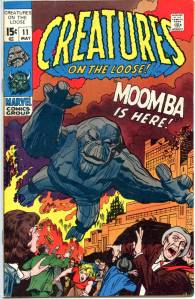
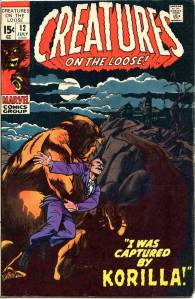
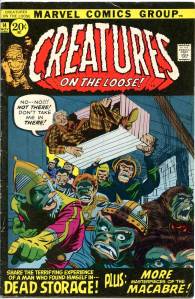
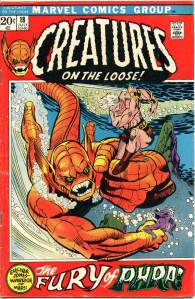
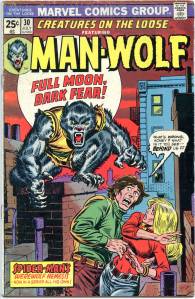
Tower of Shadows was re titled Creatures on the Loose with issue #10 (March 1971), this version led off with a seven-page King Kull story by Thomas and artist Bernie Wrightson. The book then became all-reprint until issue #16 (March 1972), when writer Thomas and the art team of Gil Kane and Bill Everett introduced the series “Gullivar Jones, Warrior of Mars”, starring an interplanetary Earthman created by author Edwin L. Arnold in his 1905 book Lieut. Gullivar Jones: His Vacation. Following another issue by Thomas and one by Gerry Conway, science fiction novelist George Alec Effinger wrote the final three installments.
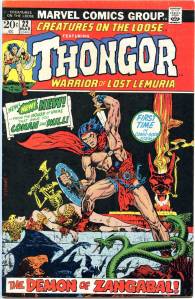
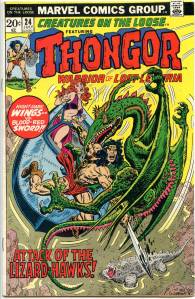
Effinger continued as writer for the series that immediately followed, in issue #22 (March 1973): “Thongor! Warrior of Lost Lemuria!”, adapting asword-and-sorcery barbarian character created by author Lin Carter. Following writers Tony Isabella and Gardner Fox, Carter himself co-wrote (with Steve Gerber) the final two installments.
Thomas, Marvel’s associate editor at the time, recalled in 2007 that Thongor had been the company’s first choice when Marvel decided to published a licensed fantasy character, rather than the eventual hit Conan the Barbarian. Publisher Martin Goodman “authorized us to go after a character. I first went after Lin Carter’s Thongor, who was a quasi-Conan with elements of John Carter of Mars, partly became editor-in-chiefStan Lee liked that name the most … I soon got stalled by Lin Carter’s agent on Thongor (he was hoping I’d offer more than the $150 per issue I was authorized to offer), and I got a sudden impulse to go after Conan”.
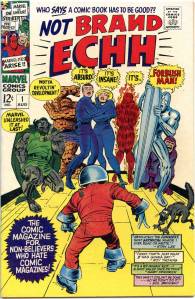
Its mascot, Forbush Man, introduced in the first issue, was a superhero wannabe with no superpowers and a costume of red long johns emblazoned with the letter “F” and a cooking pot, with eye-holes, covering his never-revealed head. His secret identity was eventually revealed in issue #5 (Dec. 1967) as Irving Forbush, Marvel’s fictitious office gofer.
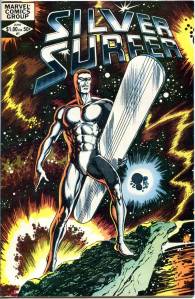
The galactic herald returns in this jam-packed one-shot! Silver Surfer recalls happier times with the Fantastic Four. With Norrin Radd becoming a distant memory with each passing day, will Surfer ever recover the man he once was? Surfer returns to his homeland Zenn-La to find absolute devastation. A new quest begins for Silver Surfer — one that involves finding his soulmate, Shalla Bal!
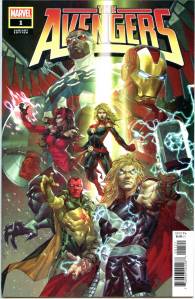
The world is ever in peril, and a new team of Avengers mobilizes to meet any dangers that dare threaten the planet. But when Terminus attacks, a new and insidious danger rears its head: one that the Avengers know all too well, and one that comes to them in the most dangerous of guises – that of a friend.
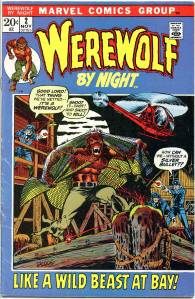
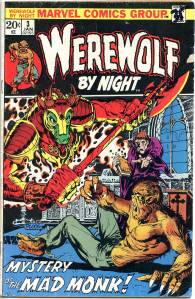
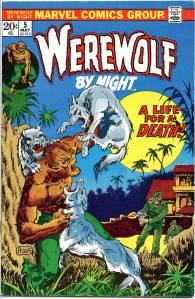
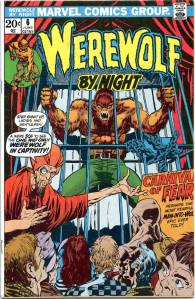
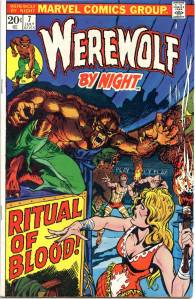
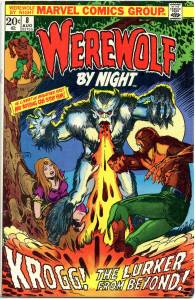
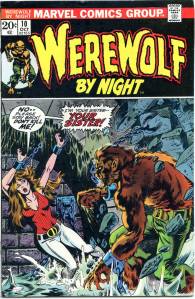
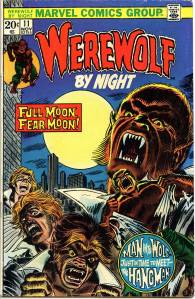
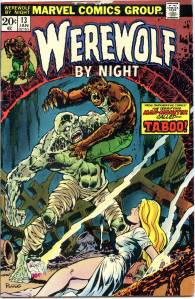
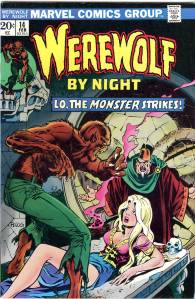
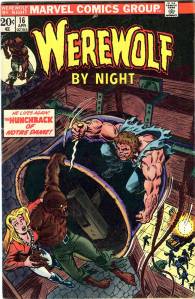
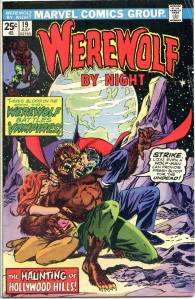
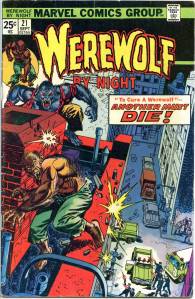
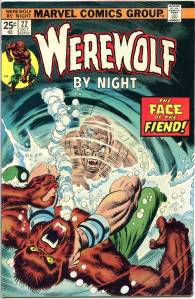
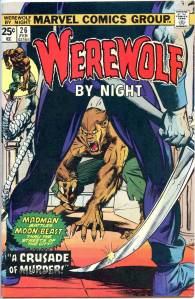
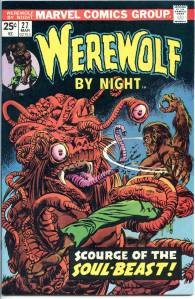
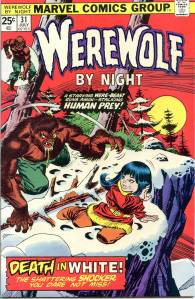
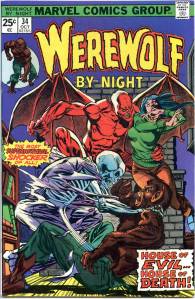
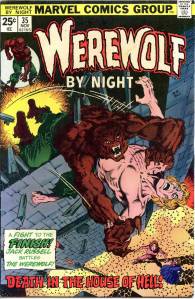
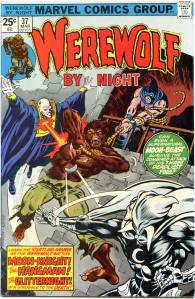
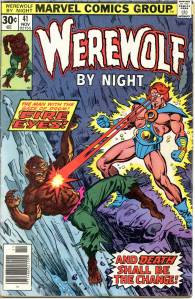
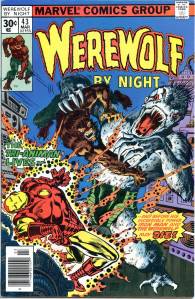
The Werewolf by Night character first appeared in Marvel Spotlight #2 (Feb. 1972) and was based on an idea by Roy Thomas. The series name was suggested by Stan Lee and the debut story was crafted by Gerry Conway and Mike Ploog. The character made additional appearances in Marvel Spotlight #3 and #4 and then graduated to his own eponymous series in September 1972. Werewolf by Night was published for 43 issues and ran through March 1977. Issue #32 contains the first appearance of Moon Knight. Jack Russell co-starred with Tigra in Giant Size Creatures #1 (July 1974), which was the first appearance of Greer Grant as Tigra instead of the Cat.That series was retitled Giant-Size Werewolf with its second issue.
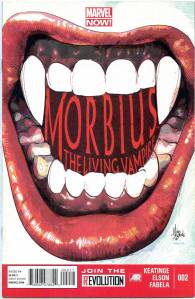
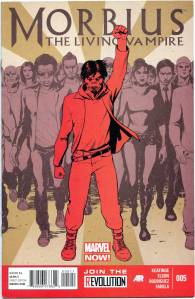
The ALL-NEW Michael Morbius? Morbius, is back, but on the run and desperate to quell his vampiric tendencies. But has the midnight son really changed? As Morbius tries to stay under the radar, a new threat arises, and they want Morbius dead.
In 1997, Deadpool was given his own ongoing title, initially written by Joe Kelly, with then-newcomer Ed McGuinness as an artist. Deadpool became an action comedy parody of the cosmic drama, antihero-heavy comics of the time. The series firmly established his supporting cast, including his prisoner/den mother Blind Al and his best friend Weasel. The ongoing series gained cult popularity for its unorthodox main character and its balance of angst and pop culture slapstick and the character became less of a villain, though the element of his moral ambiguity remained. The writer Joe Kelly noted, “With Deadpool, we could do anything we wanted because everybody just expected the book to be cancelled every five seconds, so nobody was paying attention. And we could get away with it.”
The series was taken over by Christopher Priest who noted that he found Kelly’s issues to be “complex and a little hostile to new readers like me” and that by issue 37, he realized that “it was okay to make Deadpool look stupid.”
The Werewolf by Night character (birth name Jacob Russoff, legal name Jacob Russell, nicknamed Jack) first appeared in Marvel Spotlight #2 (Feb. 1972) and was based on an idea by Roy Thomas. The series name was suggested by Stan Lee and the debut story was crafted by Gerry Conway and Mike Ploog.The character made additional appearances in Marvel Spotlight #3 and #4 and then graduated to his own eponymous series in September 1972. Jack Russell co-starred with Tigra in Giant Size Creatures #1 (July 1974), which was the first appearance of Greer Grant as Tigra instead of the Cat. That series was retitled Giant-Size Werewolf with its second issue.








 EHT Comics