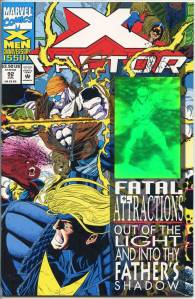
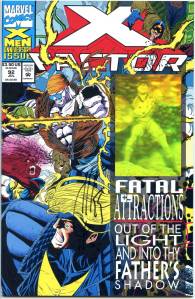
X-Factor V1 (1990’s)

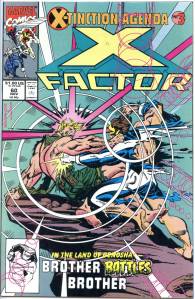
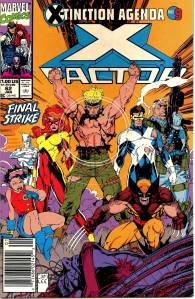
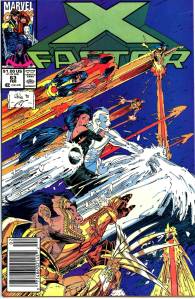
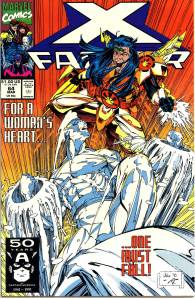
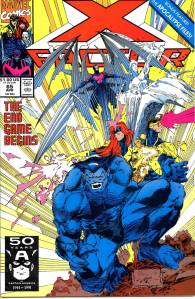
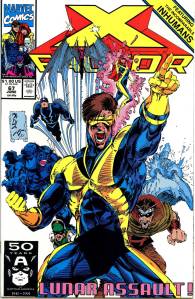
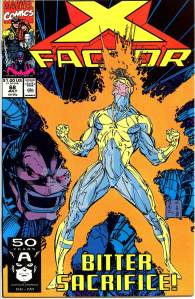
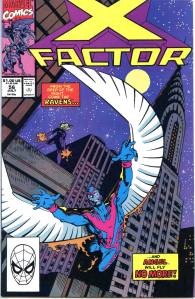
In the last major storyline of the first X-Factor series, published in early 1991, Apocalypse kidnaps Nathan Summers, sensing that he would grow up to be a powerful mutant and possible threat. X-Factor rescue Nathan from Apocalypse’s lunar base, but find him infected with a “techno-organic” virus that cannot be treated. A clan of rebels from the future, known as the Askani, send a representative to the present time to bring Nathan 2,000 years into the future to be treated. Fully grown, he returns to the 20th century as the antihero, Cable.

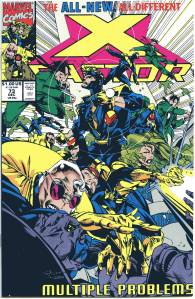
X-Factor, the X-Men, and several minor characters team up to fight the telepathic Shadow King in another crossover event, The Muir Island Saga. Afterward, the original members of X-Factor rejoin the X-Men and several characters from various X-Men-related series become founding members of a new X-Factor.

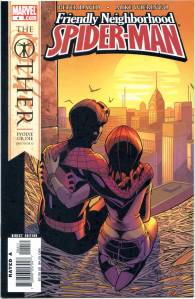
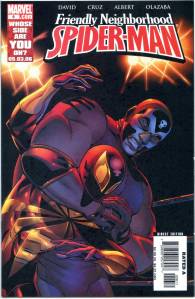
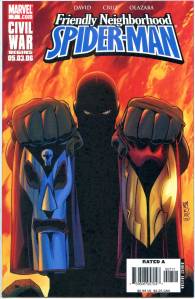
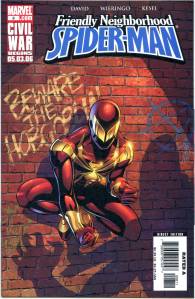
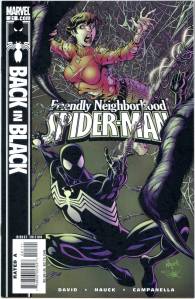
Friendly Neighborhood Spider-Man (2005)

The title is derived from a trademark self-referential comment often made by Spider-Man (as in “just another service provided by your friendly neighborhood Spider-Man!”). The series began in October 2005 and was primarily written by Peter DavidFriendly Neighborhood Spider-Man was canceled after issue #24, part 2 of J. Michael Straczynski and Joe Quesada‘s controversial “One More Day” storyline. Kurt Busiek has revealed that in 1995 he originally suggested “Friendly Neighborhood Spider-Man” as the title of the series which was eventually published as Untold Tales of Spider-Man.

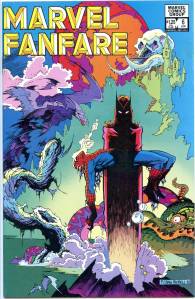
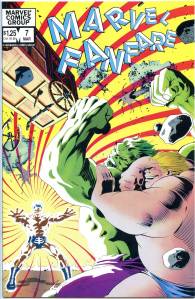
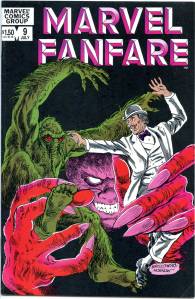
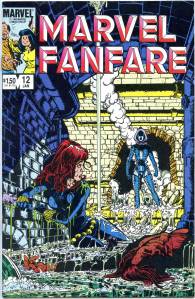
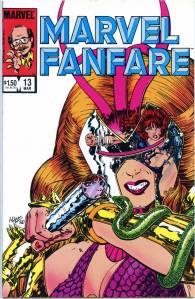
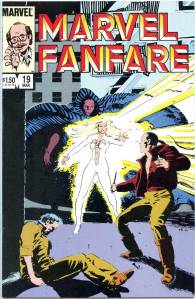
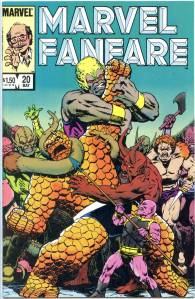
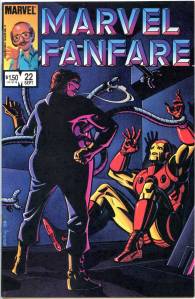
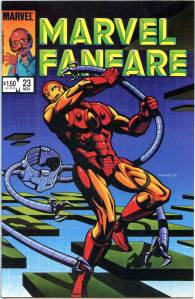
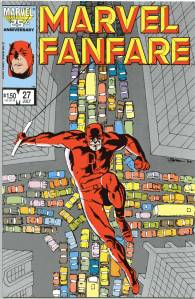
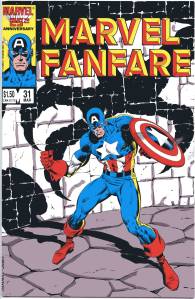
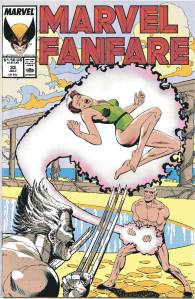
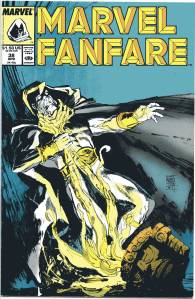
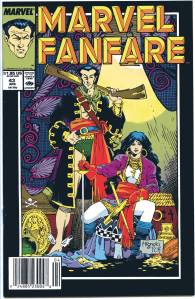
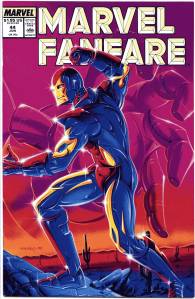
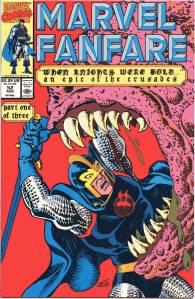
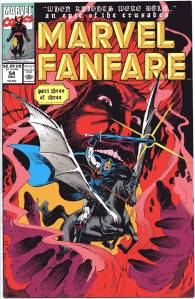
Marvel Fanfare (1982)

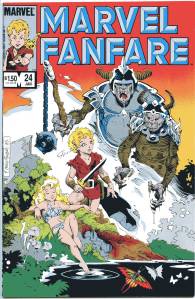
The series began with a Spider-Man/Angel team-up story by Chris Claremont and Michael Golden. Other Spider-Man appearances in the title included team-ups with the Scarlet Witch in issue #6 (Jan. 1983) and the Hulk in issue #47 (Nov. 1989). Several characters appeared in multiple issues including Doctor Strange Weirdworld, the Warriors Three, the Black Knight,[ and Shanna the She-Devil. Writer Roger McKenzie wrote several stories for Marvel Fanfare including a two-part Iron Man vs. Doctor Octopus tale drawn by Ken Steacy. A Captain America backup story in issue #29 (Nov. 1986) featured early work by artist Norm Breyfogle.

Marvel Fanfare was envisioned as a showcase of the comics industry’s best talent. Each issue featured 36 pages of material with no advertisements and it was printed on magazine-style slick paper. It was more than twice as expensive as standard comic books ($1.25 in 1982 when most titles were 60 cents and $2.25 in 1991 when most were $1).
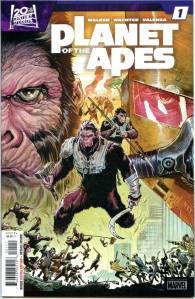
Planet of the Apes (2023)

The ALZ-113 virus has rampaged across planet Earth, and humanity is crumbling. While well-meaning researchers hunt for a cure, a fanatical group of humans has their own solution: Kill all apes. Peacekeeper Juliana Tobon is one of the few willing to stand against them, but the crisis is spreading, and soon apes will witness the true depths of human cruelty.

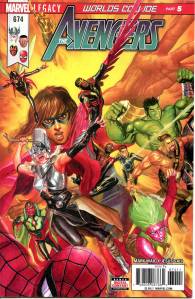
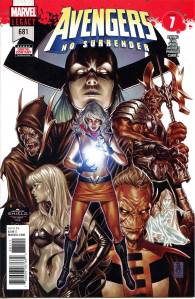
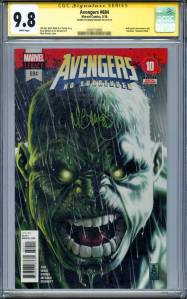
Avengers V1 (2010’s)

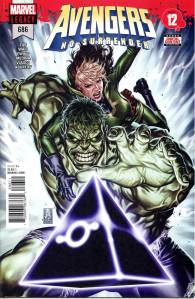
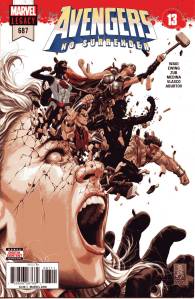
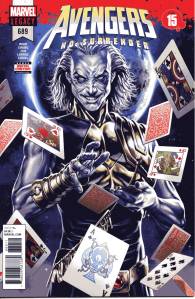
The Earth has been STOLEN! The sky burns while mysterious cosmic objects crash down from above, wreaking havoc across the world – and the Avengers are the last line of defense between Earth and the mysterious forces threatening to tear it apart. It’s time to ASSEMBLE almost everyone who has ever been an Avenger! All of the Avengers you know and love come together to face threats beyond any they’ve faced before – including the Black Order and the Lethal Legion. These two teams of powerful villains bent on destroying each other have arrived on Earth, and they don’t care who gets caught in the crossfire. And when the mysterious Challenger faces off against the Grandmaster, can the Earth survive the destruction they unleash? The Avengers are engaged in a game of cosmic proportions, but they don’t know the rules…and not everyone will survive! Plus: Who is Voyager? Valerie Vector, the forgotten founding Avenger, is revealed. And fan-favorite Avenger, Hulk, returns to the fold as the stakes in the battle for Earth become clear! Tension is high and peril is imminent, but there’s no option to surrender for the relentless Avengers!

Godzilla: King of the Monsters (1977)

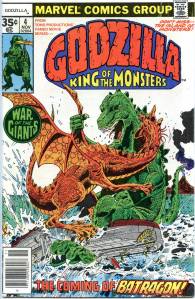
From 1977-79, Godzilla starred in a 24-issue run of comics written by Doug Moench, drawn by Herb Trimpe and published by Marvel Comics entitled Godzilla, King of the Monsters. The series thrusts Godzilla completely into the Marvel Universe. In a nod to King Kong vs. Godzilla, Godzilla first appears by bursting out of an iceberg near Alaska; although how the prehistoric creature came to be trapped again in ice is never revealed (although it is stated in the issue that this “will doubtless be determined in the future.”). Over the course of the series, he crosses the continental United States and eventually ends up in New York City.

Wolverine V3 (2000’s)

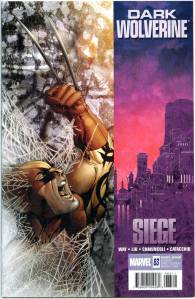
In 2008, writer Mark Millar and artist Steve McNiven explored a possible future for Wolverine in an eight-issue story arc entitled “Old Man Logan” that debuted with Wolverine #66. Millar, the writer for the story, said, “It’s The Dark Knight Returns for Wolverine, essentially. The big, wide, show-stopping series that plays around with the most popular Marvel character of the last forty years, a dystopian vision of the Marvel Universe and a unique look at their futures. The heroes have gone, the villains have won and we’re two generations away from the Marvel we know.

Marvel Two-In-One (1970’s)

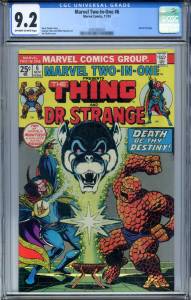
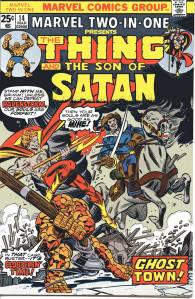
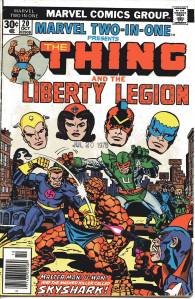
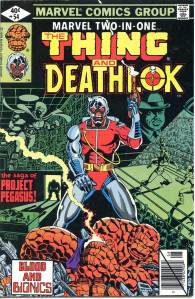
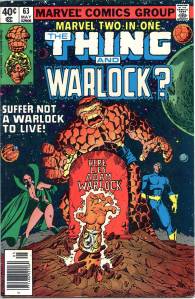
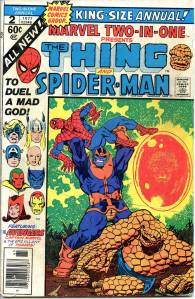
Marvel Two-in-One continued from the team-up stories starring the Thing in the final two issues of Marvel Feature and lasted for 100 issues from January 1974 through June 1983. Seven annuals were also published. Artist Ron Wilson began his long association with the title with issue #12 (November 1975) and worked on it throughout its run. With issue #17, the series had a crossover with Marvel Team-Up #47, which featured Spider-Man. The second Marvel Two-in-One Annual was a crossover with Avengers Annual #7 both of which were written and drawn by Jim Starlin. The “Project Pegasus” storyline in Marvel Two-in-One #53-58 saw the introduction of the name “Quasar” for the Wendell Vaughn character and the transformation of Wundarr into the Aquarian.

Many notable comics creators contributed to the series, including Steve Gerber, Frank MillerJack Kirby (who did pencils on several covers during its run), John Byrne, John BuscemaGeorge Pérez and Marv Wolfman.

Marvel Two-In-One ended after one hundred issues and was immediately replaced with a Thing solo series.

Sabertooth Mini (1993)

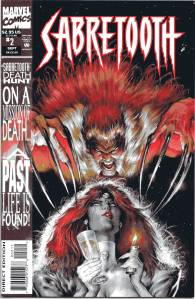
Home is the Hunter, script by Larry Hama, art by Mark Texeira;  The Hand wants Sabretooth’s head! With no back-up to speak of, Sabretooth must face an excruciating fight, both physically and mentally. Sabretooth is tied down to an operating table with a bomb placed inside his chest; Tribune wants him to kill Mystique. The story takes place after the events in Wolverine #64.Wolverine appearance.

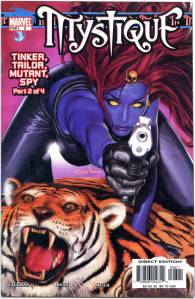
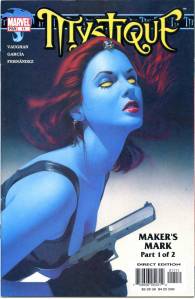
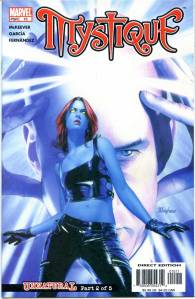
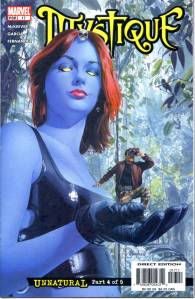
Mystique (2003)

Published 2003 – 2005. Mystique the sultry mutant shapeshifter, who has stood against the X-Men in battle after battle, is offered the chance at a new life when Professor X recruits her to complete a dangerous mission in Cuba. Can this former mutant-rights terrorist who can disguise herself as anyone on the planet be trusted? Don’t let the pinup-worthy cover fool you: Mystique is a smart, engaging piece of espionage fiction that shows that the superhero story isn’t dead yet.