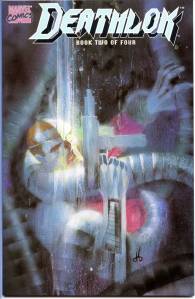
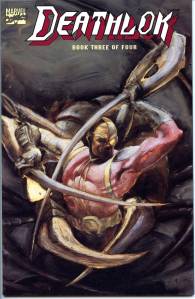
A new Deathlok, Michael Collins, debuted in the miniseries Deathlok #1-4 (July-Oct. 1990, reprinted as Deathlok Special #1-4 the following year). He was the second Deathlok to be created in the modern era and also the second to be created for the traditional Marvel Universe. This second Deathlok went on to a 34-issue series cover-dated July 1991 to April 1994, plus two summer annuals in 1992 and 1993.
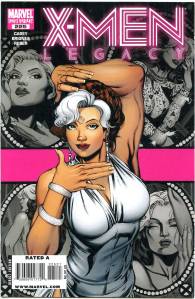
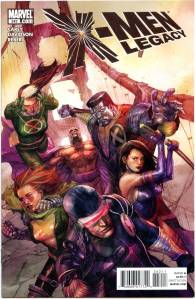
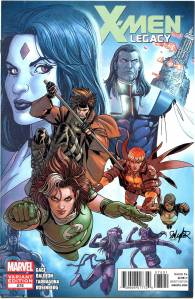
X-men Volume 2 was renamed X-Men: Legacy starting in February 2008 with issue #208. The new title reflects a shift in the series direction to focusing on solo X-Men characters versus being a team-based book as the title was previously.[11]
The re-titled series follows on from the conclusion of the Messiah Complex crossover, where Professor X was accidentally shot in the head by Bishop. Shortly after the X-Men presumed him deceased, his body disappeared and his whereabouts were unknown. X-Men: Legacy initially followed the Professor’s presumed road to recovery as well as the encounters he faced, such as a battle with the mutant Exodus on the psychic plane and discoveries about his past that include Mr. Sinister.
Many characters have been featured in the title, including Rogue, Magneto, Gambit, and the Acolytes. The title also featured flashbacks relevant to the ongoing present story as well as answered dangling plot lines throughout X-Men continuity.
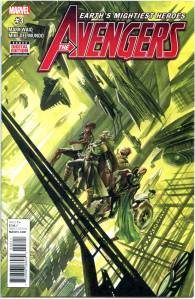
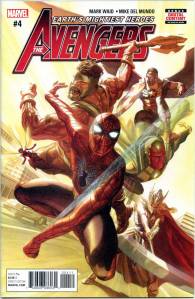
Following the “Civil War II“, storyline, the title was canceled and replaced with a new volume of the regular Avengers title. The roster was also changed, where following Iron Man being placed in a coma, and Spider-Man (Miles Morales), Nova, and Ms. Marvel’s resignation from the team (who instead teamed up with other heroes their own age to form their own group the Champions), the remaining three members are paired up with Spider-Man (Peter Parker), Hercules and Wasp (Nadia Pym) to form a new team.
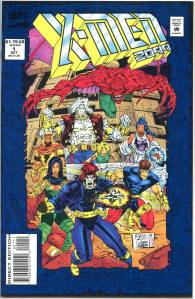
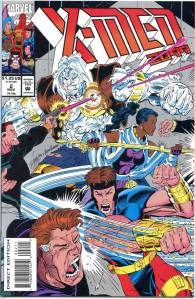
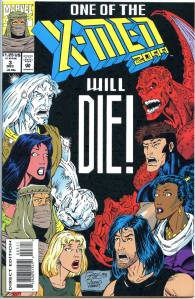
The series began in October 1993 and lasted 35 issues along with two specials. It spawned a line of action figures, mostly featuring the more popular characters in the book. In issue #20, the title received a minor makeover, officially joining the 2099 imprint and changing its name to X-Men 2099 A.D., the “A.D.” standing for “After Doom“. At the series’ end, it was folded into 2099: World of Tomorrow, though members of the team were rarely seen after that point.
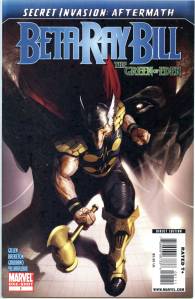
Cosmic defender Beta Ray Bill is approached by a band of monks who ask for his protection. The monks turn out to be Skrulls who are looking for a new god after the Secret Invasion and have decided Bill should be their new deity. Bill and his new pals are attacked by Skrulls who are trying to kill the monks as heretics. When their first attack fails, they form a Super Skrull patterned after the Warriors Three. Once the battle is concluded, Bill takes off for the stars and the Super Skrull has a change of heart and decides to be the new defender of his brother monks.
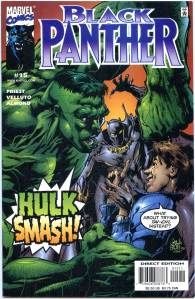
Writer Christopher Priest‘s and penciller Mark Texeira‘s 1998 series The Black Panther vol. 3 used Erik Killmonger, Venomm, and other characters introduced in “Panther’s Rage”, together with new characters such as State Department attorney Everett Ross; the Black Panther’s adopted brother, Hunter; and the Panther’s protégé, Queen Divine Justice. The Priest-Texeira series was under the Marvel Knights imprint in its first year. Priest said the creation of character Ross contributed heavily to his decision to write the series. “I realized I could use Ross to bridge the gap between the African culture that the Black Panther mythos is steeped in and the predominantly white readership that Marvel sells to,” adding that in his opinion, the Black Panther had been misused in the years after his creation.
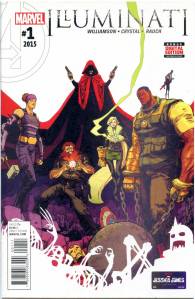
Following Secret Wars, a new Illuminati series was launched by writer Josh Williamson. The book features the Hood leading a new, villainous incarnation of the group. The new Illuminati includes Titania, Enchantress, Mad Thinker, Thunderball, and Black Ant.
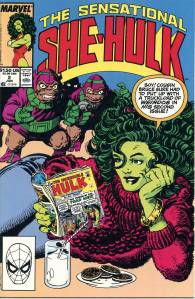
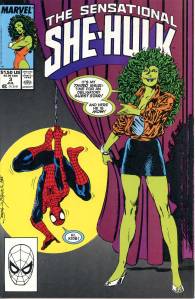
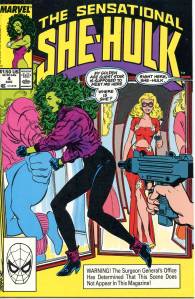
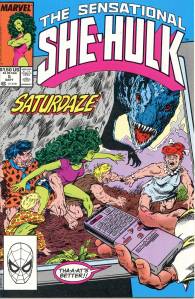
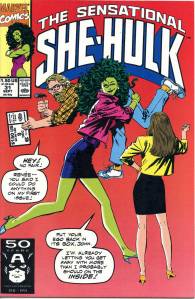
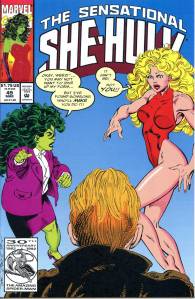
She-Hulk regained a solo series in 1989, The Sensational She-Hulk (maintaining the 1985 graphic novel‘s title). The Sensational She-Hulk ran for sixty issues. Issues #1 to #8, #31 to #46, and #48 to 50 were written and drawn by Byrne. Byrne’s She-Hulk stories satirized comic books and introduced She-Hulk’s awareness that she is a comic book character. Two issues tested the limits of the comics code: #34 makes reference to the 1991 Vanity Fair cover in which actress Demi Moore appeared nude and pregnant (She-Hulk’s version has her holding a green beach ball to imitate Moore’s pregnancy); in issue #40 She-Hulk is entirely naked with her breasts and genital area covered by blur lines as she is depicted jumping rope in the nude. Other writers to contribute to this series include Steve Gerber (#10, 11, 13–23), Simon Furman, and Peter David.
(The team first appeared in the partial reprint title Marvel Super-Heroes with issue #18 (Jan. 1969), written by Arnold Drake and penciled by Gene Colan. They appeared sporadically in several Marvel titles, such as Marvel Two-In-One #4–5 (July–Sept. 1974), Astonishing Tales(April 1975), and Giant Size Defenders #5 and Defenders #26–29 (July–Nov. 1975). In each case, other heroes such as Captain America, the Thing, and the Defenders aid them in their war against the alien Badoon.
The Guardians were next featured in Marvel Presents #3–12 (Feb. 1976 – Aug. 1977). This was followed by a series of appearances in Thor Annual #6 (1977), The Avengers #167–177 (Jan.–Nov. 1978) and #181 (March 1979), Ms. Marvel #23, Marvel Team-Up #86 (Oct. 1979), andMarvel Two-in-One #61-#63 & #69 (Nov. 1980).
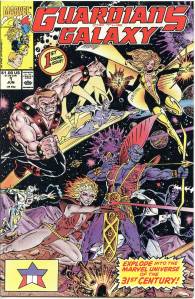
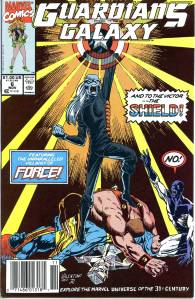
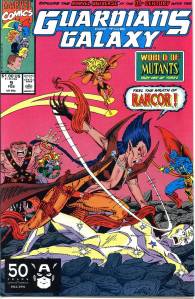
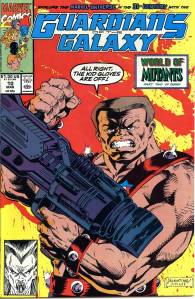
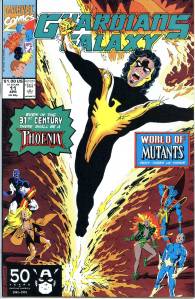
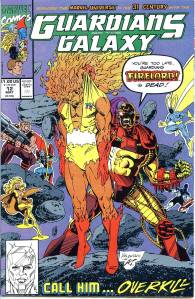
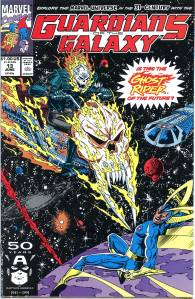
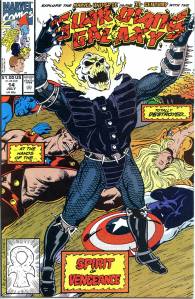
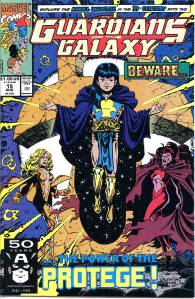
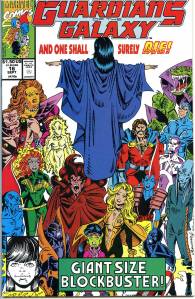
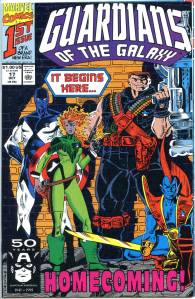
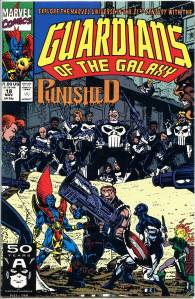
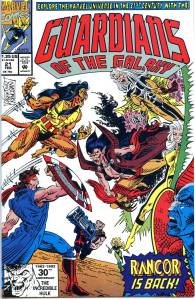
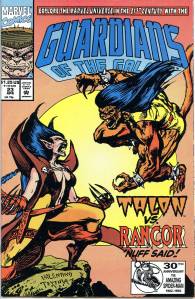
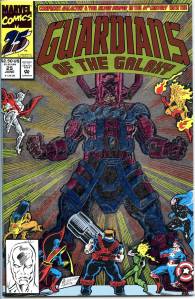
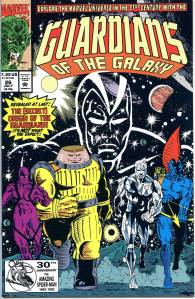
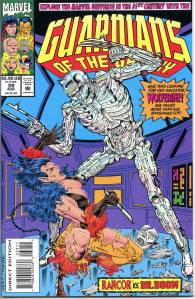
In the early 1990s, the Guardians starred in a self-titled comic that ran for 62 issues. This series was initially written and illustrated by Jim Valentino. With issue #29 (Oct. 1992) Michael Gallagher commenced writing the title, and continued until its cancellation with issue #62 (July 1995). A spin-off four-issue miniseries, Galactic Guardians (July–Oct. 1994), followed.











 EHT Comics