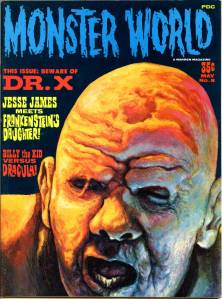
Monster World (1964)

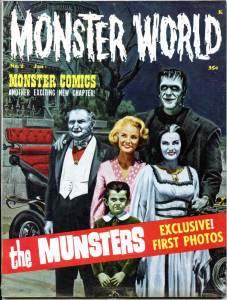
Begun by James Warren, Warren Publishing’s initial publications were the horror-fantasy–science fiction movie magazine Famous Monsters of Filmland and Monster World, both edited by Forrest J Ackerman. Warren soon published Spacemen magazine and in 1960 Help! magazine, with the first employee of the magazine being Gloria Steinem.

After introducing what he called “Monster Comics” in Monster World, Warren expanded in 1964 with horror-comics stories in the sister magazines Creepy and Eerie – black-and-white publications in a standard magazine format, rather than comic-book size, and selling for 35 cents as opposed to the standard comic-book price of 12 cents. Such a format, Warren explained, averted the restrictions of the Comics Code Authority, the comic-book industry’s self-censorship body.
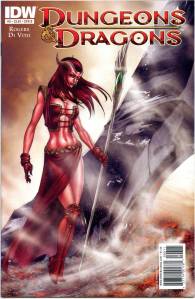
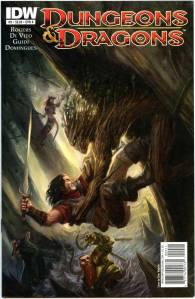
Dungeons & Dragons (2010)

Dungeons & Dragons is a series of comic books published by IDW Publishing, under the license from Hasbro and Wizards of the Coast, based on the Dungeons & Dragons (D&D) fantasy role-playing game. Since 2010, IDW Publishing has released two Dungeons & Dragons ongoing series, twelve Dungeons & Dragons limited series, three crossover series and an annual.

It was originally based on the 4th Edition core setting of D&D. Since 2014 (starting with the Legends of Baldur’s Gate mini-series), the comics have been tied to the 5th Edition core setting.


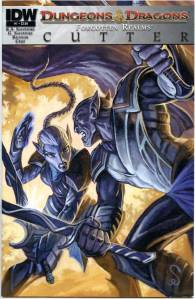
Dungeons & Dragons: Cutter (2013)

Dungeons & Dragons: Cutter is a collection of five comic issues centering on Tos’un and Doum’wielle Armgo and the sentient sword Khazid’hea; it takes place just prior to Night of the Hunter. The story was written by R.A. Salvatore and his son Geno Salvatore. The majority of the art was done by David Baldeon, with David Garcia Cruz (colors) and Neil Uyetake (letters). Steve Ellis contributed cover art.

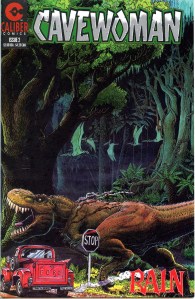
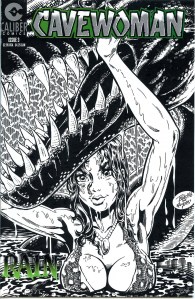
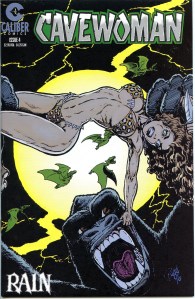
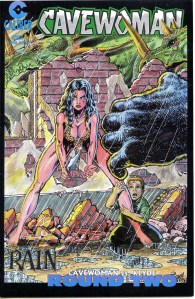
Cavewoman – Rain (1996)

Cavewoman is an alternative comic  created by writer-artist Budd Root, and published primarily by Basement Comics and additionally by Caliber Comics and Avatar Press. The story follows superhuman Meriem Cooper, a 19-year-old jungle woman who battles dinosaurs and other prehistoric creatures in the Cretaceous period.

Root credits the artist William Stout, as well as the Playboy cartoon feature Little Annie Fanny, as his inspirations for the character.

Artist Devon Massey has done much of the cover-art for the series.

Vampire: The Masquerade (2001)

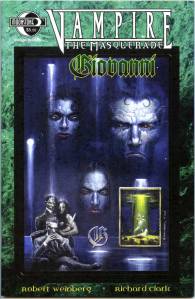
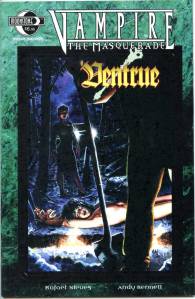
Published by Moonstone starting in 2001, this series explores the noir/goth White Wolf universe of “Vampire the Masquerade.” Hidden agends, political powerplays, secret trysts, and self preservation, are part of everyday existence.

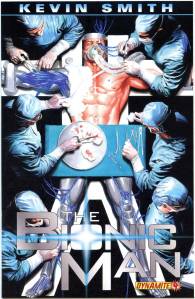
The Bionic Man (2011)

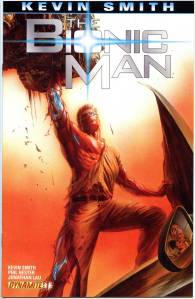
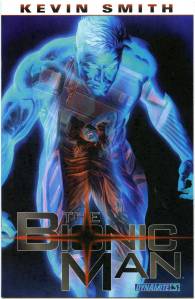
The series adapts an unproduced 1998 screenplay for a Six Million Dollar Man feature film by Kevin Smith, who is best known for films such as Clerks. as well as writing for Spider-Man and many other comic book franchises. The story is being presented in serialized form, and updates the adventures of Steve Austin to the 2010s. In January 2012, Dynamite announced it would be launching The Bionic Woman, a comic book spin-off of this series. By early 2014, Dynamite had ceased publishing The Bionic Man, replacing it in March 2014 by The Six Million Dollar Man Season Six, a continuation of the original TV series.

Vampirella One-Shots (Harris)

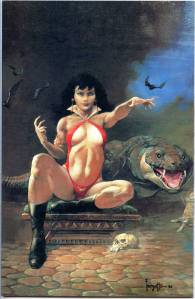
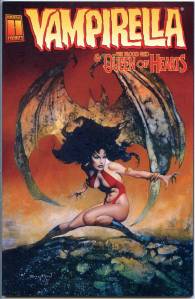
Upon Warren’s bankruptcy shortly afterward, Harris Publications acquired the company assets at auction in August 1983, although legal murkiness and a 1999 lawsuit by Warren publisher James Warren resulted in his reacquisition of the rights to sister publications Creepy and Eerie. Harris Comics published Vampirella stories in various series and miniseries from 1991 to 2007, beginning with Vampirella #113 (1988), a one-issue continuation of the original series, containing Vampirella reprints and one unrelated new story. On March 17th, 2010, Dynamite acquired the rights to the character.

The Brute (1975)

The Brute is a Neanderthal who is thawed from a block of ice after thousands of years of entombment. Part of the short-lived Atlas superhero line from former Marvel publisher Martin Goodman.

Felix the Cat (1950)

Otto Messmer pursued the Sunday Felix comic strips until their discontinuance in 1943, when he began eleven years of writing and drawing Felix comic books for Dell Comics that were released every other month. Jack Mendelsohn was the ghostwriter of the Felix strip from 1948 to 1952. In 1954, Messmer retired from the Felix daily newspaper strips, and his assistant Joe Oriolo (the creator of Casper the Friendly Ghost) took over. The strip concluded in 1966.

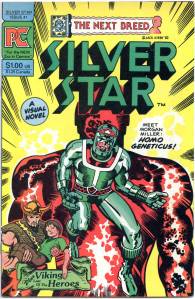
Silver Star (1983)

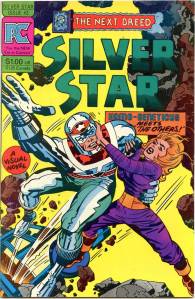
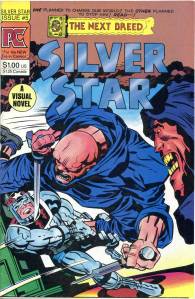
Silver Star is written, and drawn by Jack Kirby, first published by Pacific Comics in 1983. Featuring a title character who becomes super-powered due to genetic mutation, the series continued Kirby’s run of creator-owned work. Reprints of the original series and new stories based on it have subsequently been published by other comic book companies.