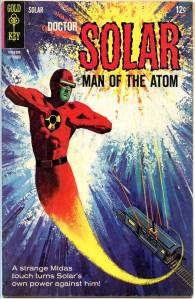
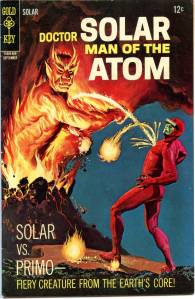
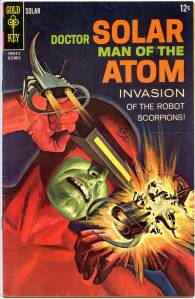
Doctor Solar premiered in issue #1 of Doctor Solar, Man of the Atom in Summer 1962 (cover date October 1962) in the first batch of comics released by Gold Key, with Solar being Gold Key’s first original character. Though Gold Key did not have as large a distribution network as Dell Comics, the Gold Key comics stood out on the newsstand shelves due to their cover art and a 12 cent price (Dell Comics sold for 15 cents). The first two issues of Solar appeared with cover paintings by Richard M. Powers; beyond the second issue the cover paintings were done by George Wilson. The interior artwork in the first several issues also had unique features: the superhero, Dr. Solar, did not have a costume until the fifth issue, rectangular word balloons and no black holding line around each panel. Following from practise of Dell Comics, and thanks to Western Publishing’s reputation of publishing other children-friendly books, Doctor Solar, Man of the Atom was able to be distributed without the Comics Code Authority symbol. The original creative team of writer Paul S. Newman and artist Bob Fujitani lasted until issue #5 when Frank Bolle took over the art work. With the exception of issue #7 written by Otto Binder, Newman wrote the comic book until issue #10 when Dick Wood took over for the remainder of the series. Other artists that contributed included Mel Crawford, Win Mortimer, Alden McWilliams (issues #20-23), Ernie Colón (issues #24-26), José Delbo (issue #27).
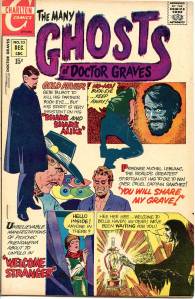
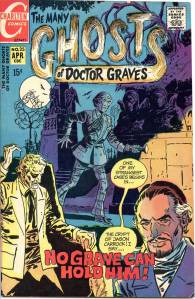
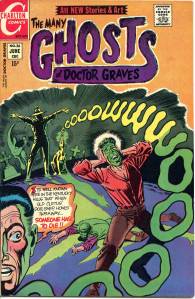
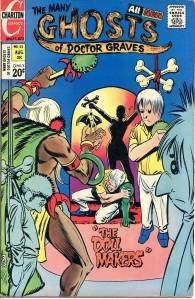
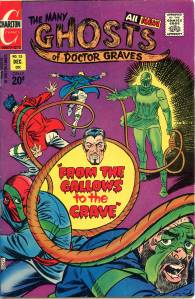
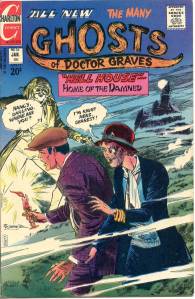
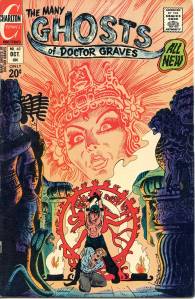
Following his introduction as Dr. M. T. Graves in Charlton Comics‘ Ghostly Tales #55 (cover-dated May 1966) in the three-page story “The Ghost Fighter” by writer-artist Ernie Bache, the character went on to host his own anthology title, The Many Ghosts of Doctor Graves. The series ran 72 issues (May 1967 – May 1982), generally published bimonthly. Following issue #60 (Jan. 1977), the title went on hiatus for seven months until issue #61 (Aug. 1977) before being canceled with #65 (May 1978). Charlton revived the title three years later with #66 (May 1981) before canceling it once more six issues later.
The Many Ghosts of Doctor Graves#54 (Dec. 1973). The cover art is among the earliest professional works of John Byrne. Three additional issues consisting solely of reprints, and titled simply Dr. Graves, were published as issues #73-75 (Sept. 1985 – Jan. 1986).
The forerunner to today’s immensely popular, vampire-themed television programs and theatrical films, Dark Shadows still garners serious attention as one of the most memorable TV shows of the last forty years. First published from 1968 to 1976, the 35 Gold Key comic books featured archetypal tales of vampires, werewolves, and the supernatural.
For generations, Ripley’s Believe It or Not! told tales of the bizarre and uncanny, but which “were absolutely true—believe it or not!” In doing so, Ripley has introduced readers to everything from child prodigies who composed masterpieces before they turned 12, to great islands built by people throwing pebbles off into the water over a period of several generations.
In this series, previously entitled “True War Stories,” Ripley tends to stretch the bounds of credibility. Readers who do not dispute the existence of spirits may have trouble believing these thrilling tales of ghost ships, hauntings, and other supernatural phenomena. Then again, Ripley has always known how to tell a good yarn—whether you believe it or not!
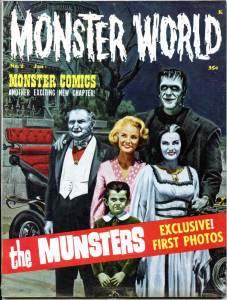
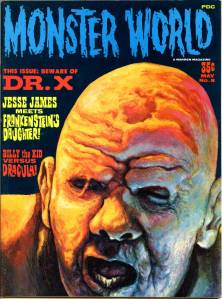
Begun by James Warren, Warren Publishing’s initial publications were the horror-fantasy–science fiction movie magazine Famous Monsters of Filmland and Monster World, both edited by Forrest J Ackerman. Warren soon published Spacemen magazine and in 1960 Help! magazine, with the first employee of the magazine being Gloria Steinem.
After introducing what he called “Monster Comics” in Monster World, Warren expanded in 1964 with horror-comics stories in the sister magazines Creepy and Eerie – black-and-white publications in a standard magazine format, rather than comic-book size, and selling for 35 cents as opposed to the standard comic-book price of 12 cents. Such a format, Warren explained, averted the restrictions of the Comics Code Authority, the comic-book industry’s self-censorship body.
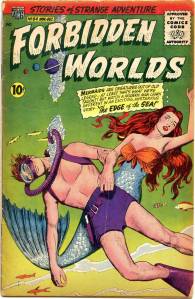
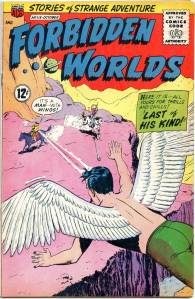
Forbidden Worlds, a 52-page comic with the initial subtitle “Exploring the Supernatural!”, debuted in October 1951. Due to pressure from the 1954 Senate subcommittee hearings on the dangers of comic books, the comic changed its title (and focus) to Young Heroes from March 1955 to June/July 1955 (publishing issues #35–37). However, in August 1955, Forbidden Worlds reappeared with (another) issue #35 and the altered subtitle “Stories of Strange Adventure”.









 EHT Comics