
Married… with Children was adapted into a comic book series by NOW Comics starting in 1990. Featuring all the characters you know and love — Al Bundy, Peggy Bundy, Bud Bundy, Kelly Bundy, Snake Face, Greg Miller, Dean Keller and Suzy!
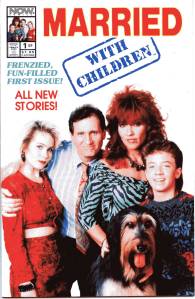
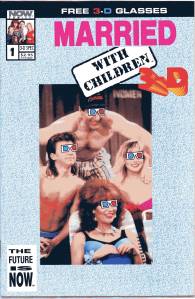
Married… with Children was adapted into a comic book series by NOW Comics starting in 1990. Featuring all the characters you know and love — Al Bundy, Peggy Bundy, Bud Bundy, Kelly Bundy, Snake Face, Greg Miller, Dean Keller and Suzy!
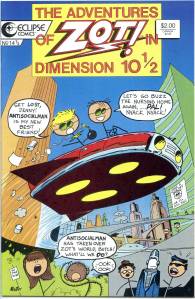
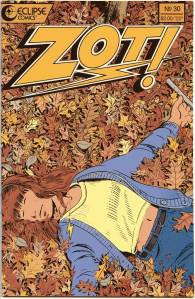
Zot! is a comic book created by Scott McCloud in 1984 and published by Eclipse Comics until 1990 as a lighthearted alternative to the darker and more violent comics that dominated the industry during that period. There were a total of 36 issues, with the first ten in color and the remainder in black and white. McCloud credited Astro Boy creator Osamu Tezuka as a major influence on the book, making it one of the first manga-inspired American comic books.






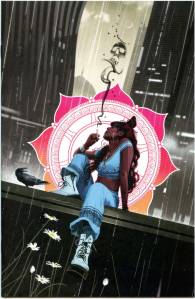
With humanity on the verge of discovering immortality, the avatar of Death is fired and relegated to the world below to live out her now-finite days in the body of twenty-something Laila Starr in Mumbai. Struggling with her newfound mortality, Laila hatches a plan and soon discovers a way to be placed at the time and location where the creator of immortality will be born . . . But will Laila take her chance to permanently reverse the course of (future) history, or does a more shocking fate await her within the coils of mortal existence?

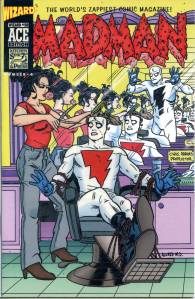
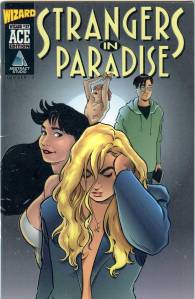
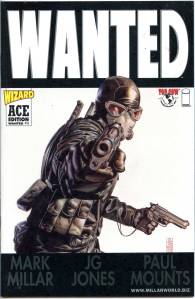
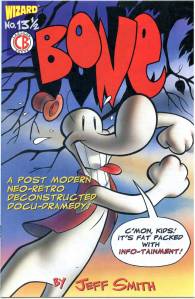
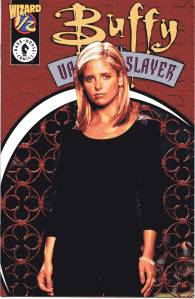
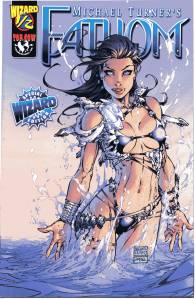
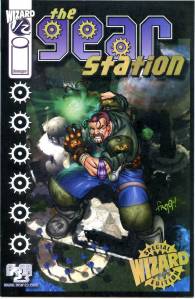
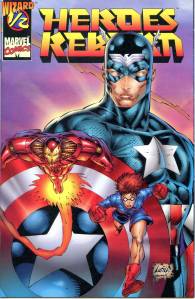
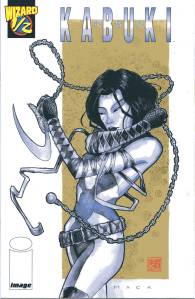
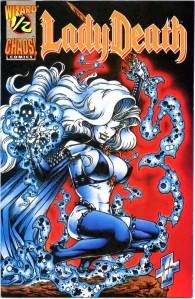
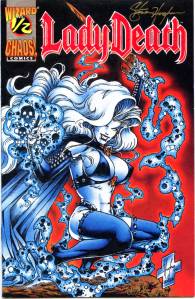
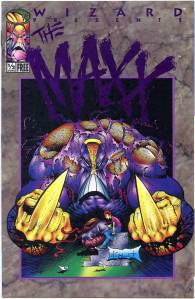
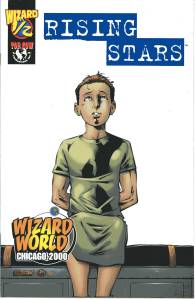
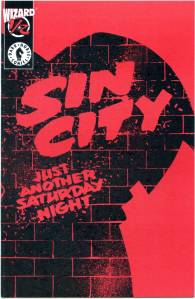
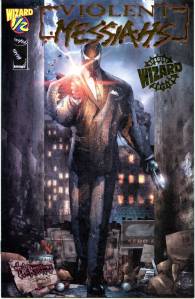
Wizard often featured mail-away offers for exclusive merchandise. Wizard began a practice of producing specially offered Wizard #½ issues. These were special issues of ongoing major comic book series which featured in-continuity stories that supplemented the regular series’ published issues. The issues were numbered #½ so as not to disrupt the series’ ongoing numbering system. Often Wizard would also include free pack-in issues with their magazines, usually numbered as Wizard #0.


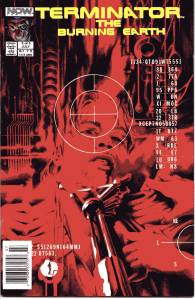
The story is set as part of the background history of John Connor‘s future war with the machines. It is also set after the events of the 17 part The Terminator (1988–1989) series also penned by Fortier. The story starts with members of the resistance fighting against the machines with John (nicknamed Bear) giving a commentary on how the war has been. Later he is seen having what could only be described as a loss of faith as he is shown putting a pistol to his mouth. However, after watching two lone fighters (one injured) firing on an oncoming Hunter Killer tank only to be run over, John regains his resolve to never stop and never give up.

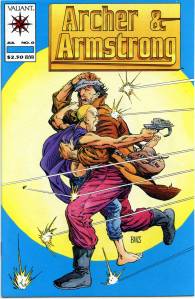
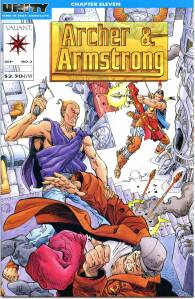
Murdered by his sadistic parents, Obadiah Archer returns from the dead with uncanny physical abilities and a mission: to punish all evil-doers like his parents; Learning martial arts in the Orient, Archer soon becomes the world’s greatest fighter!; He soon encounters Armstrong, a free-spirited immortal with the strength of ten men!; They have just met when they are attacked by Armstrong’s foes, the Sect.; Can they survive their crazy friendship?


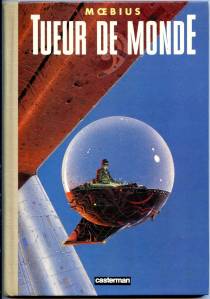
Tueur de Monde (translation: Killer of the World) follows a space traveller named Fildegar, a human crew member on a tubular vessel called the Laché Tout (Drop Everything), a floating greenhouse filled with fields of flowers. When Fildegar is not nurturing the flora inside the ship, he passes his time painting frescoes on the corridor walls, gazing into the ship’s central crystal and on rare occasions filing away old photographs which often reminds Fildegar of past memories. Suddenly Fildegar’s ship enters an unknown galaxy and discovers a planet called Bar-Jona inhabited by the contemplative creatures the Tragos. After landing on the planet’s surface and greeting it’s indigenous population, Fildegar inexplicably becomes pulled by some mysterious force and finds himself gazing up at a giant fungi.
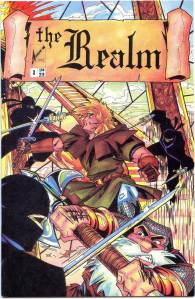
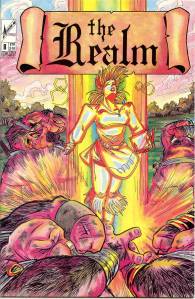
Four normal modern day teenagers are plunged into a world they thought only existed in novels and film. They are whisked away to a magical land where dragons roam the skies, orcs and hobgoblins terrorize travelers, and kingdoms wage war for dominance. It is a world where man is just one race, joining other races such as elves, trolls, dwarves, changelings, and the dreaded night creatures who steal the night. Not a typical “dungeons and dragons” world, for this story follows the adventures of these teens into the unknown as we watch the world unfold with their eyes. It is a world that is foreign to them. We learn as they learn. And what hope do these teens have in this strange Middle Earth world? How can they survive against wizards, dwarves, halflings, dragons, and trolls if they had a hard time making it in high school?


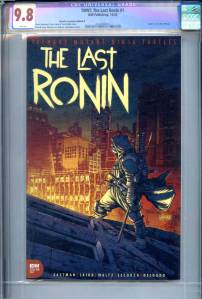
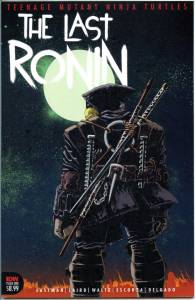
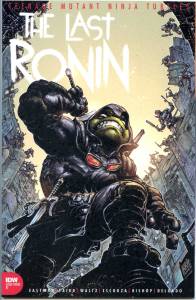
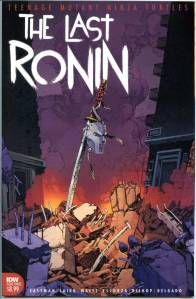
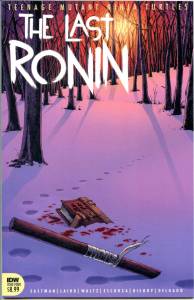
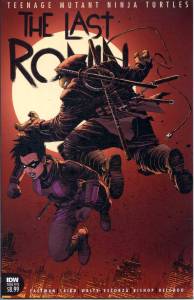
In a future NYC far different than the one we know today, a lone surviving Turtle goes on a seemingly hopeless mission to obtain justice for his fallen family and friends. Kinetic layouts from Eastman, moody inks from Andy Kuhn and a thrilling script full of surprises from longtime TMNT scribe Tom Waltz all combine to make this one of the most memorable TMNT stories you will ever read! This is a perennial TMNT tale that can’t be missed!
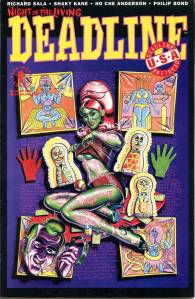
You’ve seen him on MTVs Liquid Television–Richard Sala continues his all-new, ultraterrifying 13 O’clock! He’s harder than hard-boiled, he’s Johnny Nemo by the ultrascientific Peter Milligan and Brett Ewins! It’s sex, it’s rock n’ roll, but is it drugs? It’s Doe, the latest graphic vortex from Harvey Award ultranominee Ho Che Anderson! They play the game, God makes the rules! They’re the A-Men by the ultraconservative Shaky Kane! Plus work by Julie Hollings, Philip Bond, Alec Stevens, D’Israeli and never forget GWAR, puny human! And an ultraspecial music feature! And another ultraschizophrenic cover painting from the corkscrewed psyche of Mitch O’Connell!
 EHT Comics