The Choke is a 5 issues horror anthology miniseries published by Anubis Press in 1993-94 with covers by amazing artists such as James O’barr and Jim Balent.
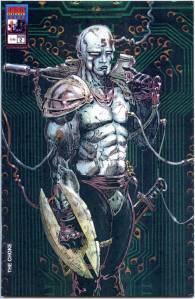
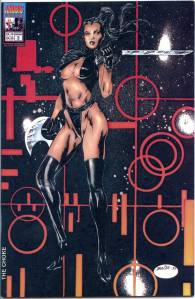
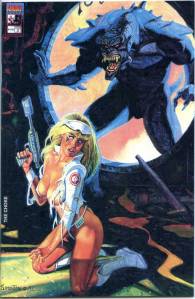
The Choke is a 5 issues horror anthology miniseries published by Anubis Press in 1993-94 with covers by amazing artists such as James O’barr and Jim Balent.
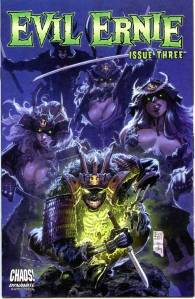
After Ernest Gleckman is mortally wounded, he discovers he must “pay down his new lease on life” by serving as a part time fixer for a death cult. Each time he manifests his dark side as Evil Ernie it becomes harder to maintain his tenuous grip on his inherently good humanity.
Ernest Gleckman is a good kid with exceptional grades in his senior year at college…his only quirk is the rock band he sings in every Saturday night. He enjoys the rock esthetic and “dressing the role” if not acting like a nihilistic punk.
All that is changed when he assumes the role of… Evil Ernie who is the polar opposite of Ernest. Ernie is vicious and cruel and sadistic as he employs all manner of torture or murder (or oft-times both!) against his targets.


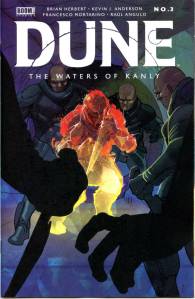
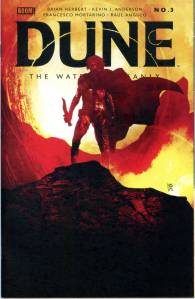
Go deeper into the Dune universe with this lore-expanding story set during the events of the Frank Herbert classic! In the aftermath of the battle of Arrakeen, legendary House Atreides warmaster Gurney Halleck takes refuge with spice smugglers, vowing revenge against the Harkonnens no matter the cost.

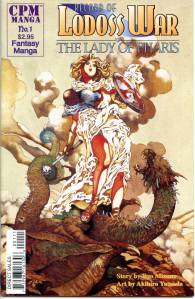
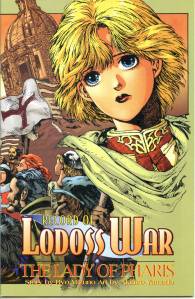
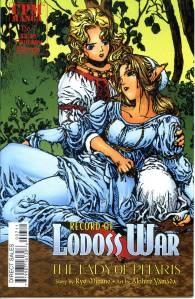
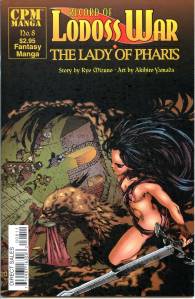
Lady of Pharis introduces new Lodoss characters including the heroine, Flaus, a savage warrior fire maiden, who leaves her evil master to live a life of her own amid the demons and vampires of Lodoss. She meets Wort and Beld, who join her quest to find the legendary King Fahn. They journey to Allania where they are tested to the limit in defending Lodoss from the horned Beast and the powerful witch Mana!
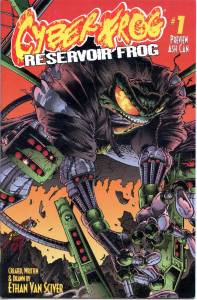
Cyberfrog attacks a band of cybernetic insects known as the Swarm who murdered a young couple in their apartment. As the Swarm gain the advantage Cyberfrog finds two large cannons have appeared on his arms. Unsure of the origins of the weapons Cyberfrog quickly drives the Swarm away. Meanwhile, the spirit of Ben Riley appears to a suicidal teen named Yoshi and offers Yoshi his artifact. Later, the Swarm have assembled underground and rally together, vowing to rid the streets of those who created and abandoned them; Traffik. Heather arrives at Cyberfrog’s apartment shortly before the Swarm attacks in full force.
A large spacecraft emerges from a swamp and flies away as the Swarm surrounds Cyberfrog’s apartment and begins their attack. Cyberfrog has again found himself bearing powerful weapons. The leader of the Swarm kills the leader of Traffik, and Ben passes his artifact to Yoshi, christening him as Dragon-Fly. Cyberfrog engages the Swarm in a heated battle and is eventually overwhelmed. Heather investigates the battle and is targeted by the Swarm. Cyberfrog jumps in front of the shots meant for Heather and is heavily wounded.The spacecraft from the swamp suddenly arrives at the battle, kills all members of the Swarm and informs Heather that it is Cyberfrog’s mother.

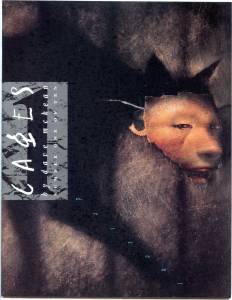
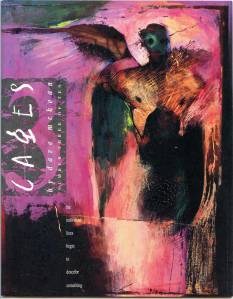
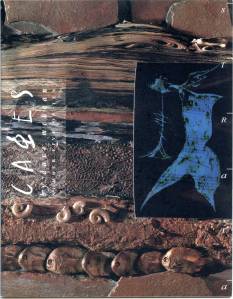
Cages is a ten-issue comic book limited series by Dave McKean. It was published between 1990 and 1996, and later collected as a single volume.
Cages is a story about artists, belief, creativity and cats, illustrated in a stripped-down pen and ink style.


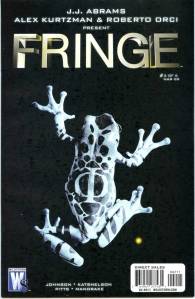
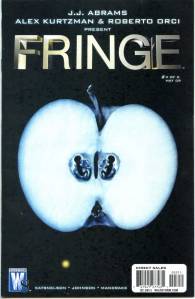
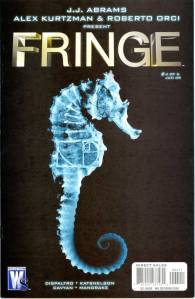
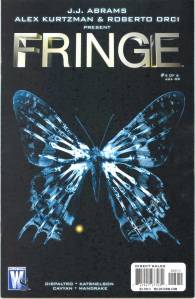
FBI Agent Olivia Dunham, brilliant scientist Walter Bishop and his estranged son Peter investigate the world of “fringe science” (telepathy, time travel, etc.) following suspicions that the large scientific research company, Massive Dynamic, is experimenting on the general public.

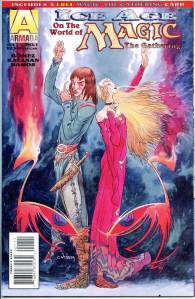
“The Twilight Kingdom” – Set in the world of Dominia, this series of adventures is set during a time in history when glaciers and snow covered most of the world. Closely tied to the release of the Ice Age expansion deck for The Gathering, published by Wizards of the Coast early in 1995. Written by Jeff Gomez, with art by Rafael Kayanan and Rodney Ramos. Painted cover by Charles Vess.


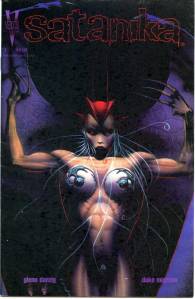
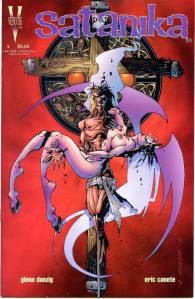
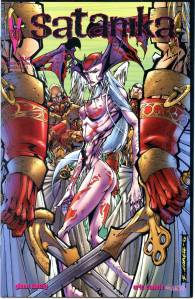
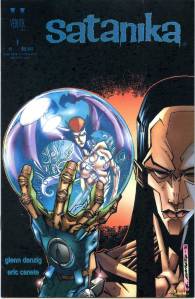
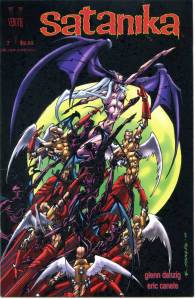
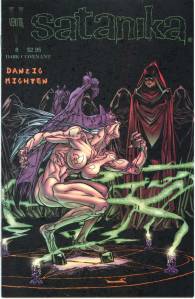
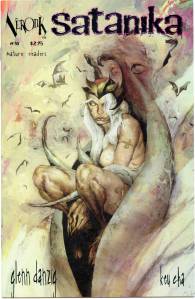
2nd Series. Satanika is a comic book character created by Glenn Danzig that first appeared in Satanika #0. Satanika was described as a demoness with some succubus-like aspects, but generally did not have a true succubus aspect to her. Through the series Satanika indulged in her sexual appetites and attracted a wide variety of attention from other demons and angels which eventually brought about her downfall.
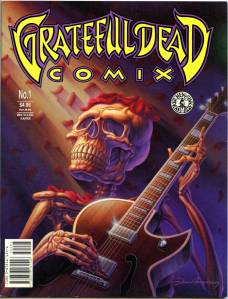
Jerry Garcia was a big comic book fan. When he made his “first real money” the very first thing he bought was a complete set of E.C. Comics. By 1991 he was ready for his band to have its own comic book series. So George Lucas’ licensing arm (representing the band at that point for ancillary merchandise) contacted longtime underground comics publisher Kitchen Sink Press to create this unusual hippie merger of music and comics. Issue No. 1 is kicked off by a great Dean Armstrong cover along with visual interpretations of four classic Dead songs: “Dire Wolf” by Tim (Scout) Truman; “Terrapin Station” (Dan Steffan); “One More Saturday Night” (Fred Carlson) and “Casey Jones” (Nina Paley), with a pin-up by Jean Giraud also known by his trippy pen name Moebius.