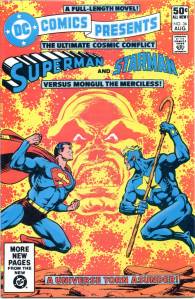
DC Comics Presents V1 (1978)

DC Comics Presents debuted with a July/August 1978 cover date . The series was launched with a team-up of Superman and the Flash by writer Martin Pasko and artist José Luis García-López.  Issue #26 included an insert introduction story to the then-upcoming New Teen Titans series by Marv Wolfman and George PérezLen Wein and Jim Starlin co-created the supervillain Mongul in issue #27 (Nov. 1980) as part of a three-issue storyline. Another insert in issue #41 previewed the “new direction” Wonder Woman. In issue #47, Superman traveled to Eternia and met the Masters of the Universe. Ambush Bug made his first appearance in issue #52 (Dec. 1982)  and made additional appearances in issue #59 and #81. The Superman/Challengers of the Unknown tale in issue #84 was drawn by Jack Kirby and Alex Toth. The series also contained the Alan Moore Superman/Swamp Thing story “The Jungle Line” in DC Comics Presents #85 (Sept. 1985), pencilled by Rick Veitch and inked by Al Williamson. Issue #87 featured the first appearance and origin of the divergent Kal-El of the Earth Prime reality, who would become known as Superboy-Prime. The final issue is an exception to the team-up format, instead featuring Superman in an “Untold Tale” involving the Phantom Zone, by Steve Gerber, following up in his limited series of the same title.

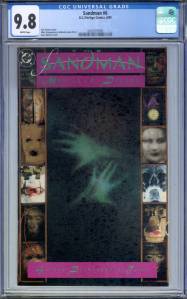
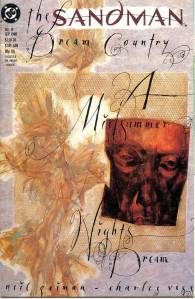
The Sandman V2 (1989)

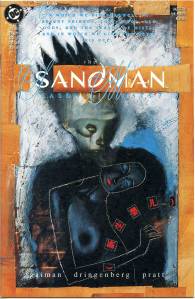
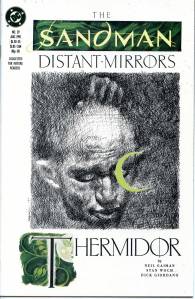
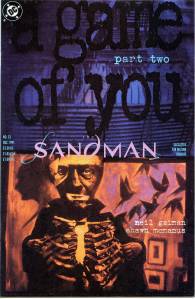
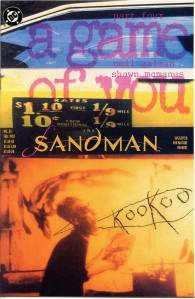
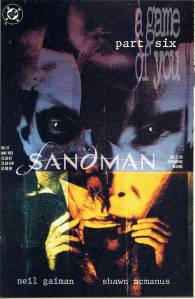
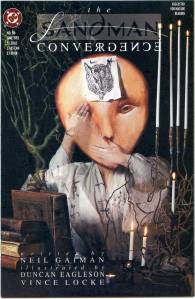
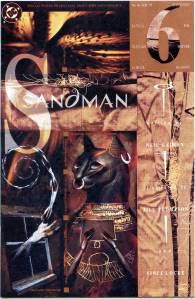
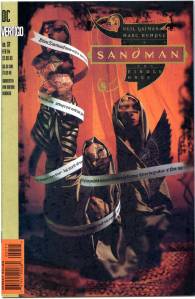
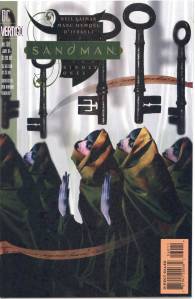
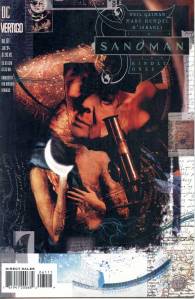
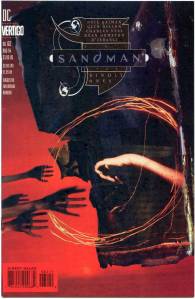
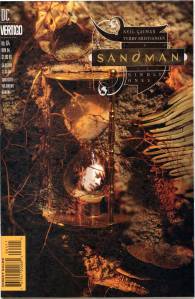
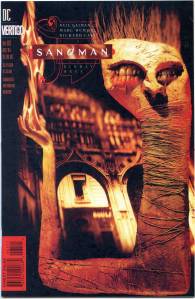
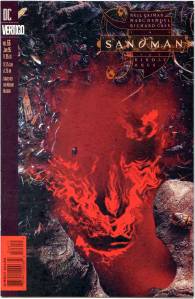
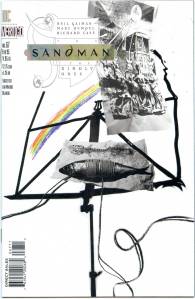
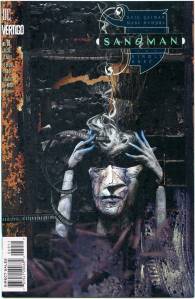
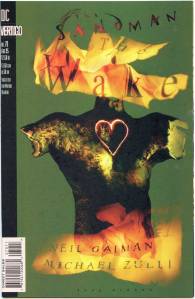
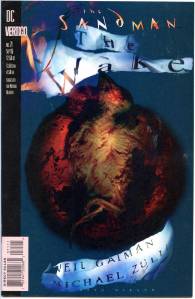
The main character of The Sandman is Dream, also known as Morpheus and other names, who is one of the seven Endless. The other Endless are Destiny, Death, Desire, Despair, Delirium, who was once Delight, and Destruction, who turned his back on his duties. The series is famous for Gaiman’s trademark use of anthropomorphic personification of various metaphysical entities, while also blending mythology and history in its horror setting within the DC Universe. The Sandman is a story about stories and how Morpheus, the Lord of Dreams, is captured and subsequently learns that sometimes change is inevitable. The Sandman was Vertigo’s flagship title, and is available as a series of ten trade paperbacks, a recolored five-volume Absolute hardcover edition with slipcase, in a black-and-white Annotated edition, and is available for digital download. Critically acclaimed,The Sandman was one of the first few graphic novels ever to be on the New York Times Best Seller list, along with Maus, Watchmen and The Dark Knight Returns. It was one of five graphic novels to make Entertainment Weeklys “100 best reads from 1983 to 2008,” ranking at No. 46. Norman Mailer described the series as “a comic strip for intellectuals.” The series is noted for having a large influence over the fantasy genre and graphic novel medium since then.

Challengers of the Unknown (1977)

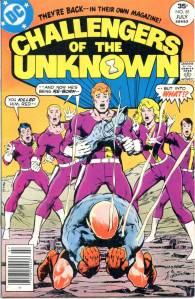
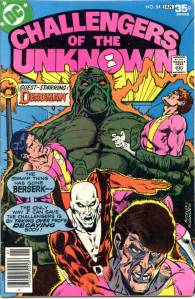
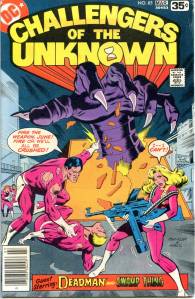
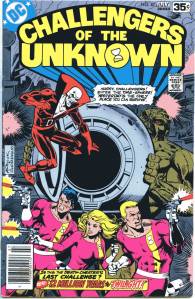
In 1977, the group returned to its own title continuing the number with #81. During this period, they were joined by Deadman and Swamp Thing, and June Robbins got a uniform and official status. No explanation was given for Corinna Stark’s departure, nor June’s joining the team. The revived series was canceled with issue #87 in 1978.

Vertigo Tarot – 1st Edition (1995) Factory Sealed

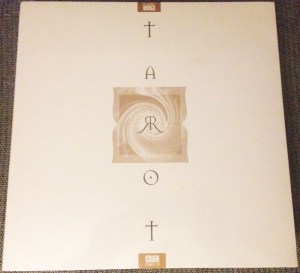
This set was issued in 1995 and was limited to 5000 sets. It is easily one of the most sought after Vertigo Items ever produced. The cards, loosely based on characters from DCs Vertigo comic imprint, are among the most uneasily beautiful interpretations ever. This particular set is still factory sealed and in excellent condition.

Wonder Woman 80th Anniversary (2021)

This oversize super spectacular features work from some of the very best in the comic industry along with bright young stars ready to share the spotlight with Diana. You won’t want to miss these new stories that capture timeless messages of hope and empowerment presented together in this gorgeous keepsake issue!

Batgirl V4 – New 52 (2011)

In September, 2011, following the company-wide relaunch, Barbara Gordon stars in a new Batgirl series—one of The New 52 titles featuring the company’s most iconic characters. The conclusion of the limited series Flashpoint (2011) establishes a new continuity within the DC Universe, with all characters regressing to an earlier age and stage in their careers, while remaining in a modern timeline. DC Senior VP of Sales, Bob Wayne, explained that with each of their titles reverting to issue #1, “our creative teams have the ability to take a more modern approach—not only with each character, but with how the characters interact with one another and the universe as a whole, and focus on the earlier part of the careers of each of our iconic characters.” Wayne also stated that “The Killing Joke” still happened and she was Oracle. Now she will go through physical rehabilitation and become a more seasoned and nuanced character because she had these incredible and diverse experiences.

Death: The High Cost of Living (1993)

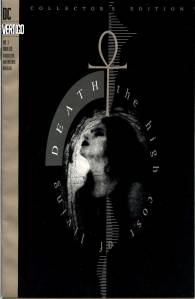
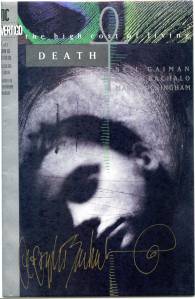
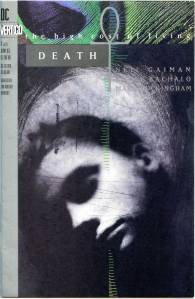
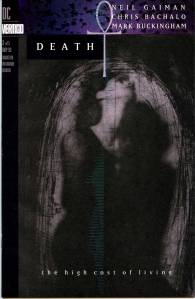
Death: The High Cost of Living is written by Neil Gaiman with art by Chris Bachalo and Mark Buckingham. It is a spin-off from Gaiman’s best-selling Vertigo Comics series The Sandman, featuring the Sandman (Dream)’s elder sister, Death of the Endless in a self-contained story based around the fable that Death takes human form once a century, to remain grounded and in touch with humanity, an idea touched upon in several other media, for example in the 1934 film Death Takes a Holiday and in the Terry Pratchett novel Reaper Man.

A movie based on this series has been in the works for several years in various stages of development and until recently was in the works at New Line Cinema. Gaiman had previously confirmed that this movie was in progress and that he was planning on writing the script and directing it, with Guillermo del Toro as executive producer. The film, which is currently on hold, was operating under the title Death and Me.

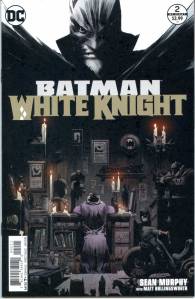
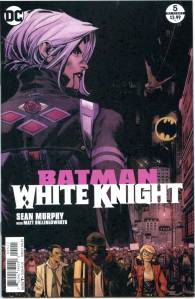
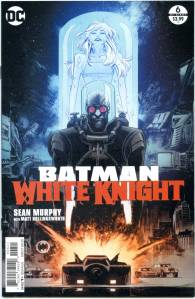
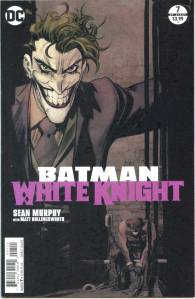
Batman: White Knight (2017)

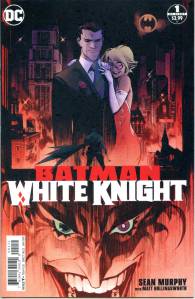
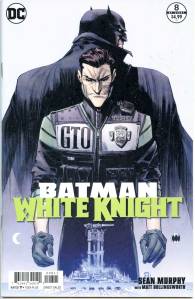
Batman: White Knight is set in a different continuity to the prime DC Universe/The New 52, though several common arcs are still present; most notably, Jason Todd is believed to be dead at the Joker’s hands. The story follows Jack Napier, a reformed Joker, who has been cured of his insanity and now views Batman as the greatest villain of Gotham City and the source of the city’s endless crime cycle. Additionally, the series reworks Harley Quinn as two individuals: her initial jester design is the original Harleen Quinzel, whereas her Suicide Squad design is an equally obsessed doppelgänger named Marian Drews who took her place in her absence.

The Unexpected (1970’s)

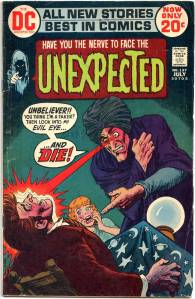
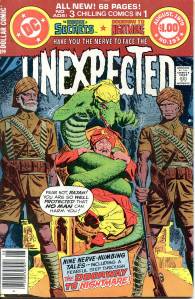
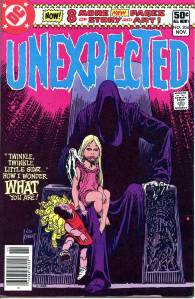
In 1979, The Unexpected converted to the Dollar Comics format and incorporated House of Secrets and The Witching Hour. Each “Unexpected” story would always include the word in its last panel. After the merge, this was only true of the Unexpected section; there would then be complete, ad-free issues of The Witching Hour, hosted by its witches, and The House of Secrets, hosted by AbelThe Witching Hour feature was alternated with Doorway to Nightmare starring Madame Xanadu, which appeared in issues #190, 192, 194, and 195.

New Adventures of Superboy (1980)

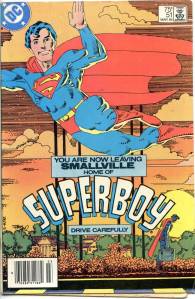
his series was published by DC Comics from January of 1980, until June of 1984, branching off from Superboy and the Legion of Super-Heroes, which also split into Legion of Super-Heroes (Volume 2) and from the Superman Family Vol 1. Like its predecessor, Volume 1, this title focused on the adventures of young Clark Kent before he became Superman. The majority of his adventures took place in his home town of Smallville, Kansas. The title contains the final appearances of the Earth-One Superboy prior to the eradication of the Earth-One continuity during the Crisis on Infinite Earths. Between 1984 and the 1986 Post-Crisis continuity relaunch, the only Superboy to appear in DC Comics was Superboy-Prime.