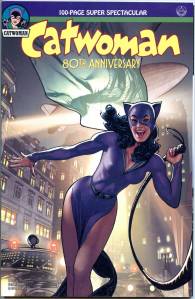
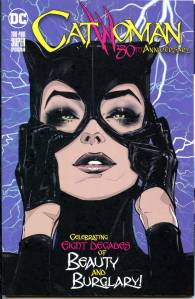
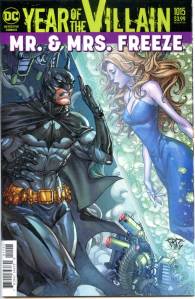
Our gal Catwoman turns 80 (and looking very good, if we meow say), and DC is celebrating with nothing less than with a huge soiree, invite only, packed with creators who mean the most to her and to whom she means the most! Stories featured in this 100-page spectacular include a tail-sorry, tale-that takes place at the end of the Brubaker/Stewart Catwoman run, in honor of artist Darwyn Cooke. Plus, Catwoman is caught by an exotic cat collector, runs into a wannabe thief trying to prove himself as her apprentice, encounters a mystery involving memorabilia from alternate continuities, and of course some Bat/Cat fun.
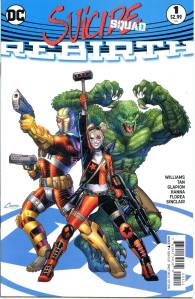
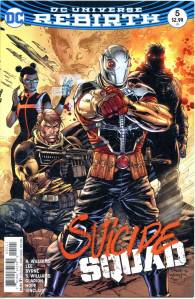
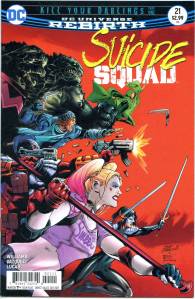
Using the end of the New 52 initiative as a launching point, DC Comics began a second relaunch of its entire line of titles called DC Rebirth in 2016. Suicide Squad (vol. 5) #1 (August 2016) was the debut bimonthly relaunch of the team’s comic book title which consisted of Amanda Waller, Deadshot, Rick Flag, Captain Boomerang, Harley Quinn, Killer Croc, Katana & Enchantress. The Suicide Squad was given a new look, reflecting the team’s appearance in the DC Extended Universe.
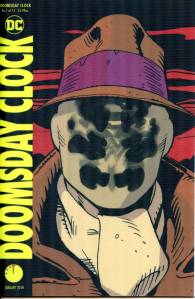
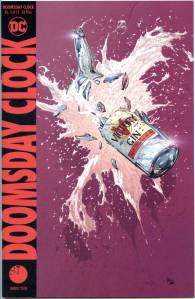
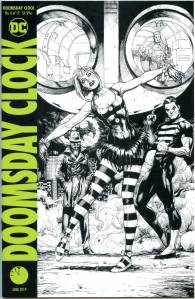
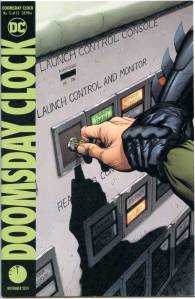
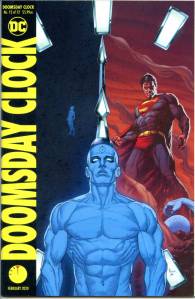
Doomsday Clock is part of the DC Rebirth initiative, and it continues the narrative that was established with the 2016 one-shot DC Universe: Rebirth Special, the 2017 crossover event “The Button” and other related stories. It is a follow-up to the 1986–1987 miniseries Watchmen by Alan Moore, Dave Gibbons and John Higgins, and it introduces that story’s characters into the DC Universe, alongside a few original characters created for the book. Although Dan DiDio (then DC’s co-publisher) confirmed that it is a sequel to that miniseries, Johns originally declined to characterize it as such, viewing it as a standalone story, saying, “It is something else. It is Watchmen colliding with the DC Universe.”
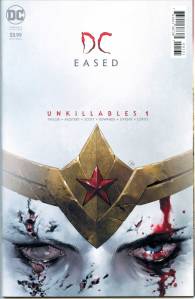
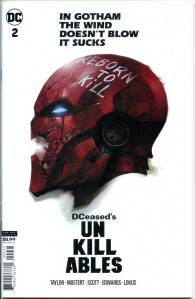
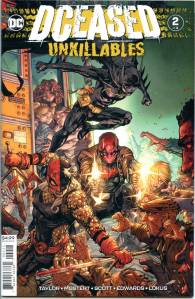
The Unkillables were a group of villains trying to survive the Anti-Living and were first led by Vandal Savage until his death. They later escaped to Bludhaven where the heroes led by Jim Gordon joined them.
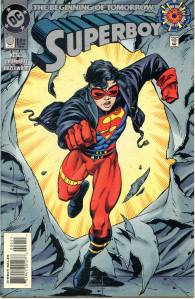
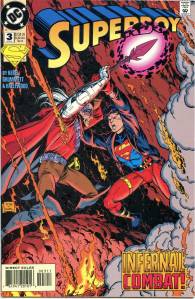
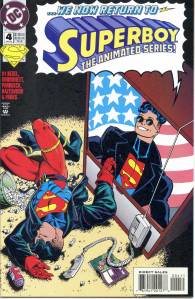
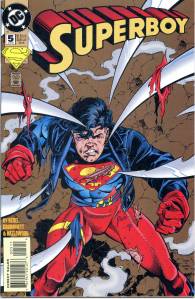
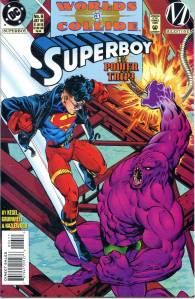
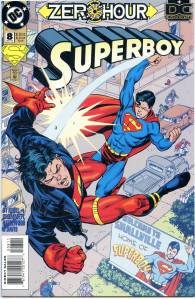
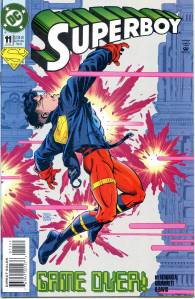
This series featured the clone of Superman and his adventures as part of Cadmus. In Superboy (vol. 4) #1 (February 1994), the new Superboy settled in Hawaii with his supporting cast, becoming Hawaii’s resident superhero for the next four years until Superboy (vol. 4) #48 (February 1998). Starting in Superboy (vol. 4) #56 (November 1998), Superboy returned “home” when he began working for Cadmus. In Superboy (vol. 4) #59 (February 1999), Superman gave Superboy the Kryptonian name of Kon-El. After leaving Cadmus and living on his own for a brief time in Metropolis, Kon-El went to live with Jonathan and Martha Kent in Smallville, where he adopted a secret identity as their nephew (and Clark’s cousin) Conner Kent.
The JSA remained inactive for some time after the events of “Zero Hour“, but the surviving members (the Flash, Wildcat, and Alan Scott, (now going by the name Sentinel) have remained active throughout the DC Universe, having been placed as reserve JLI members, as evidenced in Justice League Europe #50.
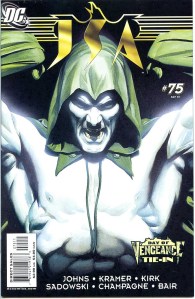
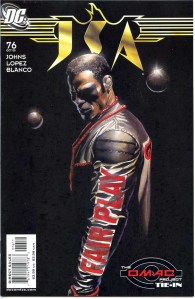
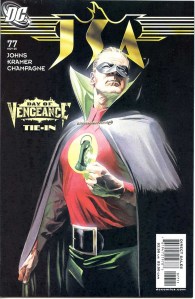
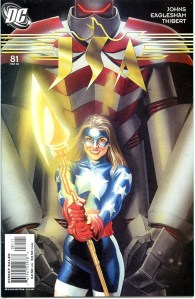
The Justice Society was revived as a monthly series called JSA in 1999 which mixed the few remaining original members with younger counterparts. This incarnation of the team focused on the theme of generational legacy and of carrying on the heroic example established by their predecessors. The series was launched by James Robinson and David S. Goyer. Goyer later co-wrote the series with Geoff Johns, who continued to write the series solo after Goyer’s departure. The series featured the art of Stephen Sadowski, Leonard Kirk, and Don Kramer, among others. It featured a story by Pulitzer Prize winner Michael Chabon.
During the events of Infinite Crisis, some of the surviving Golden Age characters, such as Wildcat and the Flash, are transported to the new “Earth-Two”, as created by Alexander Luthor, and seem to recall the existence of the original one, albeit vaguely.
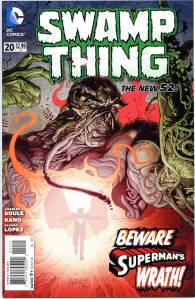
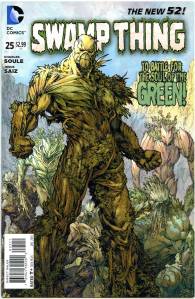
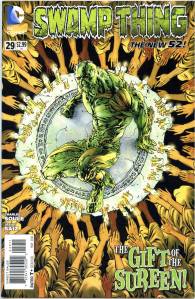
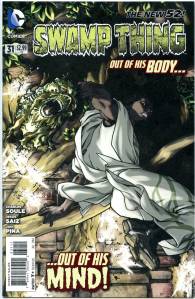
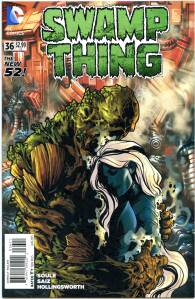
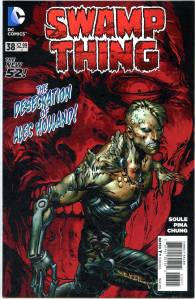
Swamp Thing (Volume 5) is one of “The New 52” ongoing series published after Flashpoint. It tells the story of Alec Holland‘s transformation into Swamp Thing following his resurrection from death.
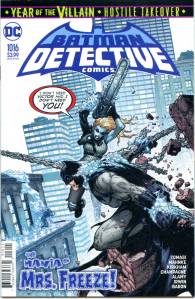
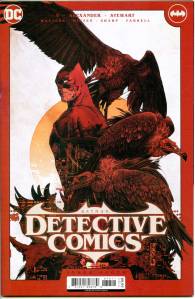
The next regular writer after James Tynion IV was Peter Tomasi who began on the series with issue #994, published December 2018. Tomasi’s run as writer continued for two years until issue #1033, published December 2020.
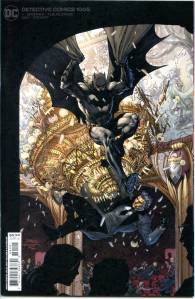
On March 27, 2019, DC Comics released the series’ 1,000th issue, marking the second American comic book in history to reach that milestone after Action Comics in 2018. The issue, which coincided with Batman’s 80th anniversary, is an anthology featuring several stories from a variety of different creative teams.
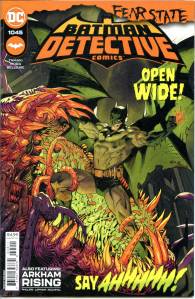
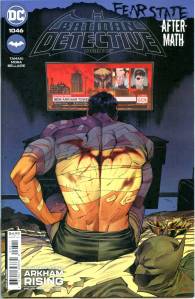
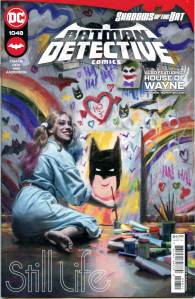
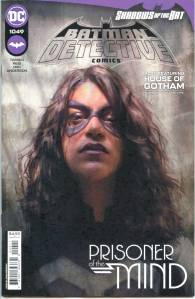
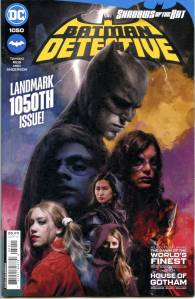
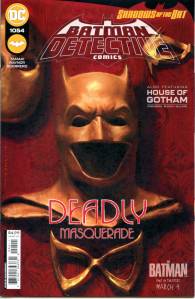
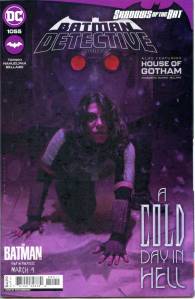
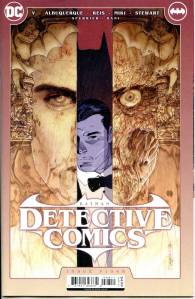
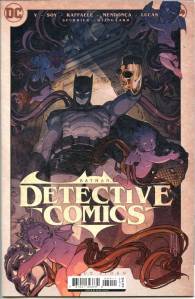
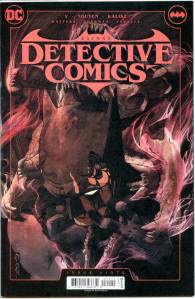
Writer Mariko Tamaki began on the series with issue #1034 as part of the Infinite Frontier line-wide relaunch. In April 2022, it was announced that Ram V and Rafael Albuquerque would serve as the new creative team starting with issue #1062.









































 EHT Comics