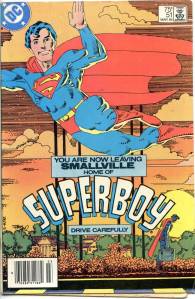
his series was published by DC Comics from January of 1980, until June of 1984, branching off from Superboy and the Legion of Super-Heroes, which also split into Legion of Super-Heroes (Volume 2) and from the Superman Family Vol 1. Like its predecessor, Volume 1, this title focused on the adventures of young Clark Kent before he became Superman. The majority of his adventures took place in his home town of Smallville, Kansas. The title contains the final appearances of the Earth-One Superboy prior to the eradication of the Earth-One continuity during the Crisis on Infinite Earths. Between 1984 and the 1986 Post-Crisis continuity relaunch, the only Superboy to appear in DC Comics was Superboy-Prime.
Category: DC Bronze Age
Green Lantern V1 (1970’s)
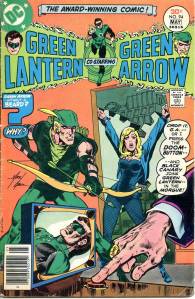
Green Lantern is the name of a number of superheroes appearing comic books published by DC Comics. They fight evil with the aid of rings that grant them a variety of extraordinary powers.
The first Green Lantern character, Alan Scott, was created in 1940 during the initial popularity of superheroes. Alan Scott usually fought common criminals in New York City with the aid of his magic ring. The publication of this character ceased in 1949 during a general decline in the popularity of superhero comics, but the character saw a limited revival in later decades.
In 1959, to capitalize on the booming popularity of science fiction, the Green Lantern character was reinvented as Hal Jordan, an officer for an interstellar law enforcement agency known as the Green Lantern Corps. Additional members of this agency, all of whom call themselves Green Lanterns, were introduced over time. Prominent Green Lanterns who also have had starring roles in the books include Guy Gardner, John Stewart, Kyle Rayner, and Simon Baz.
Black Magic – DC (1973)
In 1973–1975, DC Comics published a nine-issue series reprinting Simon–Kirby material from the earlier series.[2] The new incarnation featured new covers with the same logo as the earlier issues of the Prize series. The reprint issues generally grouped the stories by theme; for example, all the stories in issue #1 dealt with intolerance toward human oddities, while all the stories in #4 were about death.
Teen Titans V1 (1966)
The Teen Titans were spun off into their own series with Teen Titans #1 by Haney and artist Nick Cardy in 1966. The series’ original premise had the Teen Titans helping teenagers and answering calls. Comics historian Les Daniels noted that Haney “took some ribbing for the writing style that described the Teen Titans as ‘the Cool Quartet’ or ‘the Fab Foursome’. The attempt to reach the youth culture then embracing performers like the Beatles and Bob Dylan impressed some observers.