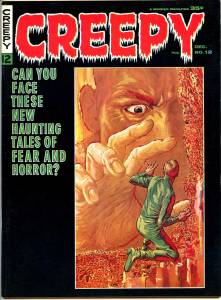
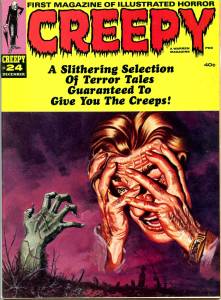
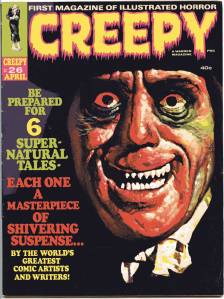
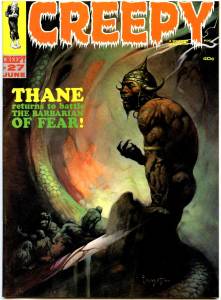
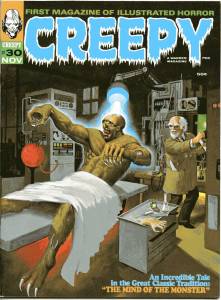
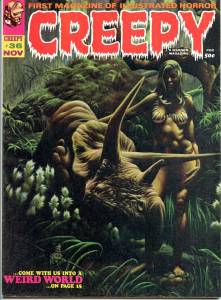
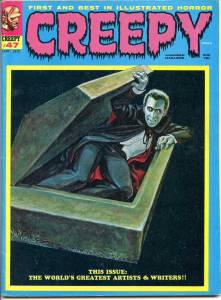
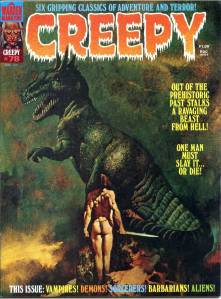
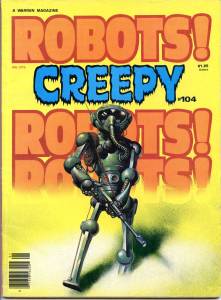
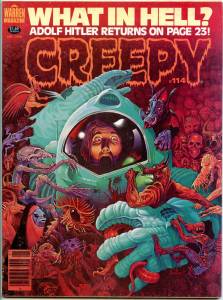
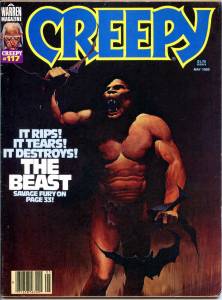
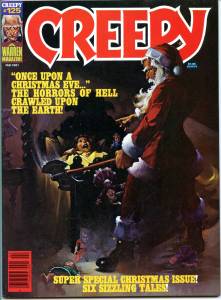
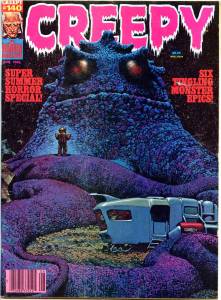
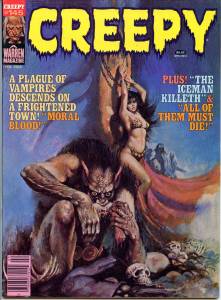
Creepy was an American horror-comics magazine launched by Warren Publishing in 1964. Like Mad, it was a black-and-white newsstand publication in a magazine format and thus did not require the approval or seal of the Comics Code Authority. The anthology magazine was initially published quarterly but later went bimonthly. Each issue’s stories were introduced by the host character, Uncle Creepy. Its sister publications were Eerie and Vampirella.
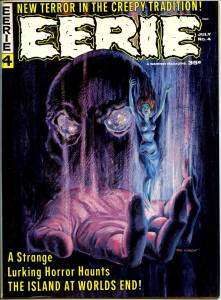
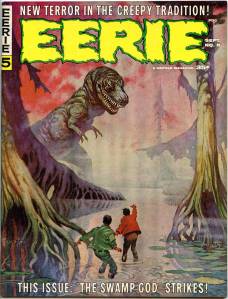
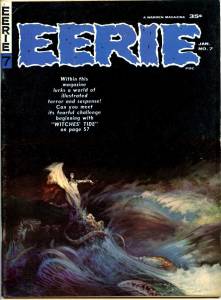
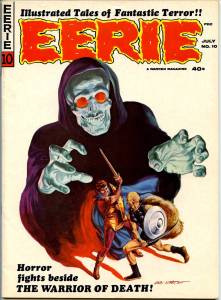
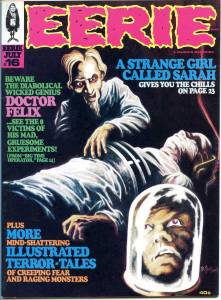
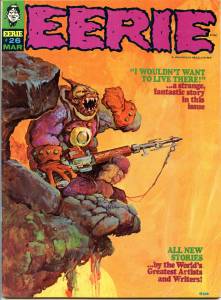
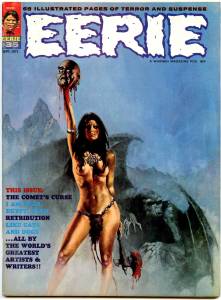
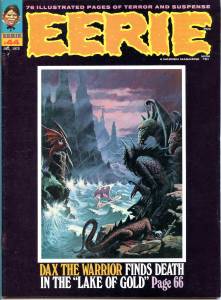
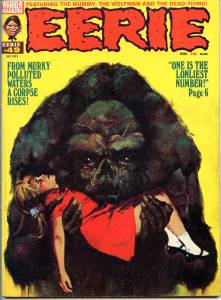
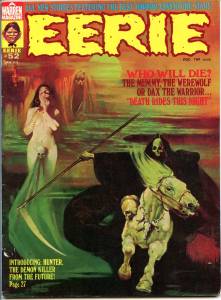
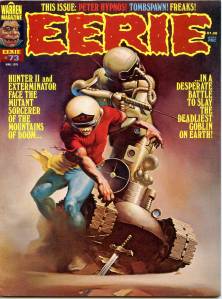
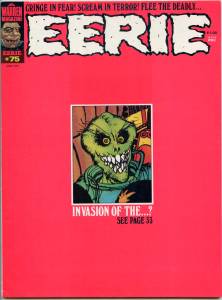
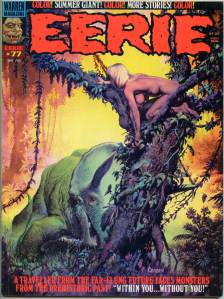
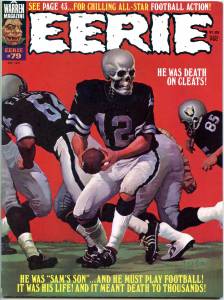
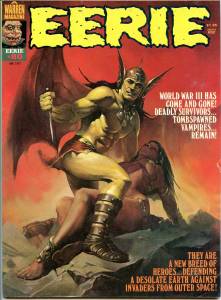
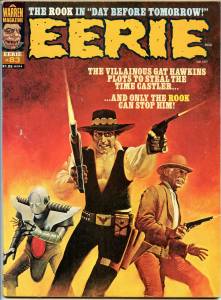
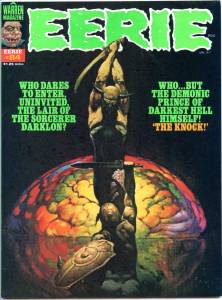
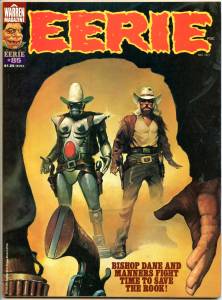
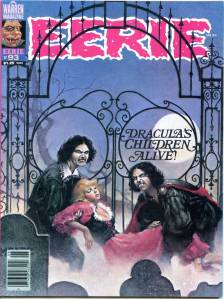
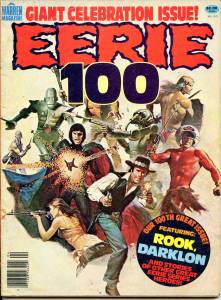
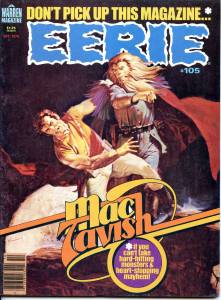
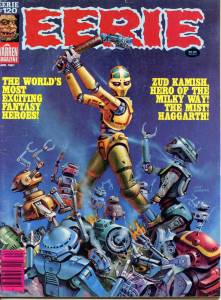
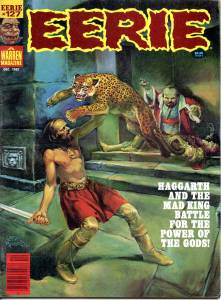
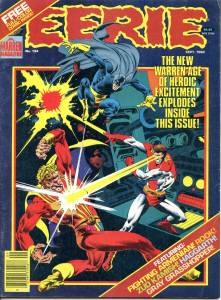
Eerie was an American magazine of horror comics introduced in 1966 by Warren Publishing. Like Mad, it was a black-and-white newsstand publication in a magazine format and thus did not require the approval or seal of the Comics Code Authority. Each issue’s stories were introduced by the host character, Cousin Eerie. Its sister publications were Creepy and Vampirella.
The first issue, in early 1966, had only a 200-issue run of an “ashcan” edition. With a logo by Ben Oda, it was created overnight by editor Archie Goodwin and letterer Gaspar Saladino to establish publisher Jim Warren’s ownership of the title when it was discovered that a rival publisher would be using the name.Warren explained, “We launched Eeriebecause we thought Creepy ought to have an adversary. The Laurel and Hardy syndrome always appealed to me. Creepy and Eerie are like Boris Karloff and Peter Lorre.”
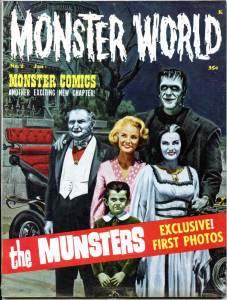
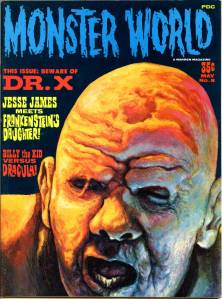
Begun by James Warren, Warren Publishing’s initial publications were the horror-fantasy–science fiction movie magazine Famous Monsters of Filmland and Monster World, both edited by Forrest J Ackerman. Warren soon published Spacemen magazine and in 1960 Help! magazine, with the first employee of the magazine being Gloria Steinem.
After introducing what he called “Monster Comics” in Monster World, Warren expanded in 1964 with horror-comics stories in the sister magazines Creepy and Eerie – black-and-white publications in a standard magazine format, rather than comic-book size, and selling for 35 cents as opposed to the standard comic-book price of 12 cents. Such a format, Warren explained, averted the restrictions of the Comics Code Authority, the comic-book industry’s self-censorship body.













 EHT Comics