Black Knight (2015)

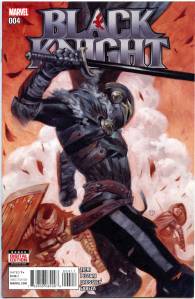
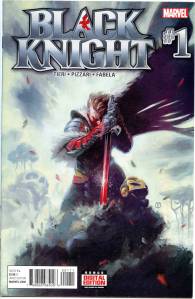
Dane Whitman is the third character to bear the Black Knight name, he was created by writer Roy ThomasJohn Verpoorten and artist George Tuska, and first appeared in The Avengers #47 (December 1967). The original Black Knight‘s descendant and the supervillain Black Knight‘s nephew, he inherited a mystical sword that carried a curse and took the Black Knight name to help restore honor, and has been a long time member of the Avengers‘ various incarnations as well as the DefendersUltraforceHeroes for Hire, and MI: 13.

The character was featured in a four-issue mini-series in 1990 and two one-shots in 1996 and 2007. Starting in 2015, he was the main character in Marvel’s All-New, All-Different Marvel ongoing Black Knight series, the first ongoing series to feature Dane Whitman as the titular character.
 

Ectokid (1993)

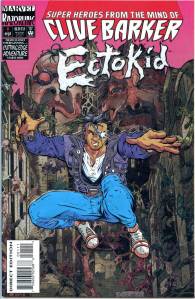
Ectokid is a fantasy series published by Marvel Comics‘ Razorline imprint that ran from 1993 to 1994. Created by filmmaker and horror/fantasy novelist Clive Barker as one of the imprint’s four interconnected series, it starred teenaged Dexter Mungo, the child of a mortal and a ghost, who is able to see and interact with the dangerous, interdimensional Ectosphere.

Avenging Spider-Man (2012)

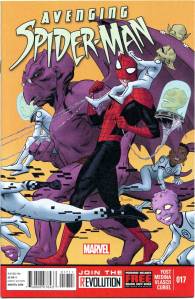
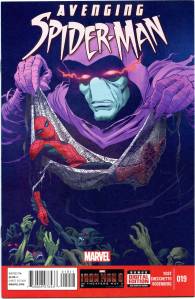
The events in the story take place in the primary continuity of the mainstream Marvel Universe along with the events of The Amazing Spider-Man and later The Superior Spider-Man. This was the first ongoing series to feature Spider-Man as the main character besides The Amazing Spider-Man since the cancellation of Friendly Neighborhood Spider-Man and the second volume of Sensational Spider-Man in December 2008 following the conclusion of the “One More Day” storyline. Avenging Spider-Man has also been instrumental in Marvel’s shift towards including codes to receive free digital copies of the comic with purchased print comic books.

Monsters Unleashed (1973)


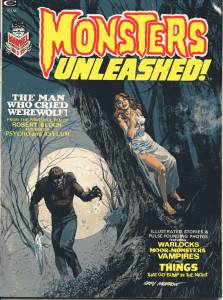
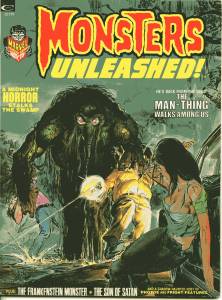
A magazine rather than a comic book, Monsters Unleashed did not fall under the purview of the comics industry’s self-censorship Comics Code Authority, allowing the title to feature stronger content — such as moderate profanity, partial nudity, and more graphic violence — than color comics of the time.


Giant-Size Spider-Man (1974)

Part of the “Giant-Size” format that Marvel published from 1974 to 1976 that featured comics that were much larger than other Spider-Man books at the time and had multiple stories, with the second one usually being a reprint of an earlier Spider-Man story.

Man-Thing V2 (1979)

A second Man-Thing series ran 11 issues (Nov. 1979 – Jan. 1981). Writer Michael Fleisher and penciller Mooney teamed for the first three issues, with the letters page of #3 noting that Fleisher’s work had received a great deal of negative criticism and that he had been taken off the book. He was succeeded by, primarily, writer Chris Claremont and illustrators Don Perlin (breakdowns) and Bob Wiacek (finished pencils). Claremont’s stories introduced the Man-Thing and Jennifer Kale to Doctor Strange (whose series he was concurrently writing), after which his material focused on two new supporting characters: John Daltry, Citrusville’s new sheriff, and Bobbie Bannister, a formerly wealthy girl who is the only survivor when her parents’ yacht is attacked. These characters’ stories he resolved by tying them to a resolution for his own War Is Hell series.


Power Records (1974)

Power Records was a record label, featuring characters licensed from DC Comics and Marvel Comics, and contemporary movies and television series (such as KojakPlanet of the ApesThe Six Million Dollar ManSpace: 1999, and Star Trek), in stories geared toward older children. The book-and-record sets frequently featured original 20-page comic books along with an extended-play 7″ record of the story. Playing the record while reading along in the book brought the story to life through music and sound effects. There were also other 7″ single releases. Besides book-and-record sets, LPs were produced, featuring the recorded stories without illustrations. As of 2010, none of the Power Records material has been re-released for CD or digital media due to copyright issues.

She Hulk V2 (2005)

With the original creative team (Dan Slott and Juan Bobillo) from the previous series, the book returned eight months later as promised in October 2005. The third issue was billed as the 100th issue of a She-Hulk comic book, and had story art by numerous artists, including Vosburg. There was no new artwork by Buscema or Byrne, who were represented by reprints of Sensational She-Hulk #1 and Savage She-Hulk #1.

Dan Slott’s last issue is #21; with 33 issues, Slott has written the most solo issues of She-Hulk. Peter David became the new writer with She-Hulk #22. Marvel Comics announced that She-Hulk #38 (February 2009) would be the final issue of the series. Peter David commented on his blog that sales of the book were hurt due to discrepancies between his book and Jeph Loeb‘s Hulk series, caused by editorial error.

The Infinity Crusade (1993)

Infinity Crusade is a six-issue limited series published by Marvel Comics in 1993. The series was written by Jim Starlin and penciled by Ron Lim, Ian Laughlin, Al Milgrom and Jack Morelli.

It is a sequel to Infinity Gauntlet and Infinity War, both from the same creative team.

When hero Adam Warlock takes possession of the artifact the Infinity Gauntlet, he expels the good and evil aspects of his being to become a totally logical being, who can therefore use the Gauntlet wisely. This act not only freed the incarnation of his evil aspects, Warlock’s old foe the Magus, but also created an incarnation of his good aspects, the Goddess. During the events of the Infinity War, the Goddess steals the five cosmic containment units (also known as Cosmic Cubes) collected by the Magus. She eventually collects a total of thirty, and uses these to form a “Cosmic Egg” capable of fulfilling wishes.

Venom: First Host (2018)

Tel-Kar first appeared in Venom: First Host #1. During the Kree-Skrull War, the Kree, desiring to replicate the Skrull‘s shape-shifting abilities, they obtain the newborn Venom, which had been outcast from the other symbiotes, on Gorr‘s planet where Knull had created the symbiotes. Tel-Kar is recruited to be bonded to the newborn symbiote in order to infiltrate the Skrull army. Tel-Kar’s body is biologically altered so he can have full control over the symbiote’s mind to the point of erasing its memories. He successfully infiltrated the Skrull army discovering various secrets. However he blew his cover up in order to save some Kree refugees and handed the symbiote to them to return it to Hala. Then Tel-Kar was betrayed by Ronan the Accuser who used a Kree Sentry to capture Tel-Kar and was given to the Skrulls as a war criminal. Separated from Tel-Kar after his capture, the symbiote goes on to be bonded to Spider-Man.