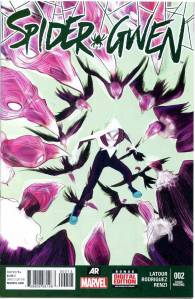
The series revolves around Gwen Stacy of Earth-65, an alternate universe version of Gwen Stacy that debuted in Edge of Spider-Verse #2 as part of the 2014–2015 Spider-Man storyline “Spider-Verse“. Spider-Gwen explores a universe where Gwen Stacy was bitten by the radioactive spider instead of Peter Parker, leading to her a career as the Spider-Woman of her world.
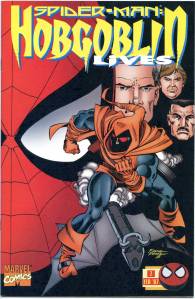
Roger Stern was unhappy with the Hobgoblin’s civilian identity revelation was Leeds and wrote the three-issue miniseries Spider-Man: Hobgoblin Lives in 1997, with the retcon that Kingsley was the original Hobgoblin while Leeds was brainwashed into serving as a fall guy, Macendale is killed off, and Kingsley returned. According to Stern, initially he had not known how to resolve the situation of having two Hobgoblins, and it was at the suggestion of the editorial staff that Kingsley kill Macendale and return to operating as the Hobgoblin.
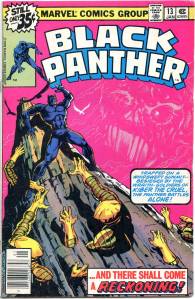
Though popular with college students, the overall sales of Jungle Action were low, and Marvel relaunched the Black Panther in a self-titled series, bringing in the character’s co-creator Jack Kirby—newly returned to Marvel after having decamped to rival DC Comics for a time— as writer, penciler, and editor. However, Kirby wanted to work on new characters and was unhappy at being assigned a series starring a character he had already worked with extensively. He left the series after only 12 issues and was replaced by Ed Hannigan (writer), Jerry Bingham (penciler), and Roger Stern(editor). Black Panther ran 15 issues (Jan. 1977 – May 1979). Due to the series’s cancellation, the contents of what would have been Black Panther#16-18 were published in Marvel Premiere #51-53.
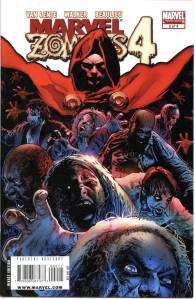
Marvel Zombies 4 is a four-issue limited series published over the summer of 2009, and features characters from Marvel’s horror comics (Man-Thing, Morbius the Living Vampire, Werewolf by Night, and Mephisto among others).
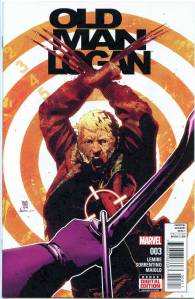
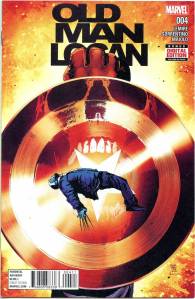
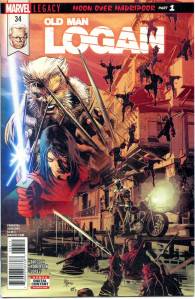
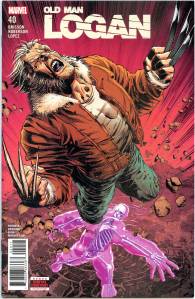
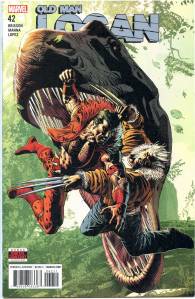
Fifty years from now, Logan – the man who no longer calls himself Wolverine – will have endured many atrocities: The Marvel Universe’s villains will have banded together and rid the world of its heroes. Logan’s closest friend, Hawkeye, will have been murdered in cold blood right before his eyes. And driven mad by the same radiation that gave him his superhuman strength, Bruce Banner will have fathered a family of hillbilly Hulks…that eventually went on to slaughter Logan’s wife and two children. But now, in the present, Old Man Logan wakes up to discover himself in a world before these atrocities, before the Wasteland. And he’s going to seize this opportunity and change history to ensure that his future never comes to pass…
It’s been a while since Deadpool’s had to merc to make ends meet, but things are tough all over. While Deadpool tries to get his humble mercenary-for-hire business back off the ground, a catastrophic threat so unfathomably huge, so mind-breakingly cataclysmic it defies description, is heading toward Earth, and there’s only ONE PERSON WHO CAN STOP IT!!!
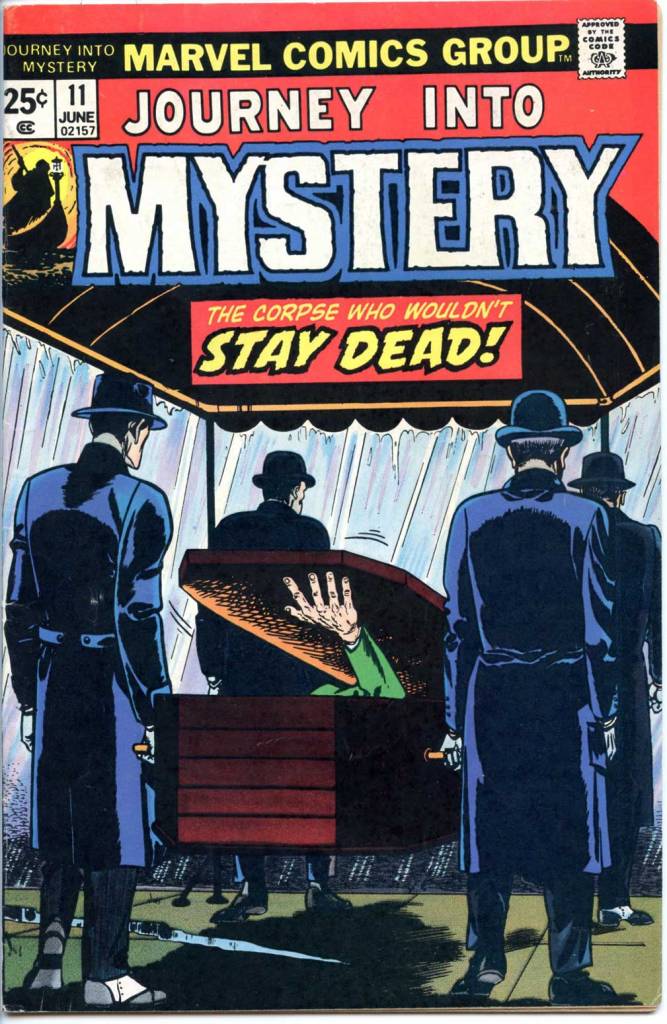
A second Journey into Mystery ran 19 issues (October 1972 – October 1975). The title was one of four launched by Marvel Comics editor-in-chief Roy Thomas to form a line of science fiction and horroranthologies with more thematic cohesiveness than the company’s earlier attempts that decade,which had included the series Chamber of Darkness and Tower of Shadows. Whereas those titles generally presented original stories, these new books would instead adapt genre classics and other stories. With the four titles’ debuts set to be staggered over the course of four months, Marvel premiered Journey into Mystery vol. 2 (October 1972), Chamber of Chills (November 1972), Supernatural Thrillers (December 1972), and, with a late start, Worlds Unknown (May 1973).
When a young X-Man breaks the laws of Krakoa and takes a life, it’s up to Wolverine to track down his former student and take her down… But Nature Girl is tired of standing by while humanity destroys her home. Can even Logan quell her fury? Find out as a good girl breaks bad to save the planet!
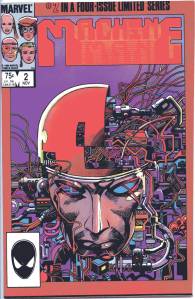
In October 1984 – January 1985, the Machine Man title was resurrected, in a four-issue miniseries written by Tom DeFalco with art by Herb Trimpe (breakdowns only, issues #1-3) and Barry Windsor-Smith (finishes only, issues #1-3 & full art for issue #4), with Windsor-Smith also coloring the entire miniseries & co-plotting issue #4 with DeFalco. This series turned out to be one of the most popular of all the Machine Man titles, tying with previous continuity, but with the action set in the distant cyberpunk future of 2020, starting with Machine Man’s reassembly.
The miniseries was republished again in 1994 as two double-size books, with the name Machine Man 2020. Characters from this alternate future have made appearances in other Marvel books, namely Arno Stark, the mercenary Iron Man 2020.
In 1990, Machine Man guest-starred in Iron Man Annual #11 (part of the “Terminus Factor” storyline). That story created strong hints that the 2020 Machine Man may turn out not to be the true X-51, but instead a duplicate created by Sunset Bain.
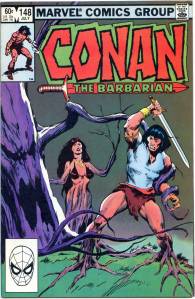
Marvel Comics introduced a fairly faithful version of Conan in 1970 with Conan the Barbarian, written by Roy Thomas with art initially by Barry Windsor-Smith, then John Buscema and Ernie Chan (aka Ernie Chua). The highly successful Conan the Barbarian series spawned the more adult, black-and-white Savage Sword of Conan in 1974, by Thomas, Buscema, and Alfredo Alcala. Savage Sword of Conan soon became one of the most popular comic series in the 1970s.
The Marvel Conan stories were also adapted as a newspaper comic strip which appeared daily and Sunday from September 4, 1978, to April 12, 1981. Originally written by Roy Thomas and illustrated by John Buscema, the strip was continued by several different Marvel artists and writers.















 EHT Comics