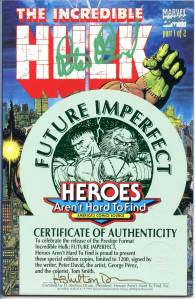
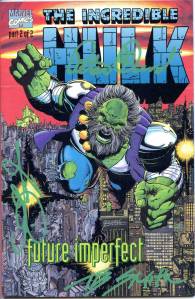
The Incredible Hulk travels to an apocalyptic future to face his ultimate challenge…himself. Meet the Maestro, the Hulk’s future imperfect self. Approximately a hundred years into the future, a nuclear war has killed almost all of Earth‘s superhumans and has taken the world to the brink of extinction. A future version of the Hulk called Maestro has seized control after being driven insane by the nuclear radiation he has absorbed and the bitterness he feels towards the world at his continued treatment. He has the intelligence of Bruce Banner and the absorbed radiation has significantly enhanced his strength. Can even the Green Goliath defeat a foe whose strength rivals his own? A foe who knows his every move before he even makes it?
Incredible Hulk – Future Imperfect #1 Signed Set NM $159
Incredible Hulk – Future Imperfect #2 Signed Set NM $159
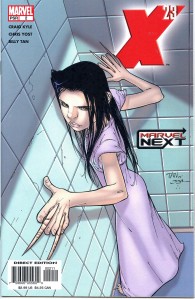
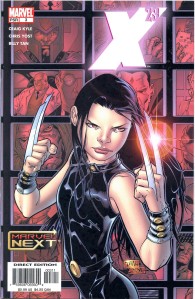
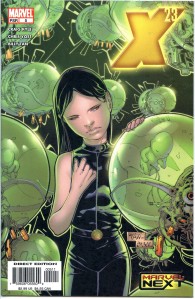
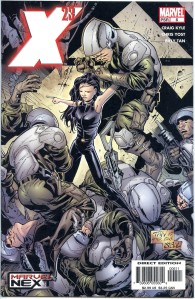
In X-23: “Innocence Lost”, a top-secret program is tasked to replicate the original Weapon X experiment that bonded adamantium to the skeleton of Wolverine. The project is taken in a new direction: Dr. Martin Sutter recruits renowned mutant geneticist Doctor Sarah Kinney to develop a clone of Wolverine. Also on the team is Sutter’s protege, Dr. Zander Rice, who was raised by Sutter after his father was killed by the original Weapon X.
Since the only genetic sample from Weapon X is damaged, Kinney is unable to salvage the Ychromosome. Kinney proposes the creation of a female genetic twin. Her request is denied; Rice is opposed to the idea. After 22 failed attempts at reconstituting the DNA using a duplicate X chromosome, the 23rd sample yields a viable sample to combine with an embryo. Although Kinney is allowed to proceed, Rice exacts revenge for her insubordination by forcing her to act as the surrogate mother of the specimen. For nine months, Kinney’s every move is monitored. Finally, she gives birth to “X-23”
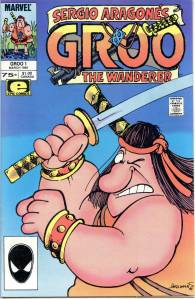
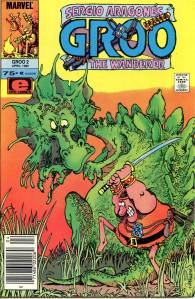
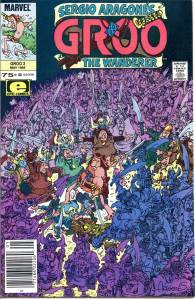
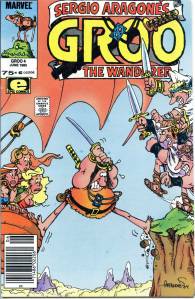
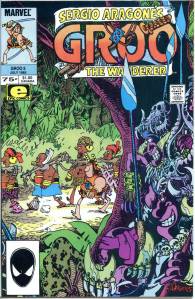
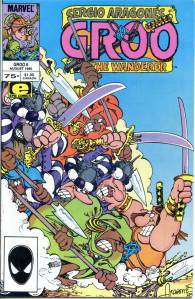
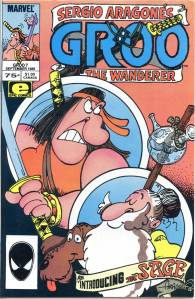
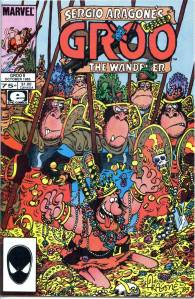
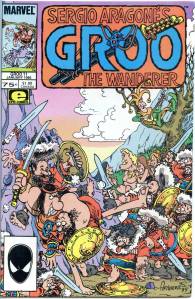
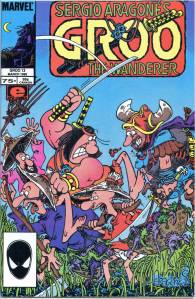
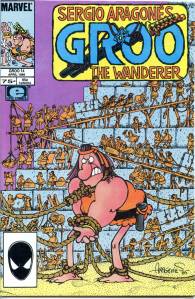
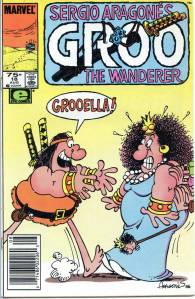
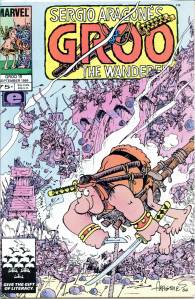
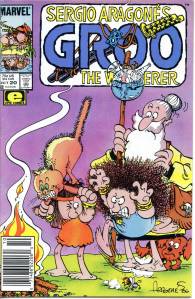
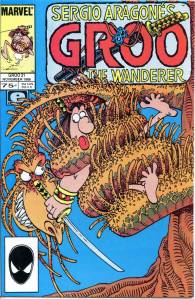
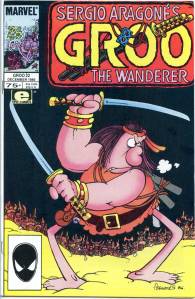
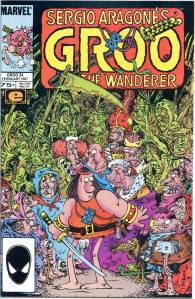
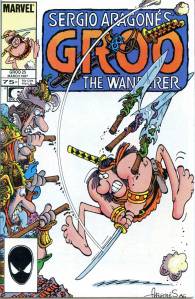
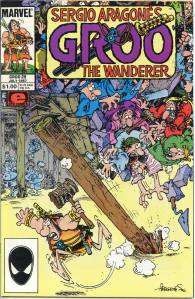
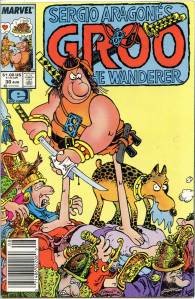
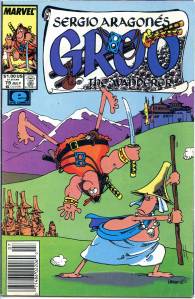
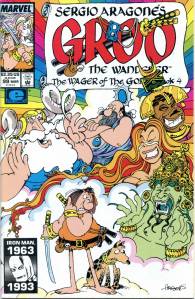
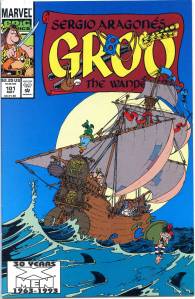
Groo was one of the first widely successful creator-owned comics, one of the few successful humorous comic books (outside Archie Comics) during its time, and one of the longest-running collaborations in comic book history. In 2011 IGN ranked Groo 100th in the “Top 100 comic books heroes”.
Aragonés and Evanier negotiated a deal with Epic Comics, an imprint of Marvel Comics, for that company to take care of publication while preserving creator rights. This resulted in the longest run of Groo the Wanderer with 120 issues. In 1994, with Marvel facing financial difficulties, the title switched to Image Comics and was retitled Groo. (In the first issue Groo remarks “The marvels of the world are but images before me.”)
When Image in turn faced legal problems after publishing twelve issues, the title switched to Dark Horse Comics in 1998. Dark Horse is not publishing the title as a regular series, but is periodically releasing new material and reprints as mini-series and collections.
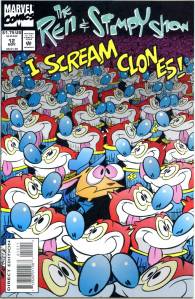
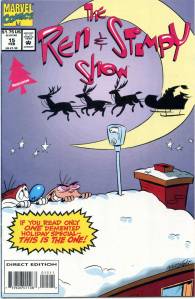
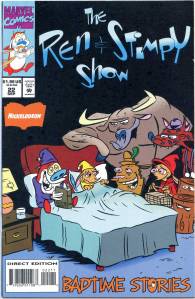
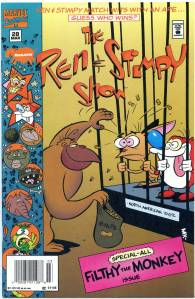
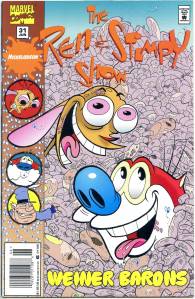
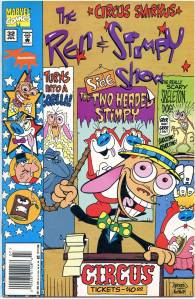
Marvel Comics optioned the rights to produce comic books based on Nickelodeon properties in 1992. The initial plan was to have an anthology comic featuring several Nicktoons properties. Marvel produced 44 issues of the ongoing series, along with several specials under the Marvel Absurd imprint. Most of these were written by comic scribe Dan Slott. One Ren & Stimpy special #3, Masters of Time and Space, was set up as a ‘Choose Your Own Adventure‘ and with a time travel plot, took Slott six months to plot out in his spare time. It was designed so that it was possible to choose a path that would eventually be 20 pages longer than the comic itself. Issue #6 of the series starred Spider-Man battling Powdered Toast Man. The editors named the “Letters to the Editor” section “Ask Dr. Stupid”, and at least one letter in every column would be a direct question for Dr. Stupid to answer. This comic series lasted from December 1992-July 1996.
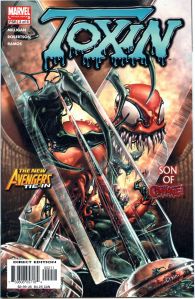
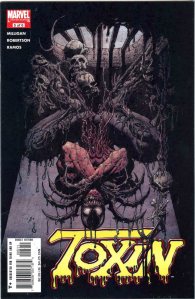
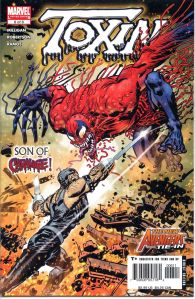
Toxin or the Toxin symbiote is the third major symbiote of the Spider-Man series, the ninth known to have appeared in the comics outside of the Planet of the Symbiotes storyline, and the first symbiote that Spider-Man considers an ally, despite temporary alliances with Venom on numerous occasions. The first host of the Toxin symbiote is former NYPD police officer Patrick Mulligan. Toxin later bonded to Eddie Brock as his second host after Patrick Mulligan was killed.
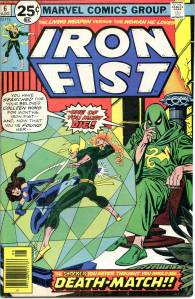
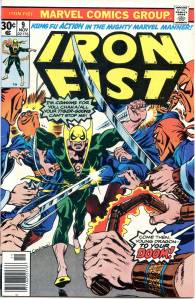
Iron Fist was spun off from Marvel Premiere into the solo series Iron Fist, which ran 15 issues (November 1975 – September 1977). The solo series was written by Claremont and pencilled by Byrne. A subplot involving the Steel Serpent left unresolved by the cancellation of the series was wrapped up in issues #63–64 of Marvel Team-Up, the latter of which featured Rand kiss Misty Knight, marking the first interracial kiss and first long-term interracial couple in Marvel Comics history, as well as the first couple with an age difference in which the woman was older than her man.
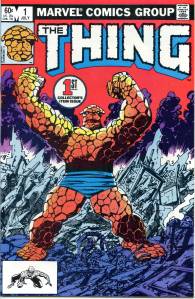
The cancellation of Marvel Two-in-One led to the Thing’s first completely solo series, which ran for 36 issues. The Thing was originally written by John Byrne and later, Mike Carlin. The series also featured art by Ron Wilson and later by Paul Neary. It elaborated on Ben Grimm’s poor childhood on Yancy Street in its early issues, and chronicled the Thing’s later foray into the world of professional wrestling. It also featured a major storyline offshoot from Marvel’s Secret Wars event, in which the Thing elects to remain on the Beyonder‘s Battleworld after discovering that the planet enables him to return to human form at will. A full third of the series’ stories take place on Battleworld.
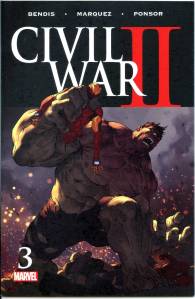
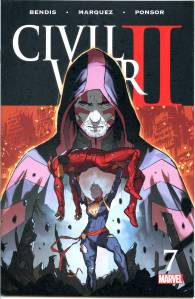
Civil War II, which debuted in June 2016, is a sequel to the 2006 “Civil War” storyline.
A new Inhuman, with the ability to profile the future, emerges and the ramifications ripple into every corner of the Marvel Universe. Lines are drawn, bodies fall, and the Marvel Universe will be rocked to it’s very core.
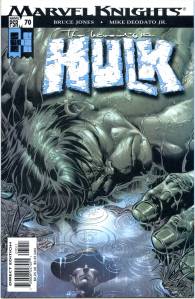
In 2000, Banner and the three Hulks (Savage Hulk, Grey Hulk, and the “Merged Hulk”, now considered a separate personality and referred to as the Professor) become able to mentally interact with one another, each personality taking over the shared body as Banner began to weaken due to his suffering from Lou Gehrig’s disease. During this, the four personalities (including Banner) confronted yet another submerged personality, a sadistic “Devil” intent on attacking the world and attempting to break out of Banner’s fracturing psyche, but the Devil was eventually locked away again when the Leader was able to devise a cure for the disease using genes taken from the corpse of Brian Banner. In 2005, it is revealed that the Nightmare has manipulated the Hulk for years, and it is implied that some or all of the Hulk’s adventures written by Bruce Jones may have been just an illusion.
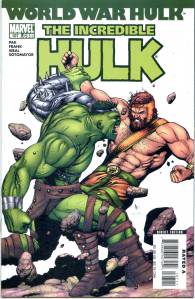
In 2006, the Illuminati decide the Hulk is too dangerous to remain on Earth and send him away by rocket ship which crashes on Planet Sakaar ushering in the “Planet Hulk” storyline that saw the Hulk find allies in the Warbound, and marry alien queen Caiera, a relationship that was later revealed to have born him two sons: Skaar and Hiro-Kala. After the Illuminati’s ship explodes and kills Caiera, the Hulk returns to Earth with his superhero group Warbound and declares war on the planet in World War Hulk (2007). However, after learning that Miek, one of the Warbound, had actually been responsible for the destruction, the Hulk allows himself to be defeated, with Banner subsequently redeeming himself as a hero as he works with and against the new Red Hulk to defeat the new supervillain team the Intelligencia.
















 EHT Comics