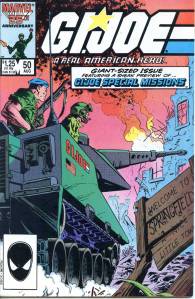
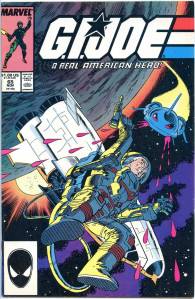
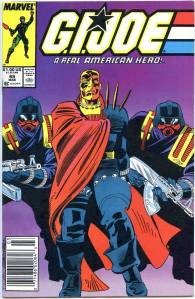
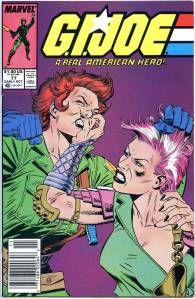
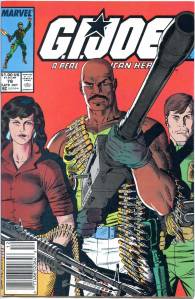
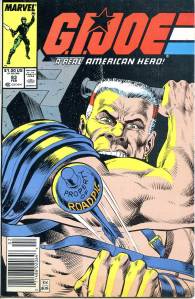
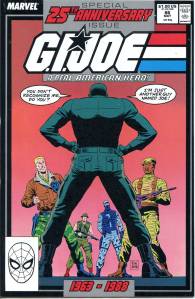
G.I. Joe: A Real American Hero was published by Marvel Comics from 1982 to 1994. Based on Hasbro, Inc.’sG.I. Joe: A Real American Hero line of military-themed toys, the series has been credited for making G.I. Joe into a pop-culture phenomenon.G.I. Joe was also the first comic book to be advertised on television, in what has been called a “historically crucial moment in media convergence.”
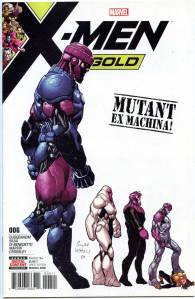
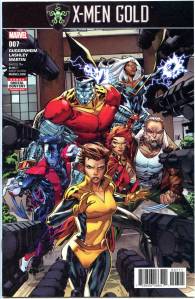
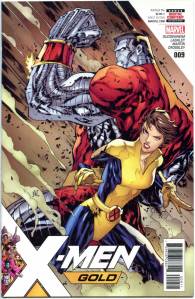
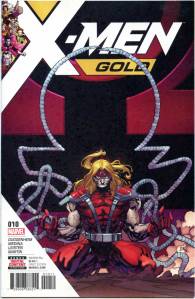
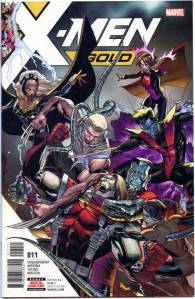
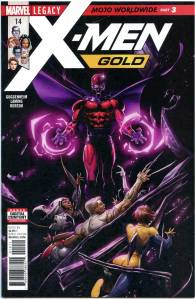
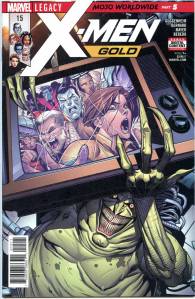
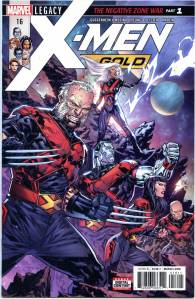
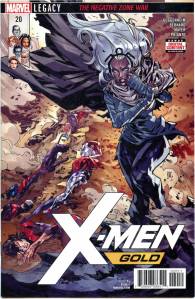
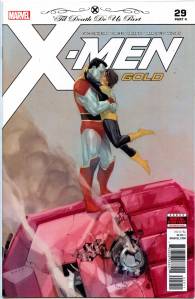
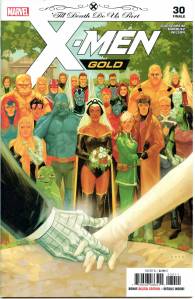
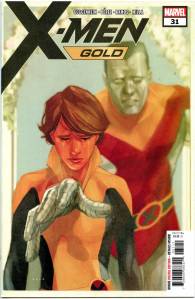
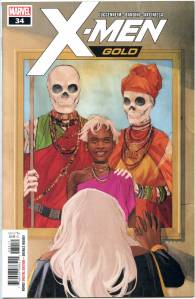
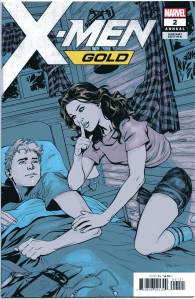
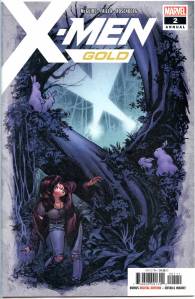
X-Men Gold and its sister book, X-Men Blue, were created following the crossover series Inhumans vs. X-Men. The new titles were announced October 21, 2016 as part of the ResurrXion brand. The color-coded names are a reference to storylines from the early 1990s when various comics in the X-Men franchise were best-sellers. The first issue was released April 5, 2017 and subsequent issues were released twice monthly. In February 2018, the spin-off sister book X-Men Red was released. On September 2018, the series ended at issue 36.
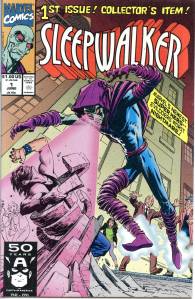
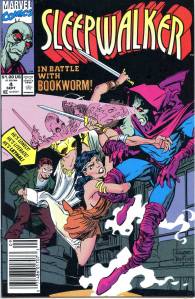
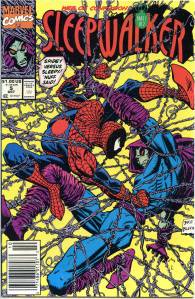
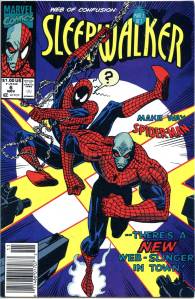
Sleepwalker is a Marvel Comics character created by Bob Budiansky. He is named after his race, and is the star of a self-titled comic book which ran for 33 issues from June 1991 to February 1994, with one Holiday Special. All but two of the issues were written by Budiansky, with Tom Brevoort and Mike Kanterovich writing the Holiday Special and one fill-in issue. Dan Slott also contributed a humorous side story in issue #25.
Budiansky’s concept dates to the late 1970s; however, he originally called the character Alien until the Ridley Scott film of the same name was released, at which point he shelved the character.
A second Sleepwalker character was planned to receive a self-titled series by Robert Kirkman in 2004 but instead debuted in the 2004 Epic Anthology, which was canceled after one issue. The original Sleepwalker’s next appearance was in Marvel Team-Up #15 nearly a decade after his original cancellation.
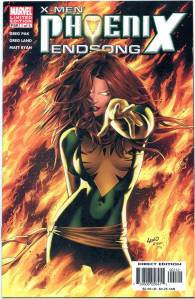
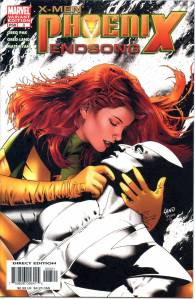
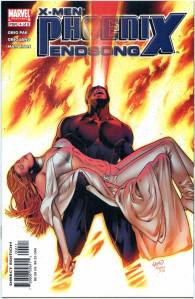
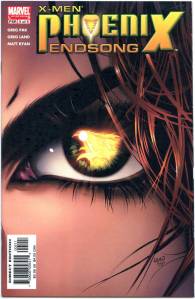
The Shi’ar resurrect the dormant Phoenix Force prematurely and without a host, in hopes of destroying it. The Phoenix escapes to Earth where it resurrects Jean Grey and forcefully bonds with her again, despite Jean’s pleas that it is “too early.” Written by Greg Pak with art by Greg Land.
Greg Pak said “The biggest new character is actually the Phoenix Force it/herself, whom we’re exploring as a thinking, learning sentient creature with a big and terrifying and moving emotional arc of her own.”
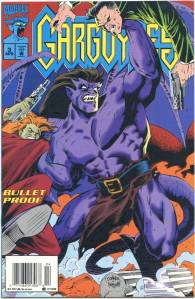
In 1995, Marvel Comics issued a Gargoyles comic book series which ran for 11 issues. A 12th issue, to be entitled “The Day the Sun Kissed the Earth!!” was announced at the end of Issue 11, but never published. The books did not directly follow the continuity of the series, but they did reference specific events that took place within it. The Marvel series was tonally darker than the television series, dealing largely with Xanatos‘ experiments to create creatures and machines to defeat the Gargoyles. Greg Weisman, television series co-creator, did not have any direct involvement in the story development of the comic series, but was consulted on some plot points to be sure it stayed within certain boundaries.
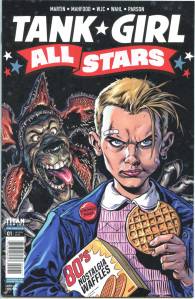
An anthology of stories from creators old and new, celebrating the 30th anniversary of Tank Girl! At last it can be told! In this 30th anniversary anthology, we finally reveal the biggest secret in comic history – how Tank Girl got her tank – the origin story to end all origin stories! This, and a whole bunch of other tales, will be written by series co-creator Alan Martin, with artwork by a host of Tank Girl stalwarts, newbies, and superstar guests, including current artist Brett Parson, and friends from throughout Tank Girl’s checkered 30-year lifetime!
In conjunction with the expanded Mars Attacks trading card set released in 1994, Topps issued a six-issue limited comic book series written by Keith Giffen and drawn by Charles Adlard. The series featured a “flip-cover” format, with 22 pages of the book following the story of the card set and six pages detailing previous encounters leading up to the invasion. The limited series was successful and led Topps to continue it as a regular series.
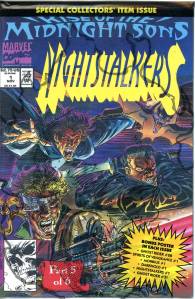
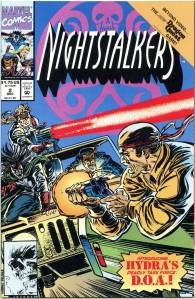
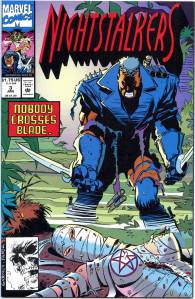
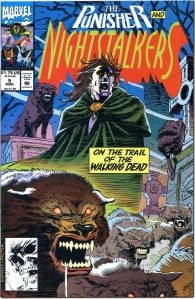
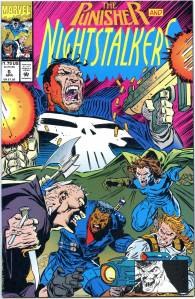
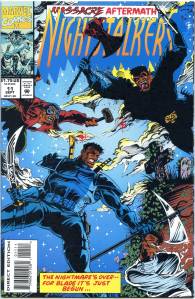
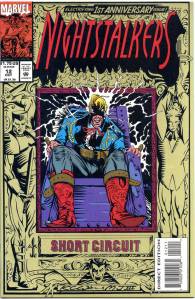
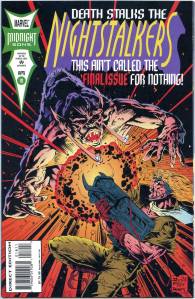
Nightstalkers, published by Marvel Comics from 1992 to 1994, featured a trio of occult experts reluctantly banded together to fight supernatural threats. Operating under the business name Borderline Investigations, the team was composed of the vampire–huntersBlade and Frank Drake, who had fought Count Dracula in the 1970s series The Tomb of Dracula; and private detectiveHannibal King, also introduced in that previous series, a “neo-vampire” with vampiric abilities but only a craving, not a need, for drinking blood. They are gathered by Doctor Strange in Nightstalkers #1 (Nov. 1992) to battle an immediate threat, but under Strange’s larger, hidden agenda.
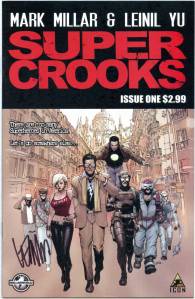
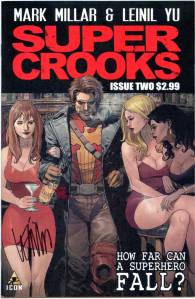
Supercrooks is described as a return to the world of Jupiter’s Legacy with a ragtag gang of supervillains, con artists, petty thieves and leg-breakers who band together for the heist of the century and the most outrageous crime story you’ve ever seen in your life. Crime pays, and they’re going to prove it. Some people just want to have the time of their lives and make a little dirty money while they’re doing it. If the superheroes get in the way, they’re going to be spitting teeth.
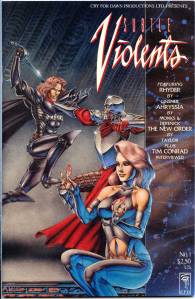
CFD anthology title featuring,”Rhyder” by Joseph Michael Linsner, “Ahryssia 1 Out of the Black” by Joseph M. Monks, “The New Order” by Kevin J. Taylor, and an interview with Tim Conrad. 48 pgs. B&W with color covers by Linsner.













 EHT Comics