
Giant size reprint of classic Stan Lee and Jack Kirby backup stories from Journey into Mystery (Issues 97 thru 106).

Giant size reprint of classic Stan Lee and Jack Kirby backup stories from Journey into Mystery (Issues 97 thru 106).
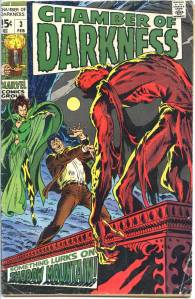
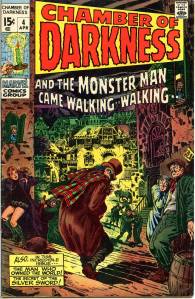
Chamber of Darkness is a horror/fantasy anthology comic book published by Marvel Comics that under this and a subsequent name ran from 1969-1974. It featured work by such notable creators as writer-editor Stan Lee, writers Gerry Conway and Archie Goodwin, and artists John Buscema, Johnny Craig, Jack Kirby, Tom Sutton, Barry Windsor-Smith (as Barry Smith), and Bernie Wrightson. Stories were generally hosted by either of the characters Digger, a gravedigger, or Headstone P. Gravely, in undertaker garb, or by one of the artists or writers.
After the eighth issue, the title changed to Monsters on the Prowl, and the comic became almost exclusively a reprint book.
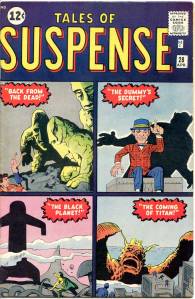
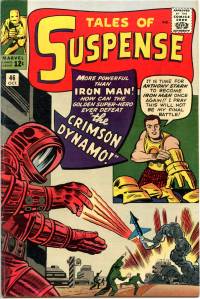
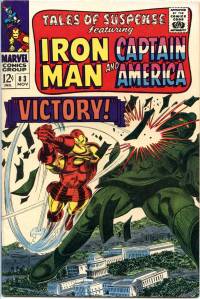
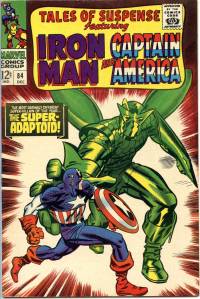
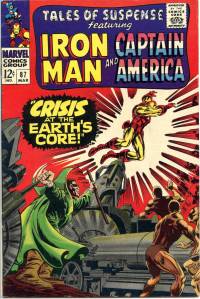
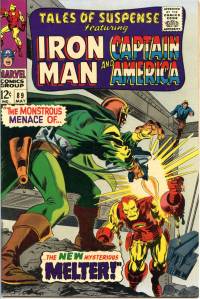
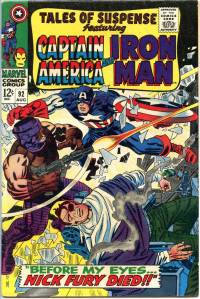
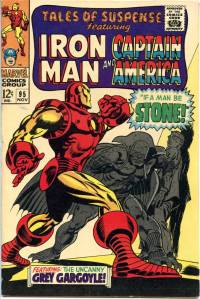
Tales of Suspense, Issue #39 (March 1963) introduced the superhero Iron Man, created by editor and plotter Lee, scripter Lieber, and artists Heck and Jack Kirby. He starred in generally 13-page but occasionally 18-page adventures, with the rest of Tales of Suspense devoted to the anthological science fiction and fantasy stories the comic normally ran.
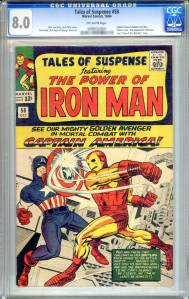
After debuting with bulky gray armor, Iron Man was redesigned with similar but golden armor in his second story (issue #40, April 1963). The first iteration of the modern, sleek red-and-golden armor appeared in #48 (Dec. 1963), drawn by Ditko (though whether he or Kirby, singly or in collaboration, designed it, is uncertain). From #53-58 (May-Oct. 1964), the cover logo was “Tales of Suspense featuring The Power of Iron Man”. Two months before the debut of the sorcerer-hero Doctor Strange, Lee, Kirby and scripter Robert Bernstein, under the pseudonym “R. Berns”, introduced a same-name criminal scientist and Ph.D., Carl Strange. Making his sole appearance in the Iron Man story “The Stronghold of Dr. Strange” in Tales of Suspense #41 (May 1963), the character gained mental powers in a freak lightning strike. The Mandarin debuted in issue #50 (Feb. 1964) and would become one of Iron Man’s major enemies. The Black Widow first appeared in #52 (April 1964) and Hawkeye followed five issues later.

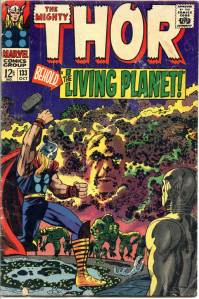
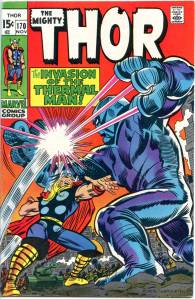
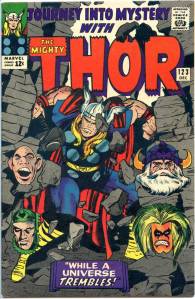
Thor debuted in the science fiction/fantasy anthology title Journey into Mystery #83 (cover-date Aug. 1962), and was created by editor-plotter Stan Lee, scripter Larry Lieber, and penciller-plotter Jack Kirby. A different version of the mythological Thor had appeared previously in Venus #12-13 (Feb.-April 1951).
In a 1984 interview Kirby said “I did a version of Thor for D.C. in the Fifties before I did him for Marvel. I created Thor at Marvel because I was forever enamored of legends, which is why I knew about Balder, Heimdall, and Odin. I tried to update Thor and put him into a superhero costume, but he was still Thor.” And in a 1992 interview, Kirby said “[I] knew the Thor legends very well, but I wanted to modernize them. I felt that might be a new thing for comics, taking the old legends and modernizing them.”
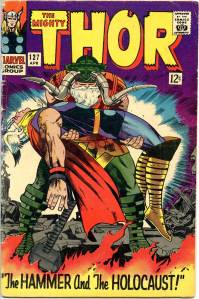
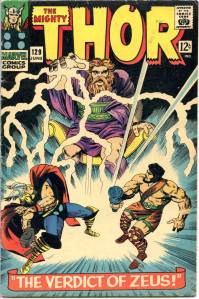
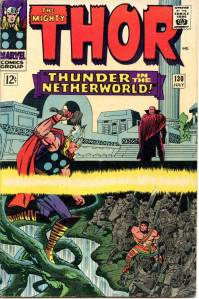
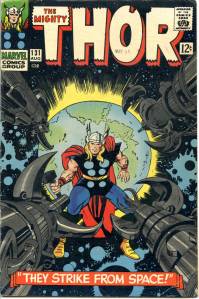
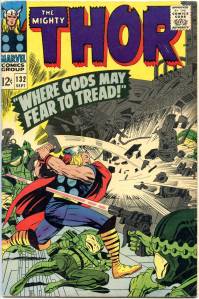
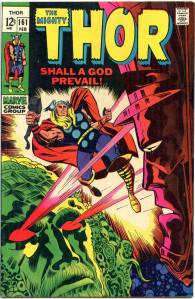
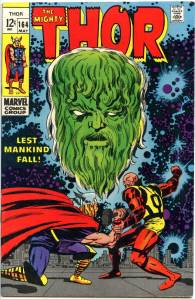
Journey into Mystery was retitled Thor (per the indicia, or The Mighty Thor per most covers) with issue #126 (March 1966). “Tales of Asgard” was replaced by a five-page featurette starring the Inhumans from #146–152 (Nov. 1967 – May 1968), after which featurettes were dropped and the Thor stories expanded to Marvel’s then-standard 20-page length.



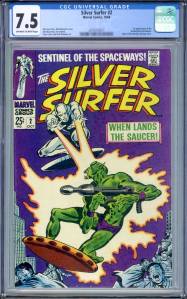
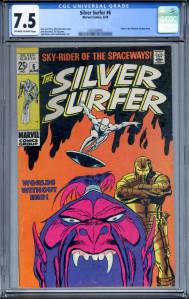
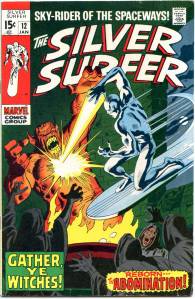
The Silver Surfer debuted as an unplanned addition to Fantastic Four #48 (March 1966). The comic’s writer-editor, Stan Lee, and its penciller and co-plotter, Jack Kirby, had by the mid-1960s developed a collaborative technique known as the “Marvel Method“: the two would discuss story ideas, Kirby would work from a brief synopsis to draw the individual scenes and plot details, and Lee would finally add the dialog and captions. When Kirby turned in his pencil art for the story, he included a new character he and Lee had not discussed. As Lee recalled in 1995, “There, in the middle of the story we had so carefully worked out, was a nut on some sort of flying surfboard”. He later expanded on this, recalling, “I thought, ‘Jack, this time you’ve gone too far'”. Kirby explained that the story’s agreed-upon antagonist, a god-like cosmic predator of planets named Galactus, should have some sort of herald, and that he created the surfboard “because I’m tired of drawing spaceships!” Taken by the noble features of the new character, who turned on his master to help defend Earth, Lee overcame his initial skepticism and began adding characterization. The Silver Surfer soon became a key part of the unfolding story.

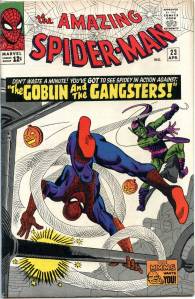
Due to strong sales on the character’s first appearance in Amazing Fantasy #15, Spider-Man was given his own ongoing series in March 1963. The initial years of the series, under Lee and Ditko, chronicled Spider-Man’s nascent career with his civilian life as hard-luck yet perpetually good-humored teenager Peter Parker. Peter balanced his career as Spider-Man with his job as a freelance photographer for The Daily Bugle under the bombastic editor-publisher J. Jonah Jameson to support himself and his frail Aunt May. At the same time, Peter dealt with public hostility towards Spider-Man and the antagonism of his classmates Flash Thompson and Liz Allan at Midtown High School, while embarking on a tentative, ill-fated romance with Jameson’s secretary, Betty Brant.
By focusing on Parker’s everyday problems, Lee and Ditko created a groundbreakingly flawed, self-doubting superhero, and the first major teenaged superhero to be a protagonist and not a sidekick. Ditko’s quirky art provided a stark contrast to the more cleanly dynamic stylings of Marvel’s most prominent artist, Jack Kirby, and combined with the humor and pathos of Lee’s writing to lay the foundation for what became an enduring mythos.


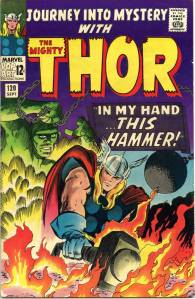
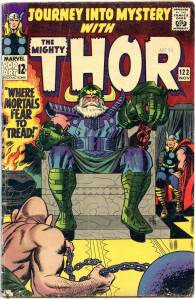
Journey into Mystery was initially published by Atlas Comics, then by its successor, Marvel Comics. Initially a horror comics anthology, it segued to giant-monster and science fiction stories in the late 1950s. Beginning with issue #83 (cover dated August 1962), it ran the superhero feature “The Mighty Thor“, created by writers Stan Lee and Larry Lieber and artist Jack Kirby, and inspired by the mythological Norse thunder god. The series, which was renamed for its superhero star with issue #126 (March 1966), has been revived three times: in the 1970s as a horror anthology, and in the 1990s and 2010s with characters from Marvel’s Thor mythos.
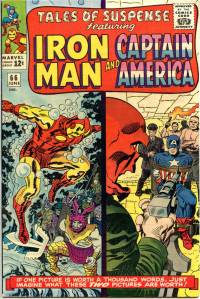
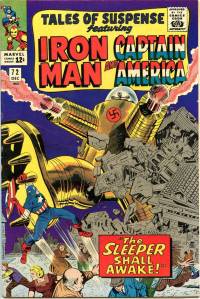
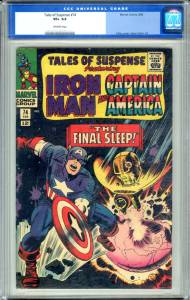
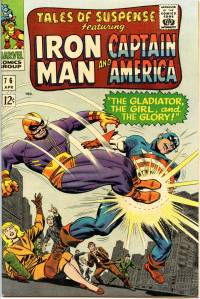
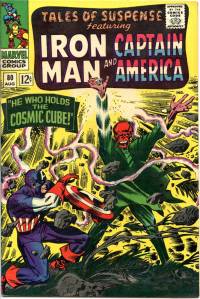
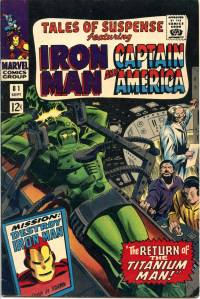
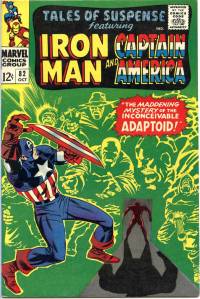
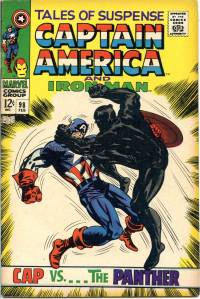
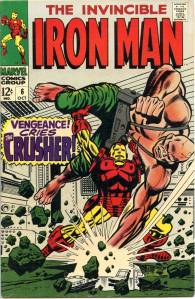
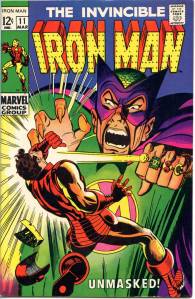
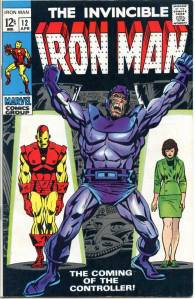
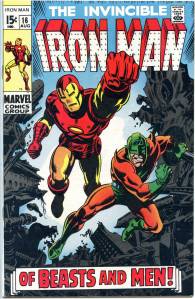
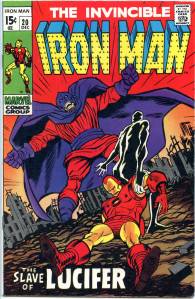
After issue #99 (March 1968), the Tales of Suspense series was renamed Captain America. An Iron Man story appeared in the one-shot comic Iron Man and Sub-Mariner (April 1968), before the “Golden Avenger”] made his solo debut with The Invincible Iron Man #1 (May 1968). The series’ indicia gives its copyright title Iron Man, while the trademarked cover logo of most issues is The Invincible Iron Man. Artist George Tuska began a decade long association with the character with Iron Man #5 (Sept. 1968). Writer Mike Friedrich and artist Jim Starlin‘s brief collaboration on the Iron Man series introduced Mentor, Starfox, and Thanos in issue #55 (Feb. 1973). Friedrich scripted a metafictional story in which Iron Man visited the San Diego Comic Convention and met several Marvel Comics writers and artists. He then wrote the multi-issue “War of the Super-Villains” storyline which ran through 1975.
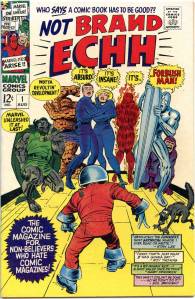
Not Brand Echh is a satiric comic book series published by Marvel Comics that parodied its own superhero stories as well as those of other comics publishers. Running for 13 issues (cover-dated Aug. 1967 to May 1969), it included among its contributors such notable writers and artists as Stan Lee, Jack Kirby, Gene Colan, Bill Everett, John and Marie Severin, and Roy Thomas. With issue #9, it became a 68-page, 25¢ “giant”, relative to the typical 12¢ comics of the times. In 2017, a 14th issue was released.
Its mascot, Forbush Man, introduced in the first issue, was a superhero wannabe with no superpowers and a costume of red long johns emblazoned with the letter “F” and a cooking pot, with eye-holes, covering his never-revealed head. His secret identity was eventually revealed in issue #5 (Dec. 1967) as Irving Forbush, Marvel’s fictitious office gofer.
 EHT Comics