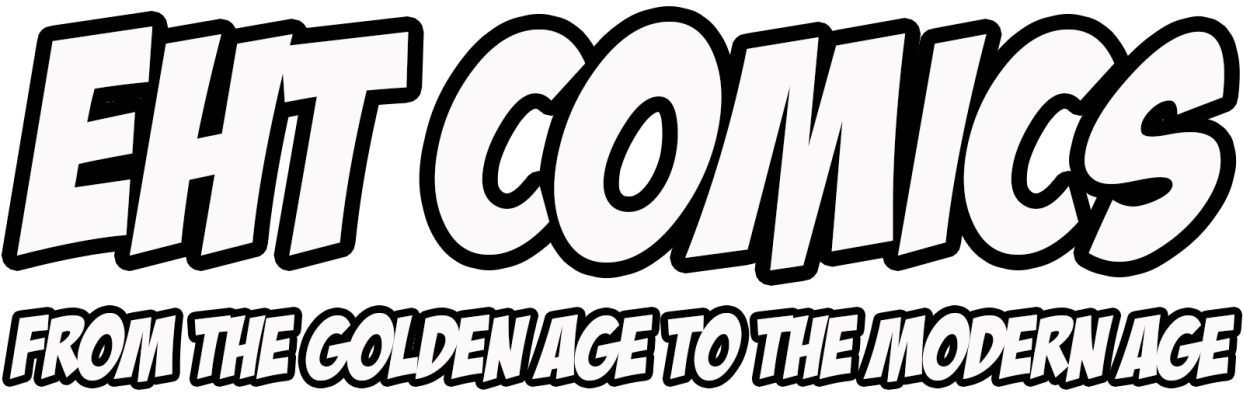
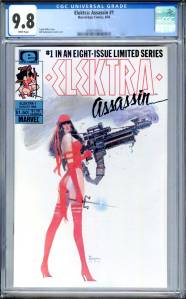
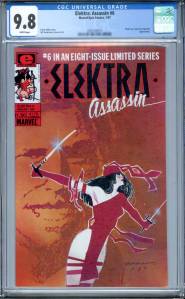
As with Daredevil: Love and War, Sienkiewicz illustrated Elektra: Assassin using watercolors as opposed to the traditional pencilling/inking method. His exaggerated art was unique amongst mainstream comics of the time, bringing to mind the illustration style of adult-oriented comics magazines like Heavy Metal.
In the near future, a young girl sees her family slaughtered by the deadliest and most feared hunter in the universe: a PREDATOR. Years later, though her ship is barely holding together and food is running short, Theta won’t stop stalking the spaceways until the Yautja monster who killed her family is dead…or she is.
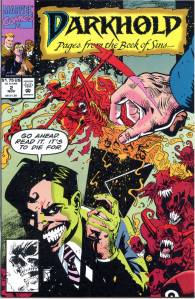
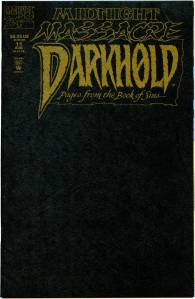
Once you get your hands on the Darkhold, you’ll be dying to read what’s inside! And when long-lost pages of the Book of Sins begin to resurface, cursing those who read them with vicious twists on their greatest desires, it’s up to Victoria Montesi and her Darkhold Redeemers, Sam Buchanan and Louise Hastings, to keep them out of the wrong hands! As the mysterious Darkhold Dwarf spreads chaos and the powerful pages wreak havoc, the Redeemers get a little help from Doctor Strange, Ghost Rider and their fellow Midnight Sons — but whose side is Modred the Mystic on? With demonic forces on the rise, can the Redeemers prevent the rebirth of Chthon?
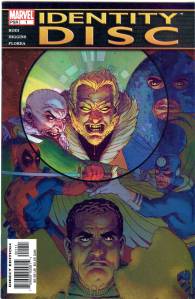
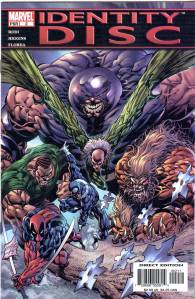
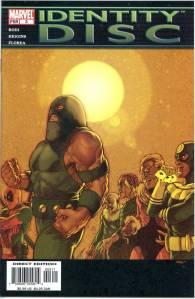
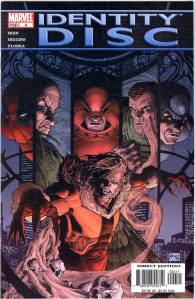
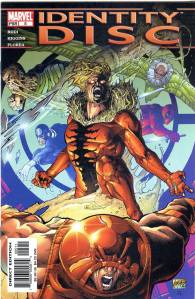
The story opens with a younger Adrian Toomes, pre-Vulture, being captured by police as his wife takes his daughter from him. Years later, Deadpool, Bullseye, Juggernaut, Sandman, the Vulture, and Sabretooth are recruited by an agent working for underworld figure Tristram Silver, who knows a dark secret for each supervillain, (although at the time Juggernaut and, arguably, Deadpool, were not villains). The agent demonstrates that she can take any one of them down by killing the Sandman. She wants them to hunt down the Identity Disc, which contains every piece of information on Marvel’s Earthbound superheroes.
The “Heroes Reborn” was followed by “Heroes Return”, which consisted of a central, four-issue miniseries, Heroes Reborn: The Return, by writer Peter David and artist Salvador Larocca (December 1997). In the story, the Celestials take notice of Franklin’s pocket universe and initially demand that he eliminate one of the two universes, but eventually relent on the condition that all beings native to Earth-616 evacuate the pocket universe and never return.
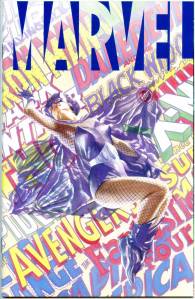
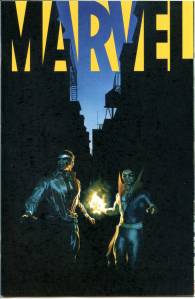
Thirty years ago, Alex Ross had a vision of a new series showing the Marvel heroes in a way they’d never been seen before. The first realization of that idea became the blockbuster MARVELS — but today Alex finally brings about his original vision: An anthology of stories by unique, exceptional talents, many of whom are doing Marvel characters for the very first time. Over this showcase series you’ll see work by such artists as Adam Hughes, Bill Sienkiewicz, Dan Brereton and more, linked together by an overarching story by Alex and Steve Darnall.
Cable & Deadpool was published by Marvel Comics beginning in 2004. The title characters, Cable and Deadpool, shared the focus of the book. The series was launched following the cancellation of the characters’ previous ongoing solo series. The book’s mix of humor, action, and intricate plotting have won it a devoted fanbase. Marvel Comics canceled the series with issue #50 to make way for a new Deadpool ongoing series that began on September 10, 2008, and a new Cable ongoing series that was launched in March 2008. Cable & Deadpool were ranked #7 on Marvel.com’s list of “The 10 Greatest Buddy Teams” of all time.
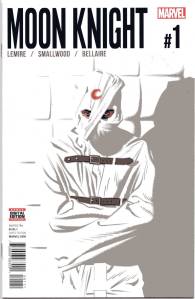
Marc Spector wakes up in a mental institute with no recollection of his past or how he got there. The staff, led by Dr. Emmet, seems to have supernatural powers and thwart Marc’s attempts to recover his past. Marc is shown evidence that he is a mentally ill man who has convinced himself he is also Moon Knight, a vigilante he’s seen on the news. Khonshu contacts Marc and explains that Emmet is an avatar like him, one who is connected to the Othervoid god Ammit. Khonshu decides it is now time for him to completely dominate Marc Spector’s body. Marc denies Khonshu and fights him with the help of all of his alters. Marc accepts that whether they are the result of childhood trauma or Khonshu’s interference, his alters are a part of him and have been for most of his life. After defeating Emmet and Khonshu, Marc resumes his life as Moon Knight, determined to be a protector and crime-fighter on his own terms rather than as a tool of anyone else. Later, Marc and Khonshu resume their bond.
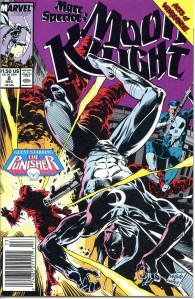
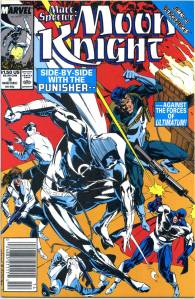
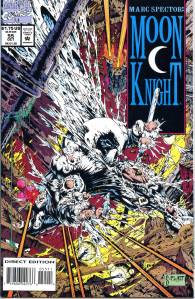
In 1989, a third Moon Knight volume, titled Marc Spector: Moon Knight was published. It was the longest-running series, lasting sixty issues. This volume introduces Moon Knight’s teenage sidekick Jeff Wilde, also known as “Midnight,” the son of Midnight Man, a villain from the first volume of the series. At this time, Moon Knight first encounters the Black Cat. Turned into a cyborg by the Secret Empire, Midnight is seemingly killed in the “Round Robin” story arc of Amazing Spider-Man, spanning issues #353-#358.
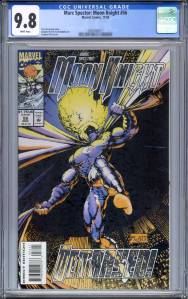
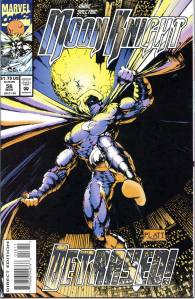
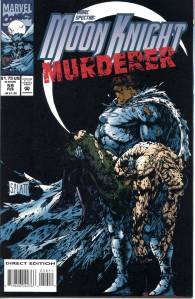
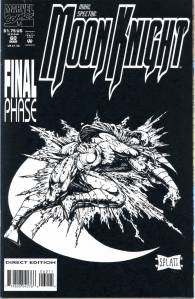
The series was canceled with issue #60 (March 1994), with four of the last six issues drawn by Stephen Platt, who was hired by Image Comics based on the strength of his work on the series.
Marc Spector Moon Knight #8 Newsstand NM $12
Marc Spector – Moon Knight #9 Newsstand NM $10
Marc Spector – Moon Knight #15 Newsstand NM $8
Marc Spector – Moon Knight #16 Newsstand NM $8
Marc Spector – Moon Knight #17 Newsstand NM- $6
Marc Spector – Moon Knight #18 Newsstand NM- $6
Marc Spector – Moon Knight #19 Newsstand NM $9
Marc Spector – Moon Knight #20 Newsstand NM $9
Marc Spector – Moon Knight #21 Newsstand VF-NM $7
Marc Spector – Moon Knight #32 NM $9
Marc Spector – Moon Knight #40 NM $8
Marc Spector – Moon Knight #44 NM- $7
Marc Spector – Moon Knight #47 NM $8
Marc Spector Moon Knight #50 NM $7
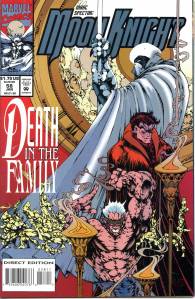
Moon Knight #55 NM $110
Marc Spector – Moon Knight #56 CGC 9.8 White Pages $110









 EHT Comics