Steve Gerber’s posthumous Man-Thing story “The Screenplay of the Living Dead Man”, with art by Kevin Nowlan, originally planned as a 1980s graphic novel before being left uncompleted by the artist, was revived in the 2010s and appeared as a three-issue miniseries cover-titled The Infernal Man-Thing (Early Sept.-Oct. 2012). The story was a sequel to Gerber’s “Song-Cry of the Living Dead Man” in Man-Thing #12 (Dec. 1974).
Amazing Spider-Man reverted completely to its original numbering for #500 (Dec. 2003).Mike Deodato, Jr. penciled the series from mid-2004 until 2006. That year Peter Parker revealed his Spider-Man identity on live television in the company-crossover storyline “Civil War“, in which the superhero community is split over whether to conform to the federal government’s new Superhuman Registration Act. This knowledge was erased from the world with the event of the four-part, crossover story arc, “One More Day“, written partially by J. Michael Straczynski and illustrated by Joe Quesada, running through The Amazing Spider-Man #544-545 (Nov.-Dec. 2007), Friendly Neighborhood Spider-Man #24 (Nov. 2007) and The Sensational Spider-Man #41 (Dec. 2007), the final issues of those two titles. Here, the demonMephisto makes a Faustian bargain with Parker and Mary Jane, offering to save Parker’s dying Aunt May if the couple will allow their marriage to have never existed, rewriting that portion of their pasts. This story arc marked the end of Straczynski’s tenure as writer.
The mutant best known as Wolverine has lived many lives under many identities and in many places, but never before has the fate of the future been so entwined with the past! Fan-favorite eras of Wolverine’s saga are explored anew, along with never-before-seen episodes as Logan must travel to various points in time to prevent the death of a key figure in mutant history. But these LIVES are only one side of the story…
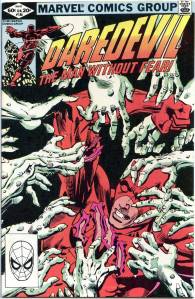
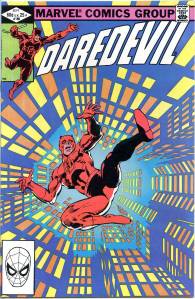
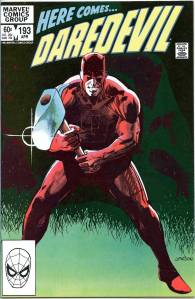
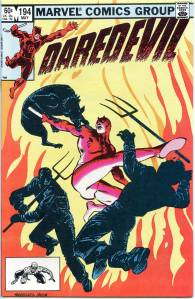
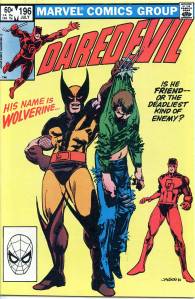
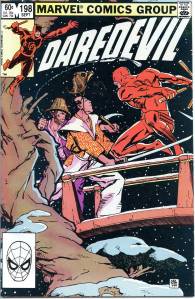
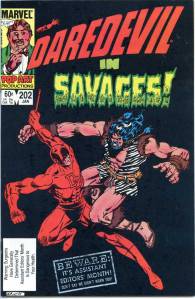
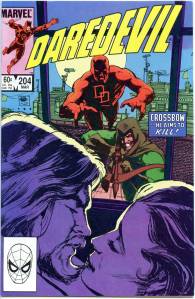
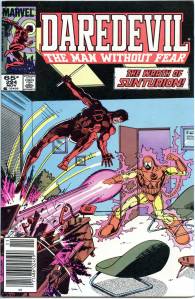
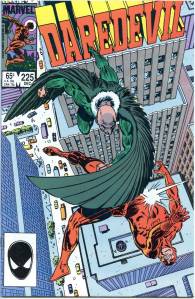
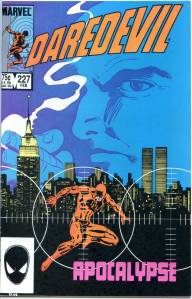
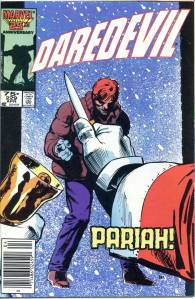
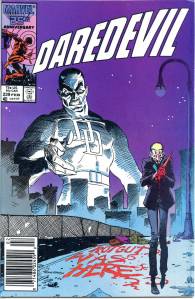
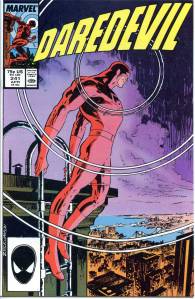
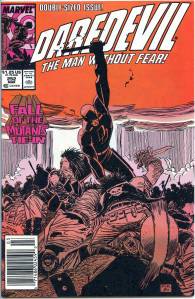
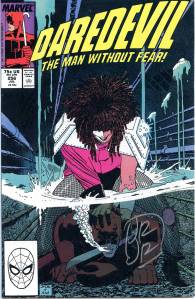
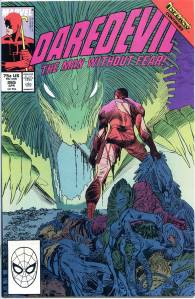
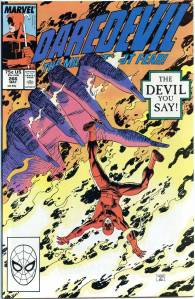
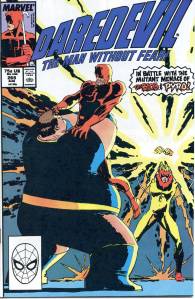
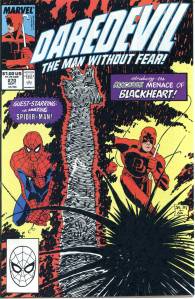
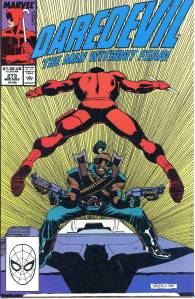
During the 80’s Frank Miller was hired to continue the title and did so in a similar vein to previous writer Roger McKenzie. Resuming the drastic metamorphosis the previous writer had begun, Miller took the step of essentially ignoring all of Daredevil’s continuity prior to his run on the series; on the occasions where older villains and supporting cast were used, their characterizations and history with Daredevil were reworked or overwritten. Most prominently, dedicated and loving father Jack Murdock was reimagined as a drunkard who physically abused his son Matt, entirely revising Daredevil’s reasons for becoming a lawyer. Spider-Man villain Kingpin was introduced as Daredevil’s new nemesis, displacing most of his large rogues gallery. Daredevil himself was gradually developed into an antihero. In issue #181 (April 1982), he attempts to murder one of his arch-enemies by throwing him off a tall building; when the villain survives as a quadriplegic, he breaks into his hospital room and tries to scare him to death by playing a two-man variation on Russian roulette with a secretly unloaded gun.Comics historian Les Daniels noted that “Almost immediately, [Miller] began to attract attention with his terse tales of urban crime.” Miller’s revamping of the title was controversial among fans, but it clicked with new readers, and sales began soaring, the comic returning to monthly status just three issues after Miller came on as writer.
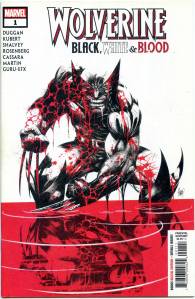
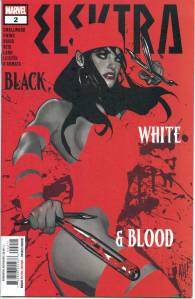
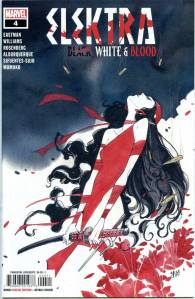
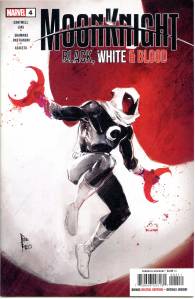
Centers around a specific Marvel character or group, exploring different facets of their history, personalities, and adventures and features a rotating cast of all-star creators, with art entirely colored in white, black and red. Often structured as anthologies, featuring multiple short stories by various creators within each issue.
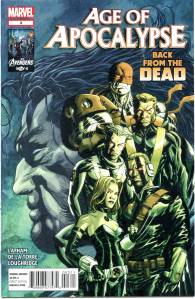
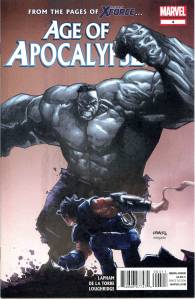
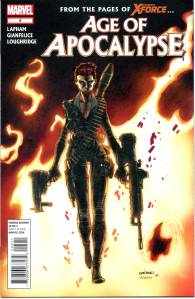
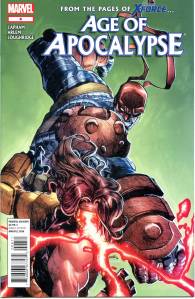
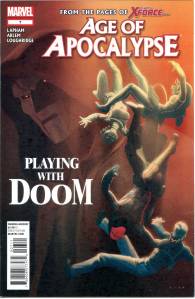
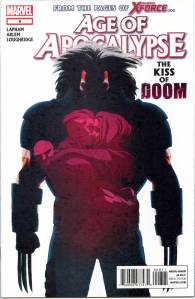
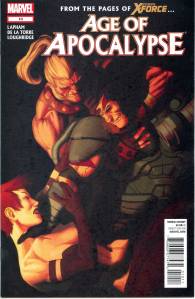
Jean Grey and Sabretooth return to Earth 616. Weapon X and his Black Legion attack the last human city where Weapon X slays both Magneto and Rogue, leaving Jean Grey and Sabretooth the last two X-Men alive. Jean telepathically nudges clones of the Scarlet Witch to recreate the Decimation and remove all mutants’ powers across the globe. However, this was only successful within a radius of 12 feet, so Jean Grey and Sabretooth are both left de-powered. The human coalition distracts Weapon X with a bomb long enough for the group to escape as the city explodes behind them. Harper Simons joins with the human team, the X-Terminated. Others who work with the X-Terminated are Doctor Moreau and Bolivar Trask.
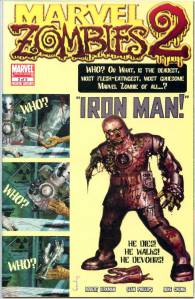
Forty years have passed and the zombies have come back home after eating just about everything else in the universe. Yum yum! What awaits them back on Earth, though, is beyond anything even these shambling monstrosities could have conceived! This is a new series featuring the amazing, irreverent take on the Marvel characters that became last year’s unexpected smash hit. They’re back and more stomach-churning than ever! The smash hit series is back, daring to ask: “Whose stomach are you in?”
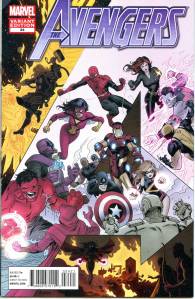
Iron Man, Thor and Captain America have been the Avengers’ heart and soul since the team’s earliest days. But in the wreckage of Asgard, they find themselves squabbling over old wounds. As unstable magics cast the heroes-at-odds into the scattered Nine Realms, they quickly realize the world in which they’re trapped is not how it should be. Can they come together and put it right? Then, as the three heroes re-forge the Avengers with the likes of Hawkeye, Spider-Man, Wolverine and Spider-Woman, Kang returns from the future bearing ill tidings of a force so powerful even he can’t conquer it!












































 EHT Comics