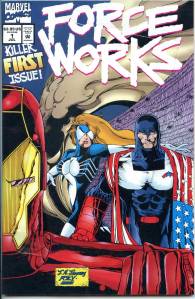
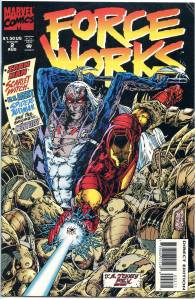
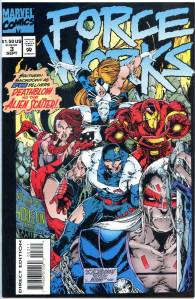
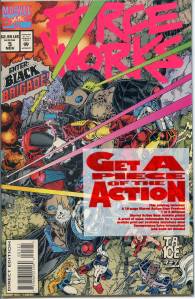
The first version of Force Works first appeared in the comic bookseriesForce Works #1 (July 1994) where they were created by writers Dan Abnett and Andy Lanning and initially drawn by Tom Tenney.[1] The team was formed from the remains of the West Coast Avengers, after leader Iron Manleft the Avengers due to an internal dispute. Force Works maintained a different outlook than the Avengers, trying to preempt natural and man-made disasters.
The second version of Force Works was mentioned in Civil War #6.
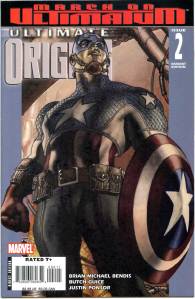
Jeph Loeb stated in an interview with Comic Book Resources: “What Ultimate Origin is going to do is sort of tell us how it all began. … The Ultimate Universe isn’t very old, so this isn’t a cosmic story. You’re not going to see the birth of a planet. What you’ll see is how the superhero community was introduced into the human population. So you’ll learn the importance of things like the Super Soldier program, which has been hinted at in Ultimate Spider-Man and Ultimates 1 and 2. Now, Brian is going to connect the dots.”
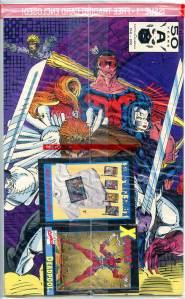
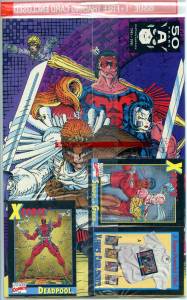
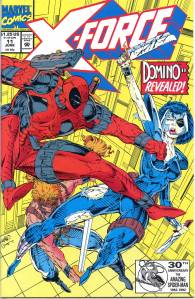
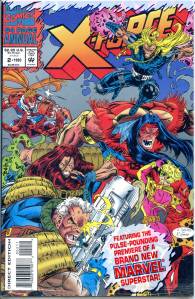
X-Force was created by illustrator Rob Liefeld after he started penciling The New Mutantscomic book in 1989 with #86. The popularity of Liefeld’s art led to him taking over the plotting duties on the book. With help from writer Fabian Nicieza, who provided the dialogue for Liefeld’s plots, Liefeld transformed the New Mutants into X-Force in New Mutants #100, the book’s final issue. Liefeld and Nicieza launched X-Force in August 1991. Rob Liefeld obtained the name for the series from an unknown artist at a convention a few months prior to its release. With the aid of a multiple-variant poly-bagged card, the book sold a record 5 million copies, and remains the second highest selling American comic book of all time, surpassed only by Jim Lee’s X-Men book that same summer with 8 million copies. The original line-up of the team included Boom Boom, Cable, Cannonball, Domino, Feral, Shatterstar and Warpath. In later issues, X-Force’s roster would include Siryn, Rictor and Sunspot.
Writer-editor Jonathan Hickman and artist/co-plotter Pepe Larraz created the Quiet Council of Krakoa in House of X #6 (October 2019). The Council appeared in many comics in the Dawn of X and Reign of X relaunches, creating and enforcing the laws of Krakoa; prosecuting and delivering judgement on mutants accused of breaking those laws.
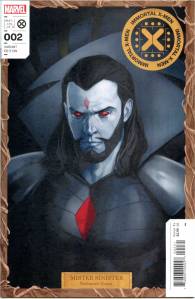
In March 2022, the council headlined Immortal X-Men as part of the Destiny of X relaunch. The series also served continuation of Inferno, vol. 2. It was written by Kieron Gillen and drawn by Lucas Werneck, building plot points for the event Sins of Sinister. After being briefly transformed into the Immoral X-Men limited series, Immortal X-Men continued from issue #11.
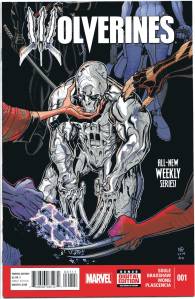
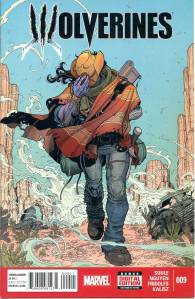
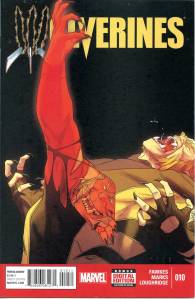
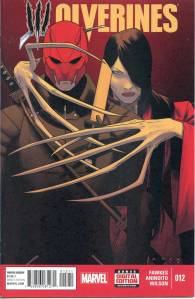
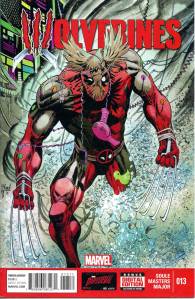
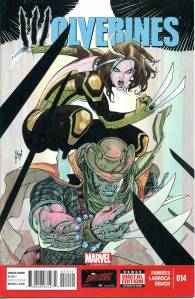
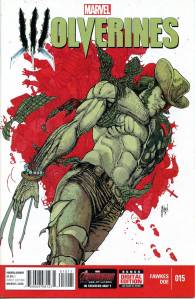
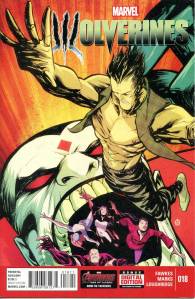
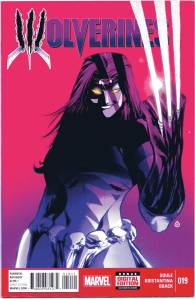
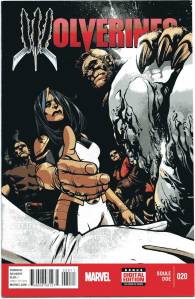
The aftermath of Wolverine’s death is explored in the series Wolverines. Sharp, Skel, Neuro, Endo, Junk, and the “Wolverines” (a team formed from the fallout of his death by Daken, Lady Deathstrike, Mystique, Sabretooth, and X-23) try to find Logan’s adamantium-covered body, which is taken by Mister Sinister. The group infiltrate Mister Sinister’s fortress to retrieve the body, but it is taken by the X-Men after a battle.
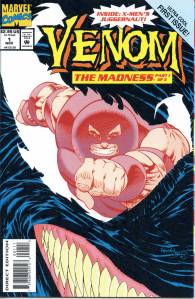
A three-part series published between November 1993 and January 1994, the series introduces attorney Beck as a love interest for Brock. When Beck pursues a lawsuit against Scarmore Industries for employees poisoned by a sentient liquid-mercury virus, Venom is injured trying to protect her from the Juggernaut‘s kidnap attempt. The symbiote is submerged and infected with the sentient virus (which heals Brock), bonding with the pair and introducing a third mind into their relationship. The virus drives Brock insane (causing him to murder a cleaning lady), and he is physically transported to the realm of insanity to confront its avatars: Paranoia, Dusk and the Necromancer. The symbiote overcomes the virus; Brock regains his senses, and Venom is returned to earth. Beck later insists on only being Brock’s friend, because his romantic feelings for her make him more violent.
Remender said, “There’s something that Cyclops said to (Captain America) on Utopia that’s ringing in his head. He didn’t do enough to help. And Steve (Captain America) is taking that to heart. Coming out of AvX with the landscape shifted and changed as much as it is, there are events that lead Steve to recognizing that he needs to do more”.
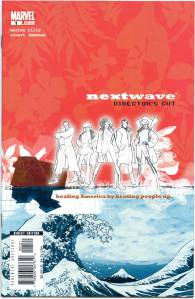
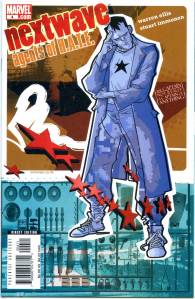
Nextwave is a humorous comic bookseries by Warren Ellis and Stuart Immonen, published by Marvel Comics between 2006 and 2007. Nextwave consistently features extreme violence and comedy, and simultaneously satirizes and celebrates Marvel’s superhero comics. The series frequently uses flashback scenes in which existing Marvel characters such as Captain America, Ulysses Bloodstone and the Celestials act grossly out of character for comedic purposes. In an interview, Ellis said, “I took The Authority and I stripped out all the plots, logic, character and sanity.” “It’s an absolute distillation of the superhero genre. No plot lines, characters, emotions, nothing whatsoever. It’s people posing in the street for no good reason. It is people getting kicked, and then exploding. It is a pure comic book, and I will fight anyone who says otherwise. And afterwards, they will explode.”
At New York Comic Con 2013, Marvel announced that they had solidified their rights to Miracleman and that Neil Gaiman would finish the story he had started 25 years earlier. The series is being reprinted in a giant-sized format, with each issue containing a reprint of the corresponding issue of the Eclipse Comics series, reprints of select Mick Anglo Marvelman stories, and non-fiction material such as essays, photos, and Marvelman design sketches. The first issue, reprinting the recolored and relettered stories from Warrior #1 & 2/Miracleman #1, was released on January 15, 2014.
The reprints continued, collecting remastered and recolored work of the original run, with hardcover collections following, and in September 2014 the first new Miracleman material under the Marvel Comics banner was announced. Featuring a ‘lost’ story by Grant Morrison that he wrote in the 1980s, and drawn by Joe Quesada, it will be joined by a brand new story by Peter Milligan and Mike Allred.
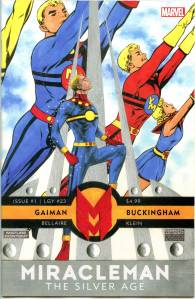
The reprints proceed through #16 when the series was retitled Miracleman: The Golden Age which reprinted issues 17-22. Miracleman by Gaiman & Buckingham: The Silver Age issues 1 to 3 were announced for release in 2017.
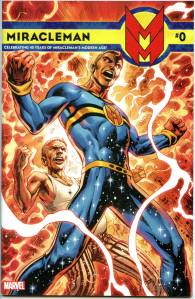
Miracleman #0 NM $6
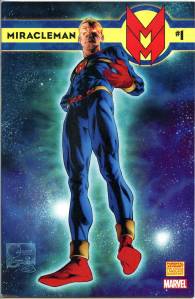
Miracleman #1 VF-NM $3
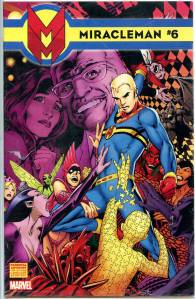
Miracleman #6 NM Pollybagged $5
Miracleman #8 NM Bagged (Book 2 The Red King Syndrome) $4
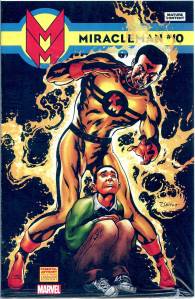
Miracleman #10 NM Bagged (Book 2 The Red King Syndrome) $4
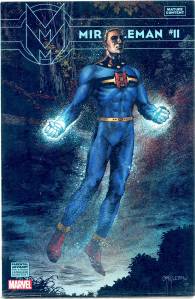
Miracleman #11 NM Bagged (Book 3 Olympus) $4
Miracleman #12 NM Bagged (Book 3 Olympus) $4
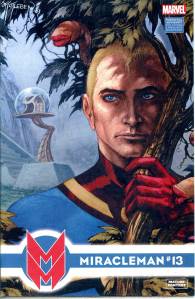
Miracleman #13 NM Bagged (Book 3 Olympus) $4
Miracleman #14 NM Bagged (Book 3 Olympus) $4
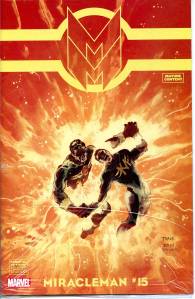
Miracleman #15B NM Bagged (Book 3 Olympus) $4
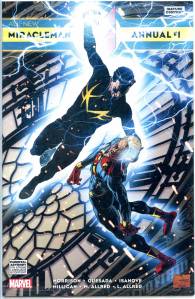
Miracleman Annual #1 NM Pollybagged $5
Miracleman – Book 4 The Golden Age #6 Coipel Variant NM $14
Miracleman – Book 4 The Golden Age #6 Andrews Variant NM $9
After Bruce Banner’s death during Civil War II and subsequent resurrection during the events of Avengers: No Surrender, the Devil Hulk suppressed the rest of Banner’s personalities and became the “dominant” Hulk. Now calling themselves the “Immortal Hulk”—due to it manifesting at night even if Banner is killed during the day and apparently unable to be killed itself—the collective personalities reveal during a conversation with Doc Samson that the Immortal Hulk actually embodies Banner’s desire for a protective father figure, and that Banner’s inability to “imagine love without pain” is why he had previously perceived it as being a malevolent, Sadistic entity.
Immortal Hulk #0 NM $5
Immortal Hulk #23 NM $4
Immortal Hulk #32 NM $4
Immortal Hulk #33 NM $6
Immortal Hulk #35 NM $5
Immortal Hulk #37 NM $4
Immortal Hulk #38 NM $4
Immortal Hulk #39 NM $4
Immortal Hulk #43 NM $4
Immortal Hulk #48 NM $4
Immortal Hulk #50 Marvel Masterpiece Variant NM $9