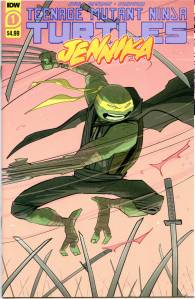
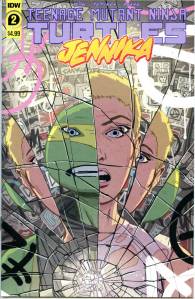
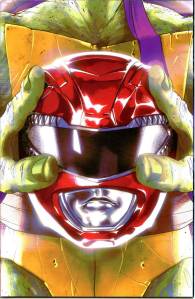
A three-issue miniseries starring the original IDW character Jennika. In this story, past, present and future collide for Jennika when she is forced to face the ghosts from her former human life and is given a chance to permanently reverse her mutation.
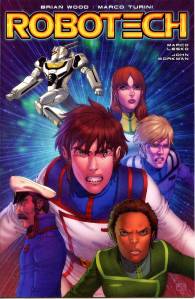
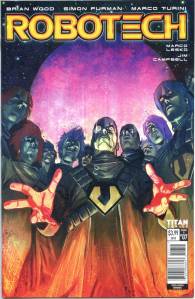
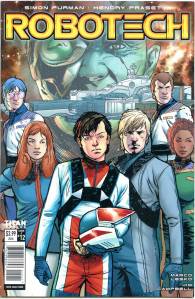
In June, 2016, Harmony Gold and Titan Comics announced a collaboration to release a new Robotech comic line in 2017. A cover was revealed in October, drawn by the Waltrip brothers. This series marks the very first time the Robotech story has been rebooted, offering significant changes to events and characters.
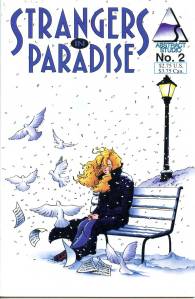
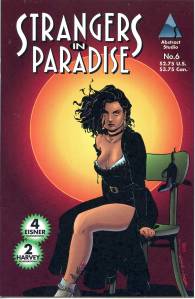
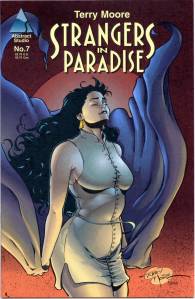
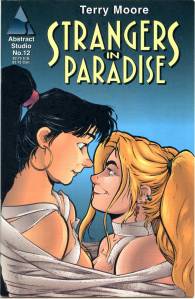
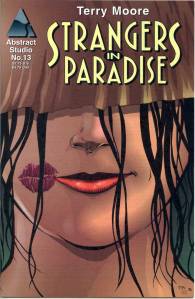
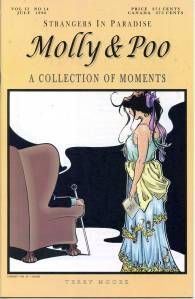
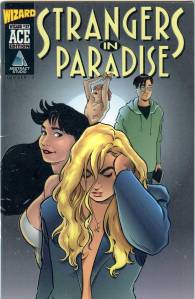
SiP, as it is commonly known, began as a three-issue mini-series published by Antarctic Press in 1993, which focused entirely on the relationship between the three main characters and Francine’s unfaithful boyfriend. This is now known as “Volume 1”. Thirteen issues were published under Moore’s own “Abstract Studio” imprint, and these make up “Volume 2”. This is where the “thriller” plot was introduced. The series moved to Image Comics‘ Homage imprint for the start of “Volume 3”, but after eight issues moved back to Abstract Studio, where it continued with the same numbering. Volume 3 concluded at issue #90, released June 6, 2007.
Harvey Comics presents a miniseries featuring legendary Japanese TV hero Ultraman. When astronaut Jack Shindo witnesses a space battle between Ultraman and an alien monster, he sacrifices his life to save the cosmic hero. In return, Ultraman merges with Jack, and the Earth gains a new superhero.
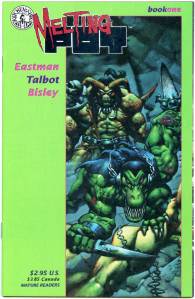
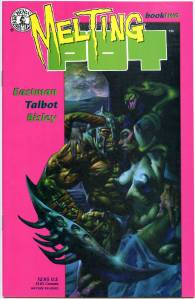
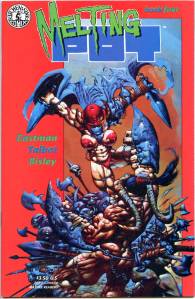
Melting Pot is a graphic novel by Kevin Eastman, Simon Bisley and Eric Talbot. Eastman and Talbot collaborated on the story, while Eastman and Bisley worked together on the painted artwork.
The series spent several years in development, with advertisements promoting its release appearing in Mirage Studios books from as far back as 1989. It was eventually serialized in four issues released in 1993 and 1994 by Kitchen Sink Press. A 144-page paperback volume collecting the series with a foreword by Mike Allred followed in 1995.
The series takes place in Barrow, Alaska, so far north that during the winter, the sun does not rise for 30 days. In the series, vampires, being vulnerable to sunlight, take advantage of the prolonged darkness to openly kill the townspeople and feed at will.
Initially an unsuccessful film pitch, the series became a breakout success story for Steve Niles, whose previous works had received relatively little attention. It was also the first full-length work by co-creator Ben Templesmith. The series has been followed by numerous sequel series, and in 2007, was adapted into a film of the same name.
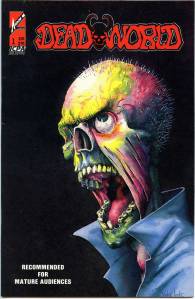
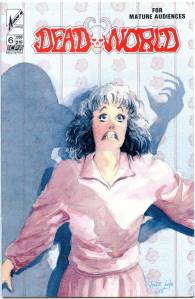
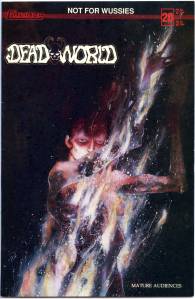
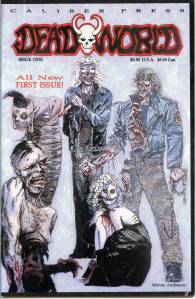
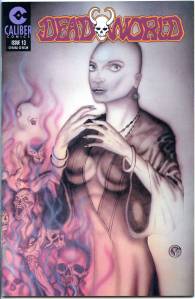
Deadworld follows survivors in a post-apocalyptic scenario brought on by zombie attacks. Led by King Zombie, Deadworld brings forth a different slant than just humans slaughtering zombies.
Originally published by Arrow Comics, Deadworld was written and created by Stuart Kerr and Ralph Griffith in 1987, scripted by Kerr for the first seven issues and illustrated by Vince Locke. The comic book quickly became a cult favorite success in the independent publisher industry.
Arrow Comics ceased production of all titles, but sold the rights of the title to Locke who transferred the rights to Gary Reed‘s Caliber Comics. By the twelfth issue of the title, Reed took over as the primary writer. The first volume of Deadworld ended in 1992 after twenty-six issues. One year later, a second volume began. The second volume ended after fifteen issues.
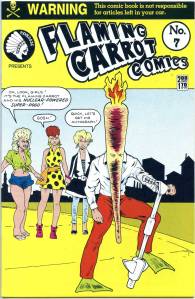
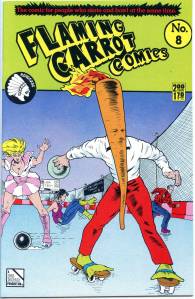
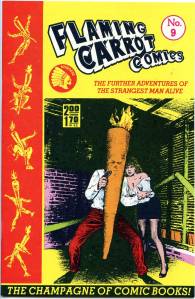
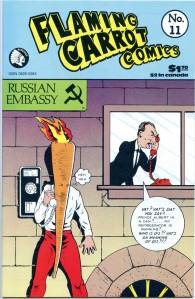
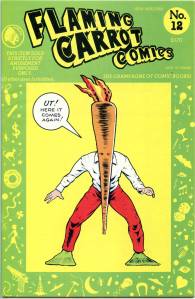
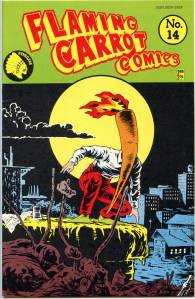
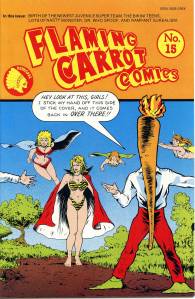
The Flaming Carrot origin states that “having read 5,000 comics in a single sitting to win a bet, this poor man suffered brain damage and appeared directly thereafter as—the Flaming Carrot!”
The Carrot, who lives in Palookaville, a neighborhood of Iron City, has staved off at least three alien invasions, a Communist take over of Iron City, flying dead dogs, the Man in the Moon, Death itself, and a cloned horde of evil marching Hitler‘s boots. Possessing no real super powers, the Carrot wins the day through sheer grit, raw determination, blinding stupidity, and bizarre luck. Flaming Carrot even died in #6 (fell into a deep toxic waste pit in Palookaville), was brought back from clinical death in #7, described his sojourn in Limbo in #8 and got back at those who sent him to Limbo in #9.
Flaming Carrot was also a founding member of the blue collar superhero group the Mystery Men, introduced in a flashback/dream sequence in Flaming Carrot Comics #16. The story of this group was later made into the 1999 movie Mystery Men and a short-lived spin-off comic book series. The Flaming Carrot himself does not appear in the film, although a handful of characters like Mr. Furious, the Shoveler, and Dr. Heller do.
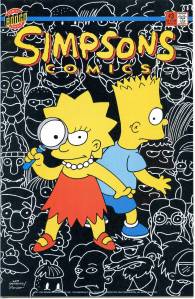
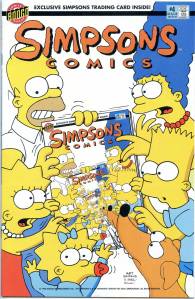
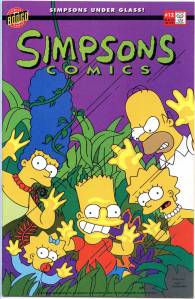
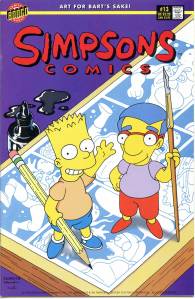
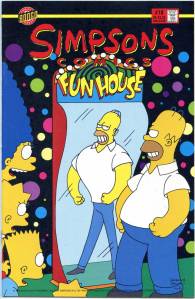
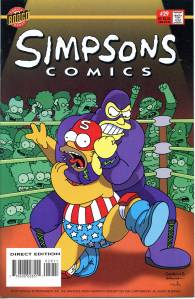
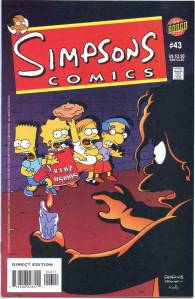
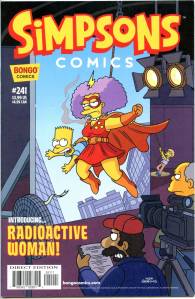
Simpsons Comics is a monthly series based on the animated TV show The Simpsons. The first issue was published on November 29, 1993. Since then over two hundred issues have been released, with the 100th issue mainly the comic book equivalent of a clip show. It was originally published bi-monthly, but went monthly in the fall of 2000.
Since March 1997, the comic has also had a monthly United Kingdom edition. This mainly reprints the stories from the U.S. edition, along with pages featuring UK readers’ drawings (currently Springfield Multiplex for movie parodies and Android’s Dungeon for video game and comic book parodies) and Junk Mail, a letters page which also features generic drawings, along with the readers’ frequent attempts to guess the identity of ‘Junk Mail Guy’, the incredibly sarcastic man who answers the letters and has apparently been locked up in a basement. The U.S. and Australian editions used to have Junk Mail, but it disappeared beginning with #114. But returned some time later.













 EHT Comics