Young Hellboy – Assault on Castle Death (2022)

Returned from their adventures on a secret island, Hellboy and the Professor move with the B.P.R.D. from New Mexico to Connecticut. The relocation is tough on Hellboy: is he just homesick, or have scrambled memories from the island gripped the supernatural whippersnapper? Meanwhile, word of Hellboy’s survival has also reached an unknown enemy, who failed to kill him once before but is determined not be foiled again . .

.

Star Wars – Boba Fett: Overkill (2006)

Boba Fett rockets onto the scene with blasters blazing in this stand-alone story featuring the galaxy’s greatest bounty hunter taking on a dangerous contract that proves deadly for all involved!

Summoned to settle the score between two warring factions, Fett quickly shows his employers the importance of always choosing the right tool for the job, and the folly of underestimating just how much damage and chaos a single Mandalorian can inflict. Once unleashed, Fett’s drive to finish the job is unshakable, and both groups quickly realize they’re dealing with a bigger and much deadlier mutual problem—one that must be stopped before it obliterates everything!

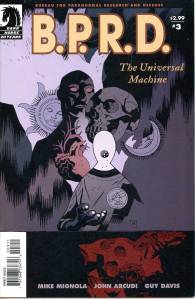
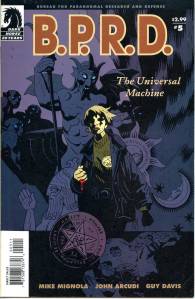
B.P.R.D. (2002)

The Bureau made its first appearance in the pages of the Hellboy miniseries Seed of Destruction (4 issues, March–June 1994) and was a major part of the comic until Hellboy leaves the B.P.R.D. at the end of Conqueror Worm. At this point the B.P.R.D. series began, following the agents of the B.P.R.D. such as Abe Sapien, Liz Sherman, Roger and Johann Krauss.

Hellboy – The Sleeping and the Dead (2011)

Hellboy is trapped in a dark basement littered with bones and small coffins, and the only way out is through the floating creature of death! For the first time, Mike Mignola teams up with artist Scott Hampton (BatmanThe Sandman Presents: Lucifier) for this gothic tale.

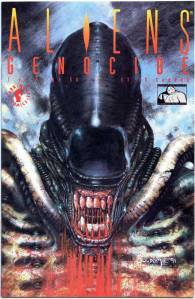
Aliens – Genocide (1991)

This series sees an attempted counter-expedition to the Xenomorph home planet following the events of Aliens: Female War, orchestrated by a billionaire for dubious reasons. The series was preceded by the short story prequel Aliens: The Alien.

Terminator (1991)

This beautifully illustrated 48-page trade paperback spotlights writer James Robinson, who delivers a compelling and action-packed script which plays to Matt Wagner’s atmospheric and visually stunning renderings. Unknowingly, Kyle Reese went back in time to protect Sarah Conner from the second of two Terminators sent from the future to alter the past. In this one-shot special, we encounter the very first Terminator to be sent back through time, a female version of the 800-model, but just as deadly, if not more so. Her mission: to kill John Conner’s mother! The Sarah Conner that she finds has a mission of her own: to kill her new husband and take off with his vast wealth before ever having a baby!

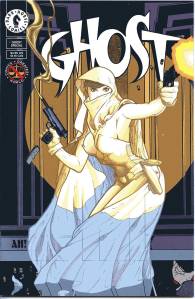
Ghost (1990’s)

Ghost first appeared in Comics’ Greatest World, week three, in 1993. After a popular special in 1994, a monthly title devoted to the character began publication in 1995. It ran for 36 issues, followed by a six-month break and a second series of 22 issues. The second series was a continuation of the first with a number of changes, including new details about Ghost’s origin. The stories in both series were based in (and around) the city of Arcadia, in a self-contained fictional universe outlined in Dark Horse’s Comics’ Greatest World.

Ghost continued appearing in her own titles (and others) into the 2000s, including several crossovers unrelated to Comics’ Greatest World. Most notable among these were a two-issue crossover with Dark Horse’s Hellboy (Ghost/Hellboy), and a four-issue crossover with DC Comics’ Batgirl (Ghost/Batgirl: The Resurrection Machine). Ghost was ranked 15th on the Comics Buyer’s Guide‘s “100 Sexiest Women in Comics” list.

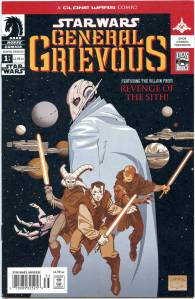
Star Wars: General Grievousis (2005)

Star Wars: General Grievousis a 4-part series published by Dark Horse Comics and released from March 16, 2005 through July 20, 2005. This tale of treachery and genocide leads up to the events of the record-breaking blockbuster Star Wars: Episode III – Revenge of the Sith. Before his all-out battle with Obi-Wan Kenobi, the latest Star Wars supervillain took on an entire alien species!

John Byrne’s 2112 (1991)

The Next Men characters made a prototypical appearance as “Freaks” in a lithography plate that was published within the History of the DC Universe Portfolio in 1986. Byrne had originally pitched the series to DC Comics, but the series never surfaced there. With some changes, Byrne changed the concept to fit in with his work on the graphic novel 2112, to become the John Byrne’s Next Men series. Two characters from the “Freaks” artwork somewhat retained their physical looks and became the lead characters of the Next Men series: heroine Jasmine and villain Aldus Hilltop.

The Next Men officially debuted in a four-part storyline in Dark Horse Presents #54-57 (later reprinted, in color, as John Byrne’s Next Men #0). The series ran until issue #30 and ended with a cliffhanger. According to Byrne, he intended the series to be science-fiction that had a “sort of smell” of being a super-hero book. In addition to exploring mature topics such as sex, abortion, and child abuse, Byrne also set aside some of the more-traditional conventions of the medium, such as “thought-bubbles” and sound-effects.

Byrne had intended to conclude the story in a second series after a six-month hiatus, but the collapse of the American comic-book industry in the mid-1990s made it financially unfeasible for him to do so, and he returned to working for hire at DC Comics and Marvel Comics.

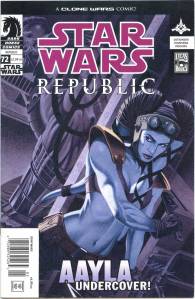
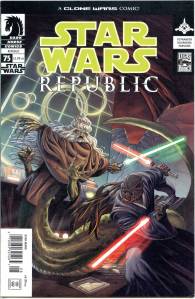
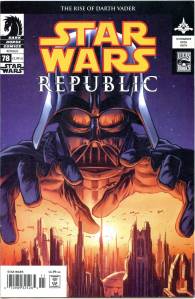
Star Wars: Republic (1998)

Published by Dark Horse Comics from 1998 to February 2006, the series was originally titled simply Star Wars, but acquired its Republic title at issue 46. The entire series comprises 83 issues. After issue 83, the series was replaced by Star Wars: Dark Times, which continued the Republic numbering on its inside covers. The Republic series is one of a number of comic book series set in the Star Wars Expanded Universe.

The events in Star Wars: Republic are set in roughly the same fictional timeframe as the Star Wars film prequel trilogy. Character development builds on the films, including appearances by more prominent characters such as Mace Windu and Yoda, as well as peripheral characters such as Ki-Adi-Mundi and Quinlan Vos.