
In the rain forests of South America, the only thing standing between Doc Savage and his injured teammates is . . . two giant, fiery snakes! Can the Man of Bronze save himself, let alone his friends?
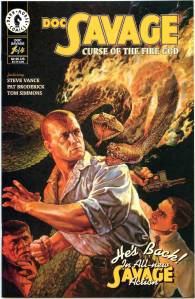
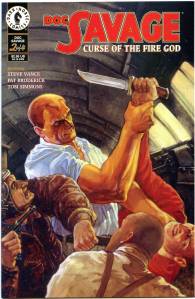
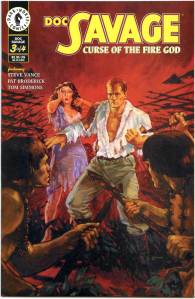
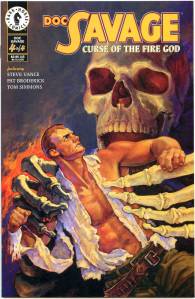
In the rain forests of South America, the only thing standing between Doc Savage and his injured teammates is . . . two giant, fiery snakes! Can the Man of Bronze save himself, let alone his friends?
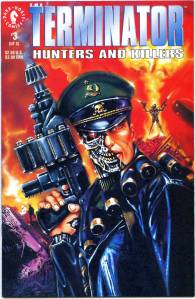
In 1991 Dark Horse published the limited series Hunters and Killers, set during the war, where special Terminators with ceramic skeletons and genuine organs are created to impersonate leaders in the Russian resistance.


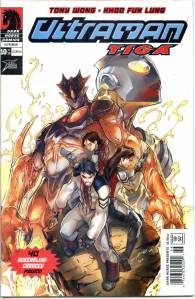
In the year 2049, the Earth has settled into a period of relative peace, thanks in large part to the global efforts of GUTS–the Global Unlimited Task Squad–an international alliance dedicated to protecting mankind from threats within the planet and beyond. But when a mysterious meteor carrying an ominous message crashes next to GUTS headquarters, it heralds the end of peacetime and the return of the giant monsters that terrorized humanity many millions of years ago. Mankind’s only hope is to find the lost land of Tiga and reawaken the 160-foot-tall warrior Ultraman! But that hope could be extinguished before it even begins, as the sinister monsters Melba and Golza set their sights on destroying Tiga and the sleeping guardian before he can arise to defeat them!
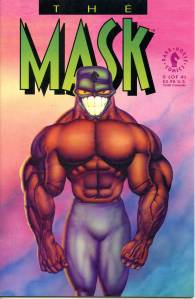
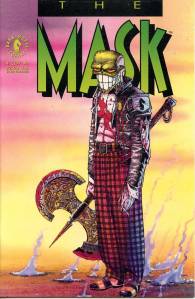
The base concept of The Mask was created by Mike Richardson in 1982. It first saw life as a single sketch he drew in 1985 for APA-5, an amateur press publication created by writer Mark Verheiden. After starting Dark Horse Comics, Richardson pitched his concept to Marvel Comics comic book writer/artist Mark Badger. The outcome was the Masque strip, that ran in the early issues of Dark Horse Presents. Badger’s strips became increasingly political, and Richardson ended the strip in order to bring the character back to his original concept.
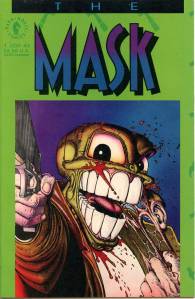
Artist Chris Warner was hired to revamp the character based on Richardson’s original APA-5 drawing and created the definitive look for the character, that was given a new launch in 1989 in the pages of Dark Horse’s Mayhem anthology. Aspiring writer John Arcudi and artist Doug Mahnke were hired to create the new adventures, which became the first very popular use of the character, “a combination of Tex Avery and The Terminator“. The Mask stories from Mayhem #1-4 were later collected as the 1991 issue The Mask #0 and in a trade paperback collection as well.
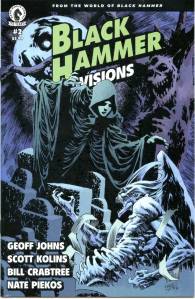
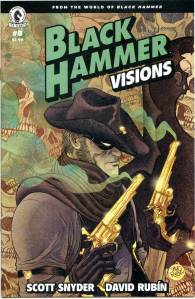
An eight-issue anthology series, with each story from different creative teams. An exciting reimagination of the Eisner Award-winning Black Hammer series told by guest writers and artists such as Patton Oswalt, Geoff Johns, Mariko Tamaki, Chip Zdarsky, Kelly Thompson, and more of comic’s top talents! Lemire has clarified that Visions is not in continuity.
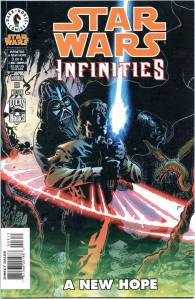
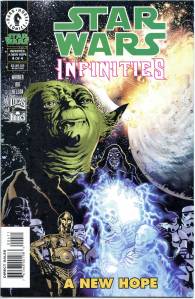
Star Wars Infinities: A New Hope is a 2002 four-part story arc in the Star Wars Infinities series of comic books. It is an extended alternate ending of the 1977 film Star Wars in which Luke Skywalker‘s proton torpedoes fail to destroy the Death Star.
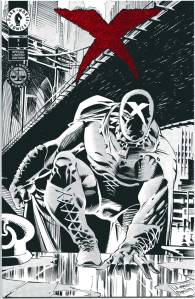
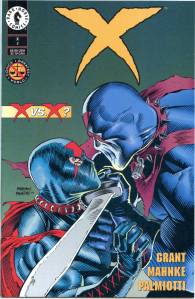
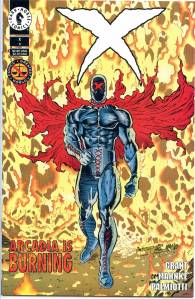
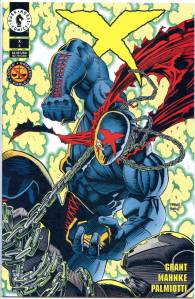
X, whose law is that one mark means a warning, the second one death, takes on a collection of business, law, mob, assassins and politics. This includes characters such as Mayor Teal and Police Commissioner Anderson as well as the Llwellyn brothers, their hired assassin named Gamble, Mob boss Carmine Tango and highly connected army officials.



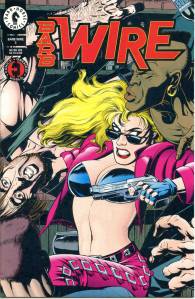
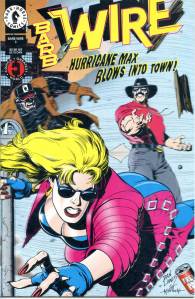
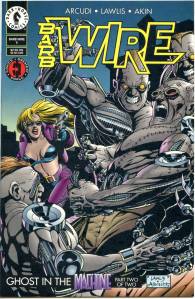
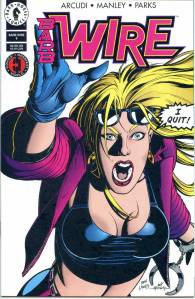
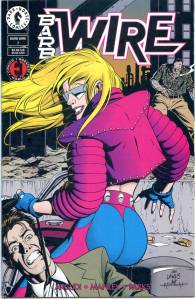
Steel Harbor, the down-and-dirty industrial metropolis of Comics’ Greatest World, was torn apart by widespread riots among super-powered gang members; Times are tough, and the people who live there can’t even count on the police!; But they can count on Barb Wire; Armed with her arsenal, motorcycle, and an attitude that just won’t quit, Barb is willing to right any wrong in Steel Harbor if the price is right; Joined by her “partner,” the hideous but helpful Machine, Barb launches a new series of gritty adventures; with Motorhead and Wolf Gang on hand to make sure the action doesn’t stop!


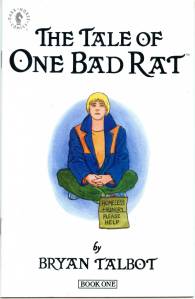
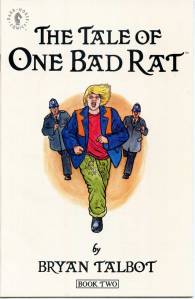
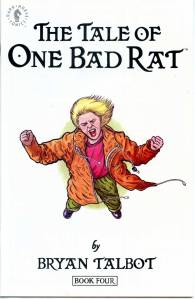
The story is about a victim of child abuse. It makes heavy reference to the works of Beatrix Potter.
Although it was first published in four comic books, The Tale of One Bad Rat is divided into three sections. Its heroine is called Helen Potter; Helen was Beatrix Potter’s first name.
One Bad Rat is the most mainstream of Talbot’s works and is drawn in a simple, naturalistic style with painted colors. Unusually for Talbot (and the comics industry in general), all of the characters were drawn from life, and the locations from photographs of real places.
The Next Men characters made a prototypical appearance as “Freaks” in a lithography plate that was published within the History of the DC Universe Portfolio in 1986. Byrne had originally pitched the series to DC Comics, but the series never surfaced there. With some changes, Byrne changed the concept to fit in with his work on the graphic novel 2112, to become the John Byrne’s Next Men series. Two characters from the “Freaks” artwork somewhat retained their physical looks and became the lead characters of the Next Men series: heroine Jasmine and villain Aldus Hilltop.
 EHT Comics