Stranger Things (2018)

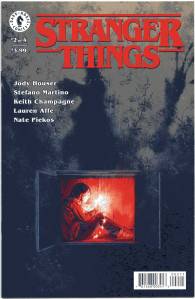
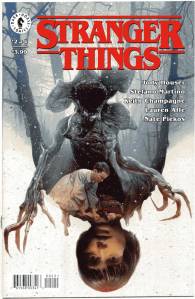
The first series in the line explores the adventures of Will Byers (Noah Schnapp) after he was transported to the horrific extra-dimensional Upside Down at the beginning of season 1. Viewers only saw Will reappear in that season’s finale when he was finally found by his mother Joyce (Winona Ryder), but obviously a lot happened in the interim. This four-issue Stranger Things miniseries — written by Jody Houser, illustrated by Stefano Martino, inked by Keith Champagne, colored by Lauren Affe, and lettered by Nate Piekos — will finally give fans a look at what happened to Will in the Upside Down.

Conan V1 – Dark Horse (2003)

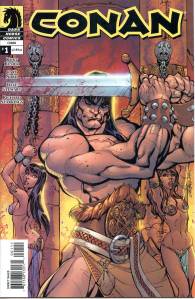
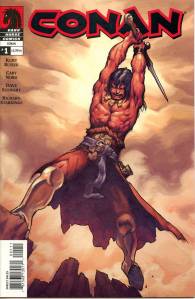
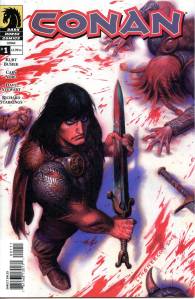
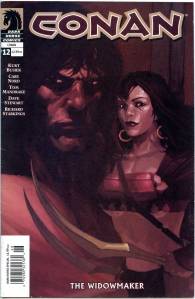
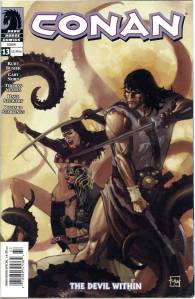
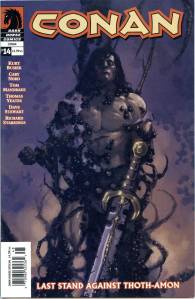
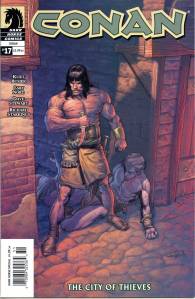
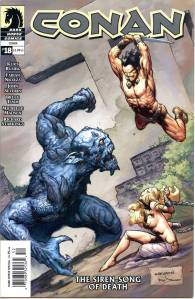
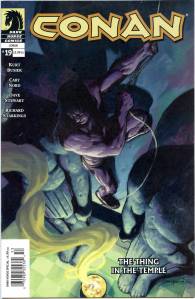
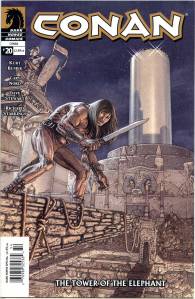
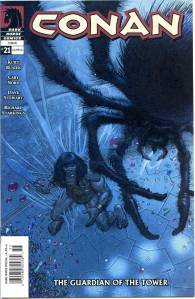
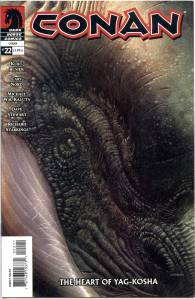
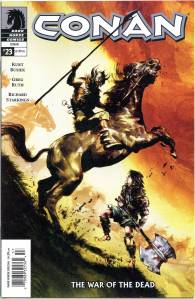
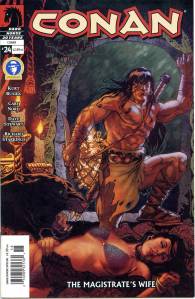
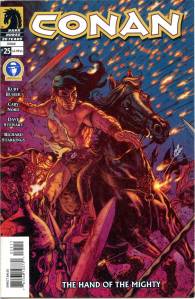
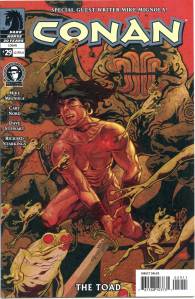
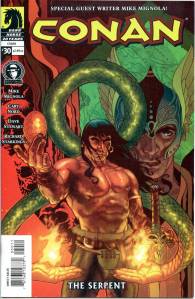
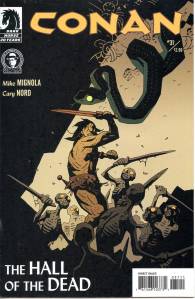
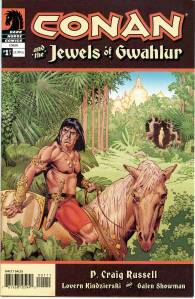
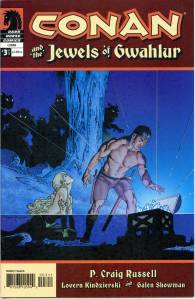
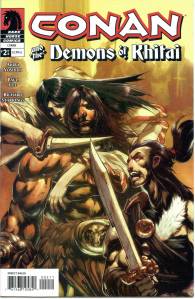
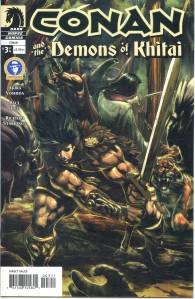
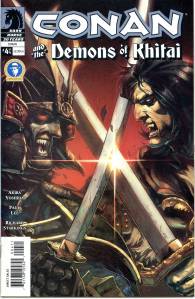
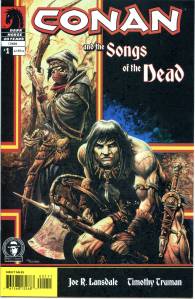
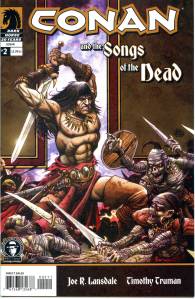
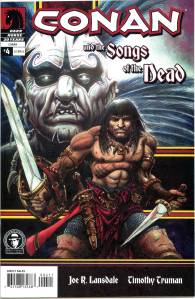
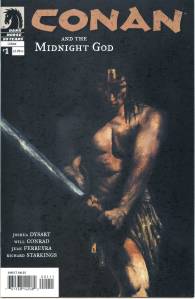
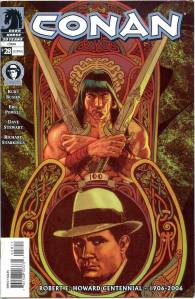
Dark Horse Comics began their take on Conan in 2003. Their  first comic series published was written by Kurt Busiek and Tim Truman and pencilled by Cary Nord and Tomas Giorello. This was followed by Conan the Cimmerian, written by Tim Truman and pencilled by Tomas GiorelloRichard Corben and José Villarrubia. This series is a fresh interpretation, based solely on the works of Robert E. Howard and on the Dale Rippke chronology, with no connection to the large Marvel run.

Ghost in the Shell- Dark Horse (1995)

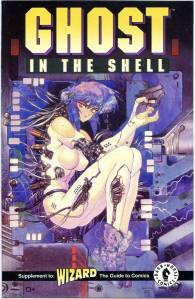
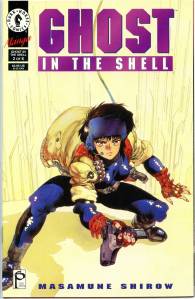
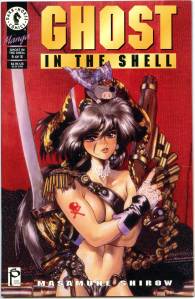
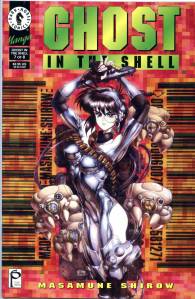
In this cyberpunk iteration of a possible future, computer technology has advanced to the point that many members of the public possess cyberbrains, technology that allows them to interface their biological brain with various networks. The level of cyberization varies from simple minimal interfaces to almost complete replacement of the brain with cybernetic parts, in cases of severe trauma. This can also be combined with various levels of prostheses, with a fully prosthetic body enabling a person to become a cyborg. The heroine of Ghost in the Shell, Major Motoko Kusanagi, is such a cyborg, having had a terrible accident befall her as a child that ultimately required that she use a full-body prosthesis to house her cyberbrain. This high level of cyberization, however, opens the brain up to attacks from highly skilled hackers, with the most dangerous being those who will hack a person to bend to their whims.

The Mask (1991)

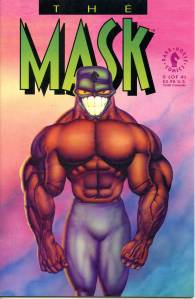
The base concept of The Mask was created by Mike Richardson in 1982. It first saw life as a single sketch he drew in 1985 for APA-5, an amateur press publication created by writer Mark Verheiden. After starting Dark Horse Comics, Richardson pitched his concept to Marvel Comics comic book writer/artist Mark Badger. The outcome was the Masque strip, that ran in the early issues of Dark Horse Presents. Badger’s strips became increasingly political, and Richardson ended the strip in order to bring the character back to his original concept.
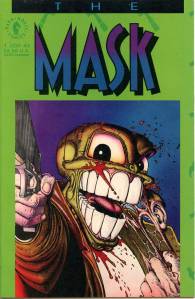
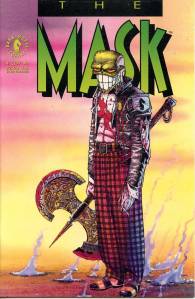
Artist Chris Warner was hired to revamp the character based on Richardson’s original APA-5 drawing and created the definitive look for the character, that was given a new launch in 1989 in the pages of Dark Horse’s Mayhem anthology. Aspiring writer John Arcudi and artist Doug Mahnke were hired to create the new adventures, which became the first very popular use of the character, “a combination of Tex Avery and The Terminator“. The Mask stories from Mayhem #1-4 were later collected as the 1991 issue The Mask #0 and in a trade paperback collection as well.

Concrete (1987)

The series focuses on the life of Concrete, formerly Ron Lithgow, whose brain was involuntarily transplanted by aliens into a hulking artificial body which is made up of a substance that closely resembles concrete.

As part of the back-story, he eventually escaped and made contact with the US Senator he worked for as a speechwriter. After a prolonged period of scientific tests and examinations, he was allowed to live on his own with the cover story that he was a cyborg constructed by the government.

Hellboy: The Wild Hunt (2009)

Hellboy: The Wild Hunt limited series was originally released from December 2008 through November 2009 , also numbered (on the inside front cover) as issues 37 through 44 of the continuing Hellboy series. The storyline delves into Irish and Arthurian legend, reprising several characters first introduced in Hellboy short story “The Corpse”. As with Hellboy stories generally, it was published by Dark Horse Comics.

This will be, in part, the basis for the 2019 Hellboy reboot directed by Neil Marshall.

Tales of the Jedi: Dark Lords of the Sith (1994)

Dark Lords of the Sith (1994–95) is a six-part story arc by Kevin J. Anderson, Tom Veitch, Chris Gossett, and Art Wetherell. It is set two years after the previous arcs, continues the tale of Ulic Qel-Droma, and introduces the character of Exar Kun, a dark lord of the Sith. The story details how the Jedi, led by Ulic Qel-Droma and Nomi Sunrider attempt to free the Empress Teta System from the tyrannical control of evil Dark Side adepts Satal and Aleema. It also details Exar Kun’s fall to the Dark Side at the seduction of the spirit of Freedon Nadd, becoming Dark Lord of the Sith with Ulic as his apprentice.

Fight Club 2 (2015)

Set ten years after the ending of Fight Club, the sequel is told from the restrained perspective of Tyler Durden as he sits in the subconscious of Sebastian (the name the narrator of the original Fight Club currently uses). Sebastian continues his dysfunctional relationship with Marla and has fallen into the mundane routine of society until Tyler re-emerges to cause chaos.

Fight Club 3 is a twelve-issue comic book limited series written by Chuck Palahniuk as the second sequel to his 1996 novel Fight Club, following the 2015 limited series Fight Club 2. The series, which is illustrated by Cameron Stewart, consists of twelve issues with the first issue being released on January 30, 2019.

Madman Comics V1 (1994)

This is it! The all-new, all-exciting, bimonthly continuing series makes its triumphant return to the racks! Thrilling stories, brilliant art — this is the one, folks! The comic-book event of the decade! In fact, this is the comic-book series you’ll be telling your grandkids about.

Cyberpunk 2077: Blackout (2022)

It hurts. Night City hurts. The suffering runs deep and the deeper one falls, the longer the self-prescribed dreams play. Fortune, hope, love–all made possible by DMS technology. But not everyone desires a happy ending. A braindance repairman discovers the answer to pain . . . comes in a blackout.
The third comic series from Dark Horse based on CD Projekt Red’s video game Cyberpunk 2077.