
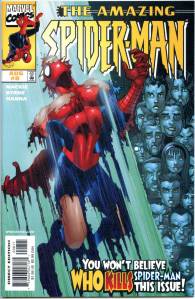
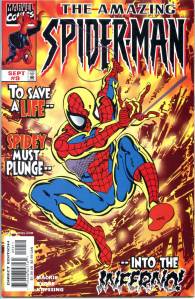
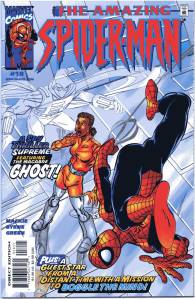
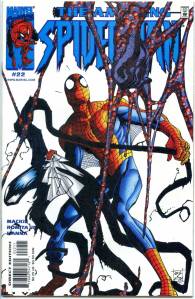
Marvel began The Amazing Spider-Man anew with (vol. 2) #1 (Jan. 1999). Howard Mackie wrote the first 29 issues. The relaunch included the Sandman being regressed to his criminal ways and the “death” of Mary Jane, which was ultimately reversed. Other elements included the introduction of a new Spider-Woman (who was spun off into her own short-lived series) and references to John Byrne’s miniseries Spider-Man: Chapter One, which was launched at the same time as the reboot. Byrne also penciled issues #1–18 (from 1999 to 2000) and wrote #13–14, John Romita Jr. took his place soon after in October 2000. Mackie’s run ended with The Amazing Spider-Man Annual 2001, which saw the return of Mary Jane, who then left Parker upon reuniting with him.
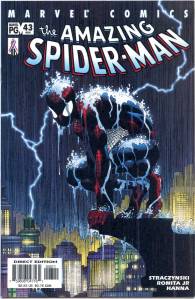
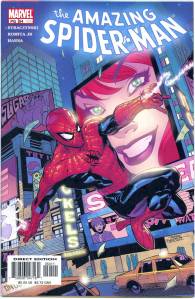
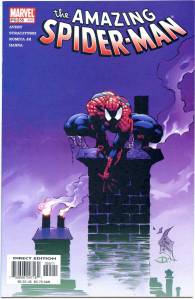
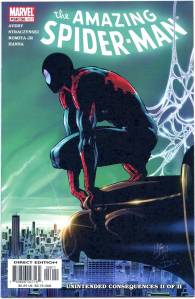
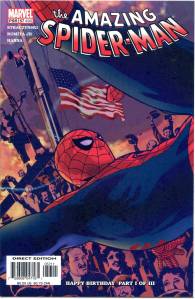
With issue #30 (June 2001), J. Michael Straczynski took over as writer and oversaw additional storylines – most notably his lengthy “Spider-Totem” arc, which raised the issue of whether Spider-Man’s powers were magic-based, rather than as the result of a radioactive spider’s bite. Additionally, Straczynski resurrected the plot point of Aunt May discovering her nephew was Spider-Man, and returned Mary Jane, with the couple reuniting in The Amazing Spider-Man (vol. 2) #50. Straczynski gave Spider-Man a new profession, having Parker teach at his former high school.
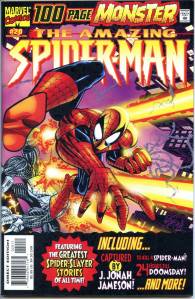
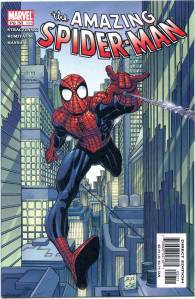
Issue #30 began a dual numbering system, with the original series numbering (#471) returned and placed alongside the volume two number on the cover. Other longtime, rebooted Marvel Comics titles, including Fantastic Four, likewise were given the dual numbering around this time. After (vol. 2) #58 (Nov. 2003), the title reverted completely to its original numbering for issue #500 (Dec. 2003). Mike Deodato, Jr. penciled the series from mid-2004 until 2006.



 EHT Comics